Join us at our brand new blog - Blue Country Gazette - created for those who think "BLUE." Go to www.bluecountrygazette.blogspot.com

YOUR SOURCE FOR TRUTH

Thursday, December 4, 2025

Vance promises to totally fix economy 'next year'

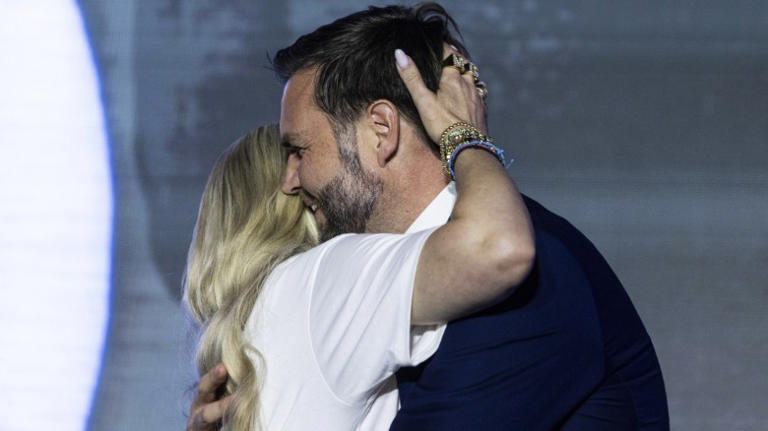
 no image description availableVice President JD "There's always tomorrow" Vance.  "Let them eat dogs and cats."
 
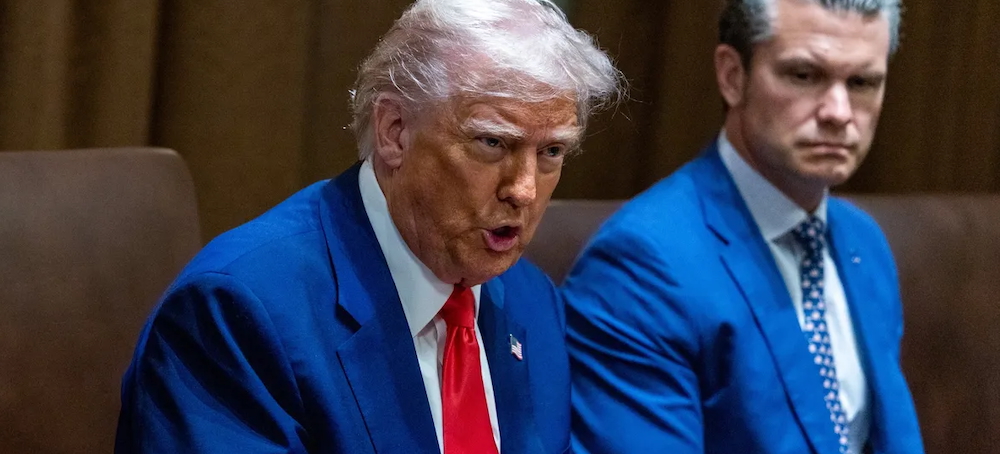
IN FACT: "Affordability and cost of living have worsened under Trump" 

During a Cabinet meeting Tuesday, Vice President JD Vance argued that it was unfair to expect the Trump administration to address issues like affordability in the first 10 months of President Donald Trump’s term. 

But Trump himself promised that he would fix these issues on “Day 1.”

“It would be preposterous to fix every problem caused over the last four years in just 10 months,” Vance said. “I think we’ve done incredibly good.” 

He then went on to say that economic growth and prosperity would come “next year.”

The lowered expectations in Vance’s statement are directly at odds with years of Trump’s promises that he would fix purported problems under former President Joe Biden.

For instance, during an August 2024 campaign speech, Trump said, “When I win, I will immediately bring prices down, starting on day one.” 

He also argued that he would open up domestic oil drilling, which would “bring down prices of everything.”

President Donald Trump speaks during an event to announce new tariffs in the Rose Garden at the White House, Wednesday, April 2, 2025, in Washington. (AP Photo/Mark Schiefelbein)
President Donald Trump announces his asinine tariffs in April.  He has penguins shaking in their flippers.

Like his promises to end Russia’s war on Ukraine, Trump has also failed to deliver on this grandiose promise.

In fact, affordability and cost of living have in many ways worsened under Trump thanks to his idiotic tariffs, which have resulted—as economists warned they would—in costs being passed on to consumers. 

A ripple effect from this decision has affected the economy, leading to job losses and an economic slowdown—reversing the recovering economy that Trump inherited from Biden.

But during Tuesday’s Cabinet meeting, Trump expressed skepticism about addressing affordability.

“There’s this fake narrative that the Democrats talk about: affordability. They just say the word, it doesn’t mean anything to anybody,” Trump blatantly lied. 

He also argued that cost of living issues are merely a Democratic “con job” and “scam.”

These remarks from Trump and Vance prove that they are out of touch with the public.

In a Yahoo/YouGov poll released Nov. 26, 49% of respondents said that Trump has raised prices, while only 24% said that his actions have reduced costs. Similarly, 86% of Democrats and 54% of independents blame Trump for the worsening economy, and even 12% of Republicans agree.

Trump has spent more time in recent weeks obsessing over his plans for a gold-encrusted ballroom at the White House, even reportedly feuding with the architect as he pushes to increase the size of the monstrosity.

Instead of making excuses for Trump, Vance may want to tell him to put down the ballroom blueprints and face his tanking economy.

Monday, December 1, 2025

A DISTURBING STORY: Gulf Monarchs Are Showering Trump With Billions in Illegal Gifts

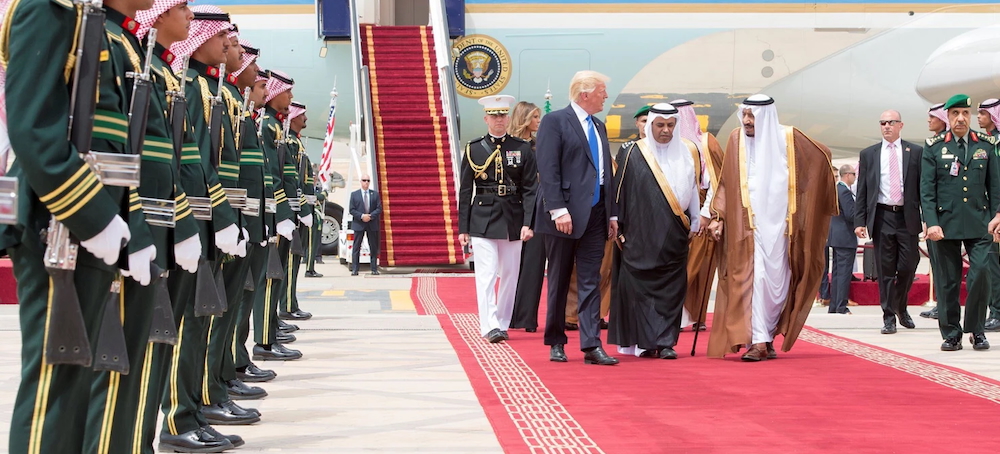
Why the Gulf Monarchs Shower Trump With Gifts Saudi Arabia's King Salman bin Abdulaziz Al Saud and U.S. President Donald Trump walk during a reception ceremony in Riyadh, Saudi Arabia. (photo: Bandar Al-Jaloud/Saudi Royal Court/Reuters)
 
 Until now, no president had yielded to royal temptations from abroad.
 
Franklin Foer / The Atlantic
  

When Benjamin Franklin left Paris in 1785, after nearly nine years as the American emissary to France, King Louis XVI presented him with a parting gift. The token exuded the rococo extravagance of the ancien régime: a portrait of the monarch, surrounded by 408 diamonds, held in a gold case. It was frequently described as a snuffbox, a term that hardly captures its opulent nature; the item was likely far more valuable than anything Franklin owned.

Under the Articles of Confederation—the document governing the still-fragile republic—Franklin could keep the gift only with the explicit permission of Congress, which it reluctantly granted. But the gift unsettled the country. 

The Constitution, written two years later, barred federal officeholders from accepting any gift, payment, or title from a foreign state without Congress’s explicit consent. The Founders feared that European monarchies would seek to control the new country by showering it with gifts, which would undermine its capacity for self-government.

Until Donald Trump, no U.S. president had ever yielded to royal temptations from abroad. But in his second term, Trump has discarded that old inhibition in its totality. Since 2022, the Trump family has been promised hundreds of millions of dollars—in the form of investments, real-estate licensing deals, even an airplane—from Gulf monarchies and the business entities they control.

During his second term, and especially during Saudi Crown Prince Mohammed bin Salman’s recent visit to Washington, Trump has rewarded his benefactors with sweeping geopolitical favors. Their huge investments in his family’s businesses are hard to describe as anything other than the spectacular subversion of American sovereignty, wherein the nation’s foreign policy reads as a thank-you note to the president’s biggest financial boosters.

Really, Trump is adopting the governing style of his backers. In the Gulf states, hardly any distinction exists between public and private interests; the royal family governs the state and dominates the economy. They oversee sovereign-wealth funds, control the largest companies, and treat nominally private enterprises as instruments of royal policy. When a Gulf developer or investment vehicle pays Trump—or licenses his brand—it is not a private commercial transaction. It is a political act: a foreign monarch using his wealth to cultivate influence, dependence, and favor.

In a monarchy, a ruler governs in part through beneficence—binding subjects through appointments, indulgences, and other blandishments. That this model might be applied to American officeholders was the gravest threat to the republic: Leaders enriched by a foreign monarch cannot be trusted to act independently. When a leader is financially entangled with foreign regimes, it becomes impossible to discern their motives: Are they acting out of conviction, or obligation? That uncertainty was precisely what the Framers sought to banish.

The timing of Trump’s deals with the Saudis tells a disturbing story. 

Before he became president, he never managed to break into the kingdom’s real-estate market. But during his first term, he proved his worth. He stood by MBS after the Saudi leader ordered the murder of the Washington Post columnist Jamal Khashoggi. Trump backed the kingdom and its Emirati allies during their blockade of Qatar in 2017, despite the fact that the United States maintains one of its largest military bases there.

The Trump family was rewarded for its demonstrations of loyalty. In 2021, Jared Kushner—Trump’s son-in-law, who was a top adviser during his first term—sought a $2 billion investment from the Saudi sovereign-wealth fund for the private-equity firm he was creating. The Saudi fund’s professional advisers warned that the fledgling Kushner firm’s operations were “unsatisfactory in all aspects.” But the crown prince controls the fund’s board, and the board overruled the professionals.

Then, after Trump announced that he was running to reclaim the presidency, the Saudis began to shower him with real-estate deals. In 2022, Dar Global—the international arm of a Saudi developer that is routinely described as having “close ties” to the royal family—contracted with the Trump Organization to manage a hotel and golf course in Oman. Two years later, the company unveiled a Trump Tower in Jeddah, followed by plans for a Trump Plaza in the city. The pattern was unmistakable: The Saudis were licensing the Trump name for a series of lavish mega-projects in places such as Riyadh, Dubai, Doha, and the Maldives.

The Trump family has become enmeshed in Saudi investment deals to an extent possible only with the crown prince’s approval. But have these entanglements actually corrupted American foreign policy? As the Founders understood, that question drifts into the murky realm of motives—always difficult to parse and almost impossible to prove.

American foreign policy was already becoming pro-Saudi long before Trump arrived for his second term. Although Joe Biden came into office vowing to make Saudi Arabia a “pariah” for killing Khashoggi, he softened his stance over time and pursued a grand bargain: Saudi normalization with Israel in exchange for Israeli movement toward a two-state solution. 

That shift didn’t stem from personal enrichment or private dealings involving the Biden family; it emerged from geopolitics. Biden did not want Saudi Arabia drifting into China’s orbit. And Iran’s growing menace ensured that any American administration—whatever its ideological priors—would be pushed toward cooperation with Riyadh, which stands among Tehran’s most committed regional adversaries.

But Biden sought to extract substantial concessions as he deepened the alliance: not just Saudi diplomatic recognition of Israel but also assurances that the kingdom would keep the dollar at the center of its financial system. His administration pressed Riyadh to curb its brutal intervention in Yemen.

In his first months back in office, Trump has delivered the defense protections that Biden merely dangled before the Saudis. Last week, he even designated the kingdom a “major non-NATO ally.” He signed an executive order pledging to defend Qatar against any attack, not long after that country gifted him a $400 million airplane. (Technically donated to the Pentagon, the plane will be transferred to Trump’s presidential-library foundation no later than January 2029.) 

At Riyadh’s urging—“Oh, what I do for the crown prince,” Trump said—the president lifted sanctions on the new Sunni-led government in Syria. And to burnish the image of his family business’s financial benefactor, he once again excused the murder of Khashoggi. Yet he has extracted almost nothing in return—aside from vague promises of Saudi investment in American firms, commitments the kingdom has every incentive to make regardless of American favors. This is exactly the kind of one-sided arrangement the Constitution was written to prevent: a republic bending toward the preferences of a foreign monarch whose wealth has seeped into the president’s private dealings.

What the Founders feared as an existential threat to the republic is now unfolding in plain sight. The anxiety they enshrined in the Constitution is being flouted with barely any disguise. The Founders understood that the nation’s immune system needed to reject even the smallest, most seemingly innocent foreign attempts to influence American politics. 

The president is ceding American sovereignty to a foreign monarchy, and there’s hardly any price to be paid.

Saturday, November 29, 2025

Don't fall for the 'Poor Poor Usha Vance' routine

 Brad Vest/Getty 

VP's wife knew exactly what she was signing up for when she married him

The Week 

Nov. 29, 2025 

Vice President JD Vance might have disrespected his wife's Hindu faith to please conservative Christians, said Renee Graham in The Boston Globe, but don't fall for the "poor poor Usha routine."  

Usha knew she married a "political opportunist and shape-shifter" who hopes to inherit the MAGA movement, and she's going along for the ride. 

People felt sorry for Usha after her husband, a Catholic convert, recently told a cheering crowd at a Turning Point USA event that he hoped that his wife would convert to Christianity.

When Vance combined that affront with an "uncomfortably intimate hug" with Charlie Kirk's widow, Erika, the internet exploded with "You in danger, girl" memes.

Usha, however, is no helpless dummy: She's a Yale-trained lawyer who clerked for Supreme Court Chief Justice John Roberts.

As the daughter of Indian immigrants, she has stood by her man through his "disgusting lies" about Haitians eating dogs and cats, and his nativist insistence that only those born in the U.S. are real Americans.  

Perhaps she views her "adjacency to whiteness and power" as protection for herself and her biracial children.  But as the administration wages war on people of color and constitutional rights, "it's America - not Usha Vance - that's in danger."

  Brad Vest/Getty

Wednesday, November 26, 2025

Trump and Hegseth’s Hysterical Reaction to an Ad

 Trump and Hegseth’s Hysterical Reaction to an Ad Trump and Hegseth during a cabinet meeting at the White House whereat all the cabinet mobsters take turns telling the Godfather what a savior he is.  (photo: Shawn Thew/EPA/Bloomberg)

Are they angry because they intend to use the  military to suppress political dissent?
 
Jonathan Chait / The Atlantic

When a group of Democratic military veterans who serve in Congress released an ad last week urging service members to refuse orders if they are illegal, the Trump administration could have deployed an obvious defense: What are you talking about? We’re not issuing or planning any illegal orders.

Instead, the administration has opted for a rebuttal that is considerably more self-incriminating. President Donald Trump swiftly took to social media to call out these lawmakers for “seditious behavior” that is “punishable by death.” “It is insurrection,” the White House adviser Stephen Miller charged. “It’s a general call for rebellion.”

In light of the administration’s undeclared military campaign in the Caribbean, which has included extralegal strikes against boats that are allegedly smuggling drugs, it might have made sense to let this controversy die down. 

Instead, Pete Hegseth’s self-styled Department of War took to X yesterday to announce that Senator Mark Kelly, a former Navy combat pilot and one of the Democrats who appeared in the ad, will be investigated for a possible court-martial owing to “serious allegations of misconduct.” The post goes on to remind military retirees that they are still subject to the Uniform Code of Military Justice, which prohibits “actions intended to interfere with the loyalty, morale, or good order and discipline of the armed forces.”

It bears noting that the ad does not call for ignoring legal orders. It’s merely a public-service announcement reminding members of the military and the intelligence community of their right to avoid implication in crimes. The ad can be interpreted as a call for rebellion only if the orders coming from above are in fact illegal.

The problem is that the president seems to think that an action is just as long as he calls for it. Trump ran for office in 2016 openly and repeatedly calling for the military to illegally torture prisoners for intelligence purposes. “If I say, ‘Do it,’ they’re going to do it,” he insisted. Though he later conceded that the U.S. is in fact bound by “laws and treaties,” he regularly pardoned service members in his first term who were credibly accused or convicted of war crimes, often against the advice of his own military leadership.

In 2019, Trump reportedly told the head of Customs and Border Protection that he would pardon him for crimes he committed in service of Trump’s immigration-enforcement agenda. He has devoted much of his second term to making good on promises to pardon allies imprisoned for crimes committed in his service. Ed Martin, the U.S. pardon attorney at the Justice Department, publicly articulated this attitude when he claimed, “No MAGA left behind.”

In Hegseth, Trump has found a willing partner. In his book, The War on Warriors, Hegseth argues that the military should enjoy a wide berth to commit war crimes. He came away from his time at GuantĂ¡namo Bay firm in the belief that people detained by the military do not deserve due process, and dismisses “the debate about the ‘rights’ of assholes (I mean, ‘detainees’) at Gitmo.” Hegseth goes on to mock the notion that wars should follow rules: “Our enemies should get bullets, not attorneys.”

In sum, the ad’s premise—that the Trump administration’s commitment to the law is less than unshakable—is well-founded.

Why the administration has responded so hysterically to this ad is obvious. Trump and Hegseth do not merely believe that they should be free to give illegal orders and that the rank and file should have to follow them. They are also keen to use the power of the state to suppress political dissent.

In his first term, Trump was rebuffed by top military officials when he suggested the military might shoot peaceful protesters. In his second term, he has placed the Defense Department under Hegseth, whose only qualification is a fanatical partisan loyalty. Hegseth has proceeded to carry out a purge that is driving out suspected non-loyalists, stripping the military of talent and sending a message to remaining officers that the faintest signs of political disloyalty could end their careers.

Trump’s purge of the armed forces and his “l’etat, c’est moi” approach to the law all spring from a single impulse to merge the state with his own interests. An ad instructing members of the military that they serve the United States and its Constitution, and don’t have to act as Donald Trump’s capos, strikes at the heart of his ethos. His demand to punish anybody who merely endorses the Constitution vindicates the charge that he is the document’s greatest enemy.

Take 'em out behind da shed and string 'em up.

Monday, November 24, 2025

'Punishable by DEATH': Deranged Trump calls for Democrats to be killed

  “The President of the United States just called for Democratic members of Congress to be executed. ‘HANG THEM,’ he posted. If you're a person of influence in this country and you haven't picked a side, maybe now would be the time to pick a fucking side,” Sen. Chris Murphy wrote.

"From pardoning MAGA insurrectionists who brought a noose to the Capitol, to urging that members of Congress be hanged, Trump is dangerously spiraling."

President Donald Trump on Thursday accused Democratic lawmakers of sedition and openly called for them to be put to death—employing some of the most vile and incendiary rhetoric he's used to date.

"SEDITIOUS BEHAVIOR, punishable by DEATH!" Trump wrote in a post on Truth Social, referring to a video a group of Democratic lawmakers who served in the military released on Tuesday, in which they urged troops not to follow illegal orders from Trump.

Sens. Elissa Slotkin of Michigan and Mark Kelly of Arizona, along with Reps. Jason Crow of Colorado, Maggie Goodlander of New Hampshire, and Chris Deluzio and Chrissy Houlahan of Pennsylvania said in the video that “No one has to carry out orders that violate the law, or our Constitution.”

“Know that we have your back," the lawmakers said, adding, "don’t give up the ship.”

The video has clearly enraged Trump—who is already feeling cornered after being forced to release the Epstein files. 

He sent out a number of other Truth Social posts slamming the lawmakers, saying in one that the video the Democratic lawmakers released, "is really bad, and Dangerous to our Country."

In yet another Truth Social post, Trump again called the lawmakers' behavior "SEDITIOUS BEHAVIOR AT THE HIGHEST LEVEL," and said that, “Each one of these traitors to our Country should be ARRESTED AND PUT ON TRIAL. Their words cannot be allowed to stand - We won’t have a Country anymore!!! An example MUST BE SET.”

He also reposted an account that called for the lawmakers to be hanged.

Cartoon by Drew Sheneman
“Problem solved” by Drew Sheneman

The Democratic lawmakers did not explicitly say in the video what orders they view as illegal. They are likely referring to the extrajudicial killings Trump is carrying out in the Caribbean Sea, in which he has claimed without evidence that the boats he's having the military blow up are trafficking drugs.

Of course, Trump calling for Democratic lawmakers to be killed is beyond the pale.

But it's especially hypocritical given that he's tried to police speech he views as incendiary, following the death of right-wing podcaster Charlie Kirk.

Democrats slammed Trump's vile behavior.

“The President of the United States just called for Democratic members of Congress to be executed. ‘HANG THEM,’ he posted. If you're a person of influence in this country and you haven't picked a side, maybe now would be the time to pick a fucking side,” Sen. Chris Murphy (D-CT) wrote in a post on X.

“From pardoning MAGA insurrectionists who brought a noose to the Capitol, to urging that members of Congress be hanged, Trump is dangerously spiraling,” Sen. Sheldon Whitehouse (D-RI) wrote in a post on X. “What have Republicans in Congress got to say about this?”

The problem is "Blowin' in the Wind."

Saturday, November 22, 2025

Emails from Prison Show Grisly Ghislaine Maxwell Is Living the Life

 
Thanks to Donald (far left), Ghislaine Maxwell (far right) is serving a 20-year sentence for sex trafficking in a positively posh prison where the warden runs errands for her.  You have to wonder what she really knows.
 
Trump Is Making Sure Epstein Sex Trafficker Is Getting a Lot More Than Extra Toilet Paper in Posh Prison
 
Isaac Stanley-Becker / The Atlantic 
 

The emails that Ghislaine Maxwell has been sending over the past several months from a minimum-security prison near Houston are stamped sensitive but unclassified. Maxwell once cavorted with presidents and royals; now she’s serving a 20-year prison sentence for sex trafficking, convicted of recruiting underage girls for Jeffrey Epstein. Her trajectory is not a happy one.

But the tone of the emails is cheerful. She revels in the privileges she’s been granted since being transferred to a new facility by Donald Trump’s Justice Department, and she expresses optimism about one day freeing herself. 

While telling family of her improved conditions, she remarks that Croatia is one of her favorite vacation destinations. Among the ebullient expressions that appear in the disgraced British socialite’s messages, mostly to her siblings and one of her lawyers: “Yippe skipee” (about her brother’s upcoming visit), “I hear you are a media star!” (in reference to another sibling publicly defending her), and “it gladdens the cockles of my heart” (when she heard from an old friend).

The dozens of emails that I obtained, part of a cache of communications that a nurse at the facility provided to Democrats on the House Judiciary Committee, are notably free of regret, remorse, shame, self-doubt. 

Portions of the emails have been disclosed in recent days, including by NBC News, but the extent of the privileges Maxwell enjoys has not previously been reported. The emails offer a portrait of Maxwell’s relatively comfortable life as the scandal that put her behind bars has gripped Trump in a political vise. 

The problem for the president arises from his administration’s determination to block public access to files about Epstein that he once dangled to the MAGA faithful like some kind of rap sheet for the global elite. This week, he backed down when it became clear that he couldn’t intimidate a sufficient number of Republican lawmakers—grudgingly reversing himself and then claiming credit for legislation compelling the release of the files.

In July, Deputy Attorney General Todd Blanche, who previously served as Trump’s personal defense attorney, took the highly unusual step of visiting Maxwell behind bars. While there, he elicited this exculpatory observation from the Epstein accomplice: “I never witnessed the president in any inappropriate setting in any way.”

Days later, Maxwell was transferred out of a Florida prison, where she had dealt with poor conditions, including “possums falling from the ceiling,” as she would later recount. Her new home was the Federal Prison Camp in Bryan, Texas, a minimum-security facility that Bureau of Prisons guidelines deem inappropriate for sex offenders. 

Since arriving there, she’s benefited from a number of unusual perks, according to the emails as well as people with knowledge of her circumstances who spoke with me on the condition of anonymity.

She is receiving visitors privately, in the prison chapel, instead of in the regular visitation space. Her lawyer has gained authorization from the warden to bring in private electronic equipment, and her legal team has had access to drinks and snacks while working with her. Her privileges extend to more intimate needs. 

Whereas other inmates receive just two rolls of toilet paper a week, and need to either buy more or resort to paper towels when those run out, Maxwell has received a special supply. Her access to communications appears uninterrupted, even when the prison’s main phone lines are down. In August, her brother marveled that they could be in “virtual real time communication.”

Certain benefits may seem more trivial than others, and family members of Maxwell’s fellow inmates told me the scandal is not what she has been allowed, but rather what their loved ones have been denied. 

Local defense attorneys I consulted, including some who have represented inmates at the facility where Maxwell is being held, were most alarmed by the wide-ranging assistance that the warden, Tanisha Hall, appears to be providing Maxwell as she seeks early release. Maxwell has praised the warden in emails to family, saying Hall is “as good as they come.”

What did the warden do to earn Maxwell’s affection? Among other things, the inmate’s emails suggest, Hall provided Maxwell with secretarial services. When a problem with the mail arose in September, as Maxwell worked to find a way out of jail, the warden came up with what the inmate called a “creative solution”—her attorney could scan documents and email them directly to the warden, “and she will scan back my changes!” 

The following month, Maxwell was typing away late one Sunday. She was wading through attachments, and she was “struggling to keep it all together,” she wrote in an email with the subject line “Commutation Application,” suggesting that her team was preparing a direct appeal to Trump. As they worked on their argument, Maxwell told her lawyer that she would transmit relevant records “through the warden.”

Trump, who once socialized with Epstein and Maxwell, hasn’t ruled out a pardon for her. When Maxwell was first arrested, in 2020, Trump told reporters, “I wish her well, whatever it is.” 

Earlier this month, Representative Jamie Raskin, the top Democrat on the House Judiciary Committee, wrote a letter to Trump demanding to know whether his administration had discussed a commutation of Maxwell’s sentence, as well as whether his advisers had arranged for the inmate’s special treatment in prison. “You should not grant any form of clemency to this convicted and unrepentant sex offender,” Raskin wrote. “Your administration should not be providing her with room service, with puppies to play with, with federal law enforcement officials waiting on her every need, or with any special treatment or institutional privilege at all.”

Congressional Democrats have also sought answers from Hall, the warden, who did not respond to my questions. A Bureau of Prisons spokesperson told me in an email that the agency “is committed to maintaining the highest standards of integrity, impartiality, and professionalism in the operation of its facilities,” and that allegations of preferential treatment are “thoroughly investigated.” The most severe repercussions thus far have befallen Noella Turnage, the prison nurse who sent the emails to Raskin’s office and was soon fired. She told me that she was raised in a conservative Republican family and was motivated not by politics but rather by outrage over Maxwell’s own account of her cozy relationship with the warden. In a statement, a Maxwell attorney condemned Raskin for disclosing the correspondence, saying it was the latest example of her client’s “constitutional and human rights being ridden roughshod over.”

Doug Murphy, a prominent Houston-based attorney, likened the warden’s solicitousness with Maxwell to the CEO of a major company dealing directly with a customer’s needs. “It’s way out of the norm,” he told me. He said he could imagine only two possible explanations. The first, which he deemed unlikely, is that the warden has a special relationship with Maxwell. The second is that she was directed by superiors to provide leniency to the convicted sex offender.

“And that would be really concerning,” Murphy said.

When Epstein was arrested on federal sex-trafficking charges, in 2019, not many people outside rarefied social circles knew the name of his former companion. Her father was a British publishing tycoon whose mysterious death in 1991 generated headlines, but that hardly made her a household name. Even when Epstein pleaded guilty to soliciting a minor, in 2008, Maxwell didn’t draw much scrutiny.

That all changed when Epstein was arrested on federal charges and then found dead in his cell at the Metropolitan Correctional Center in Lower Manhattan. Maxwell had withdrawn from public life several years earlier, but she quickly became a stand-in for the legal accountability Epstein had evaded. And, according to prosecutors, she had plenty of culpability in her own right. 

At trial, the government portrayed her as a knowing accomplice to Epstein’s crimes, a predator in her own right who established trust with a ring of girls only to offer them up to Epstein, sometimes participating in the molestation directly. 

Her defense team argued that she was being blamed for things that Epstein did. In 2021, a jury in New York found her guilty of sex trafficking and other charges. The following year, she was sentenced to 20 years in prison.

Maxwell was initially held at a federal detention facility in Brooklyn, but then transferred in the summer of 2022 to a low-security prison in Tallahassee (populated by women convicted of kidnapping and providing material support to terrorism, among other charges). Maxwell complained of poor conditions there, describing the facility as “lawless.” She tried to make do, teaching yoga and Pilates and helping other inmates with legal work.

This past summer, her fortunes began to change as senior members of the Trump administration worked to tamp down a political crisis created when they failed to live up to their own extravagant promises about exposing the monstrous conduct of Epstein and those in his orbit. 

Attorney General Pam Bondi, who had once claimed on cable television to have a client list from Epstein sitting on her desk, said in early July that the government would make no further disclosures from its investigation. Meanwhile, evidence of Trump’s associations with Epstein mounted; The Wall Street Journal reported that Trump had contributed a racy letter to a book compiled by Maxwell for Epstein’s 50th birthday, in 2003.

Amid the fallout, Blanche, the No. 2 at the Justice Department, wrote on social media that he would meet with Maxwell in search of “information about anyone who has committed crimes against victims.” Over the course of a two-day interview in late July, Maxwell said she was unaware of a much-discussed client list and denied knowledge of Epstein’s abuse. 

She also heaped praise on Trump, not only absolving him of improper conduct but also saying, “I admire his extraordinary achievement in becoming the president now. And I like him, and I’ve always liked him.” She said she first met Trump in the early 1990s, through her father, who also “liked him very much.”

FPC Bryan, as Maxwell’s prison is known, houses about 650 women. It’s surrounded by a black fence, not particularly tall or imposing. People locked up inside have been convicted of crimes including embezzlement and fraud. Two of the more well-known inmates are Elizabeth Holmes, the Theranos founder convicted of defrauding investors, and Jen Shah, the former Real Housewives of Salt Lake City star who pleaded guilty to wire fraud.

Maxwell arrived late on the final day of July, receiving her medical check-in outside of normal hours. Other inmates began complaining instantly that she was receiving preferential treatment, including delivery of special meals. 

Hall, the warden, told inmates not to confront or harm her, and threatened to ship them to a harsher facility if they stepped out of line. An inmate who was quoted in the British newspaper The Telegraph saying that she was “absolutely disgusted” by Maxwell’s presence was quickly transferred, the inmate’s attorney, Patrick McLain, told me. 

McLain said it’s “unheard of” for inmates to get the kind of treatment Maxwell is receiving: “Wardens do not get involved with individual prisoners like this.” Maxwell has credited the warden for the conditions at the Texas facility, which she said represents a major improvement over “Tal”—the Tallahassee prison.

“The food is legions better, the place is clean, the staff responsive and polite.” It was safer, too, because “you are not allowed to steal, beat people up and attack them with home made weapons.” She felt she was finally on the right side of “Alice in Wonderlands looking glass,” she wrote to her brother. “I am much much happier.”

Maxwell tried to keep a low profile. She instructed her brother, “You should look like a lawyer visiting me :).” But her attorney at times seemed to delight in the attention she was receiving. She clued Maxwell in on paparazzi outside the prison fence. One of the photographers lying in wait was “one of the best,” she told Maxwell, “if not THE best!”

When she first got to Texas, Maxwell was waiting to find out whether the Supreme Court would hear her case. “I am quietly confident that the Supreme Court case is worthy and valid and has an excellent shot,” she wrote in August. In the meantime, she worked feverishly with her attorney, writing in an email that the warden “would rather that I sent all the updates through her.” In another message, she told her attorney that the warden had records ready for her team to pick up.

She followed other legal proceedings closely. In early October, she remarked on the four-year sentence handed down for the music mogul Sean “Diddy” Combs, who had been convicted on sex-trafficking charges. “Hmm,” she wrote, seeming to suggest that his punishment was lenient compared with hers. Days later, the Supreme Court declined to hear Maxwell’s appeal, making commutation, or some other form of clemency from Trump, her last best hope of relief from her lengthy sentence.

Maxwell wrote cryptically in some of the messages, as if aware that they could one day be disseminated. In one, she expressed concern about a meeting with an unnamed individual, cautioning her attorney, “If something is too good to be true then it isn’t.”

On other matters she was more confident, including her ability to advocate for herself. She seemed to enjoy strategizing with her attorney about her case, like a puzzle that could help her pass the time. She allowed herself optimism about finding a solution. “I have faith,” she wrote.

One day, she imagined, she would not only be released; she might even get her own law license. To that expectation, divulged to her attorney, she appended a playful smiley face.

Trump's hero: She knows where the girls are.

Thursday, November 20, 2025

Despite Congressional Action, Quick and Complete Release of Epstein Files Unlikely

 Despite Congressional Action, Quick Release of Epstein Files Is in DoubtTrump's DOJ lackey Pam Bondi speaks in the White House press briefing room as Donald Trump listens. (photo: Ken Cedeno/Reuters)

 
BRACE YOURSELF: Whatever Is Released Is Sure To Be De-Trumped 
 
Perry Stein, Jeremy Roebuck and Theodoric Meyer / Washington Post


ALSO SEE: House and Senate Both Approve Releasing the Epstein Files by a Near Unanimous Margin

For the past week, official Washington has talked constantly about the Jeffrey Epstein investigation, except for the agency that has custody of the Epstein files.

The Justice Department has been silent.

On Tuesday, the House and Senate agreed to pass a bill calling on Attorney General Pam Bondi to release all unclassified information and files related to the sprawling sex trafficking investigation into the onetime powerful financier.

The Justice Department so far has continued to say nothing about how it would respond to that demand. There are many reasons to doubt that a bulk release of the files is imminent.

If President Donald Trump wanted Bondi to release all of the Epstein files, he could have ordered her to do so at any point in the past six months. He didn’t.

On Sunday, when Trump did an about-face and said House Republicans should vote in favor of releasing the Epstein files, he notably did not say he favored releasing them. Instead, he said in a social media post that the House “can have whatever they are legally entitled to, I DON’T CARE!”

What Congress is “legally entitled to” is a more complicated question than the rhetoric from Capitol Hill might imply.

The legislation that Congress agreed to pass Tuesday gives the Justice Department a few exceptions under which it can refuse to release material. Among them: if release “would jeopardize an active federal investigation or ongoing prosecution.”

On Friday, Trump ordered Bondi to launch a new federal investigation related to Epstein — this one aimed at his ties to several prominent Democrats, including former president Bill Clinton, megadonor Reid Hoffman and former treasury secretary Lawrence H. Summers. Bondi said the top federal prosecutor in New York City would take on the task.

That investigation could become a reason for the Justice Department to block release of many files. Bondi and her deputies have previously said they cannot release information about active investigations.

Other information could be covered by grand jury secrecy rules. The bill Congress agreed to pass does not explicitly waive those.

Bondi has also said many of the files cannot be released because they contain sensitive victim information and pornographic material. The legislation contains another exception allowing the Justice Department to withhold material that “would constitute a clearly unwarranted invasion of personal privacy” or “depicts or contains child sexual abuse.”

There would not be much recourse for Congress if the Justice Department refused to hand over the files since the bill does not have any enforcement teeth.

If the House decided to issue a subpoena demanding the materials, and the Justice Department refused, the chamber’s leaders could refer officials for criminal prosecution. But it would fall to Bondi to decide whether to prosecute herself or her deputies, rendering that threat potentially empty.

On Tuesday, some Republican lawmakers said they were confident that given the legislation, the administration would release the files. Sen. Rand Paul of Kentucky said he hoped the vote in the House was so overwhelming that it would persuade the administration not to block the release of the files.

“I think it’d be a mistake,” Paul said. “If they really try to play games and obscure some of that, I think it’ll really backfire on them.”

Some Democrats were more pessimistic. Sen. Peter Welch of Vermont said he would not be surprised if Bondi refused to release documents because of the investigation she announced last week.

“It would be naive of any of us to think that Trump has really had a conversion,” Welch said, referring to the president’s call for House Republicans to vote for the bill after months of trying to block it. “He does not want the information out.”

Senate Minority Leader Charles E. Schumer of New York said he met with 10 other Senate Democrats on Tuesday evening to discuss ways to press the administration to release the files.

Democrats will do “everything we can to make sure all of it, all of it comes to light and they don’t hide evidence against anyone who might be incriminated by these documents,” Schumer told reporters.

In August, the House subpoenaed the Justice Department demanding the Epstein files. The Justice Department released some files, though that release fueled further public frustration since much of the material had already been made public.

That subpoena, in theory, is still in play, and Congress could attempt to enforce it.

For months, Trump has struggled to contain backlash from within his own party over the Justice Department’s decision this summer not to release the bulk of its investigative file on Epstein. Democrats have accused the president of attempting to hide embarrassing material documenting his years-long friendship with the disgraced financier.

Trump has said that he knew Epstein socially in Palm Beach, Florida, and that they had a falling-out in the mid-2000s. Trump’s name appears several times in previously released documents from Epstein’s estate, but the president has maintained that he had “no idea” about Epstein’s criminal behavior. The documents have produced no evidence of wrongdoing by Trump.

Some within the Republican Party have demanded further disclosures, believing the Justice Department is covering up information that could be damaging to the prominent and powerful friends with whom Epstein surrounded himself. Others have questioned the circumstances of Epstein’s 2019 death while in custody awaiting a federal sex trafficking trial. He was found hanged in his cell, and the death was ruled a suicide.

The questions surrounding Trump’s relationship with Epstein reached a fever pitch last week when the House Oversight Committee released thousands of pages of Epstein’s emails, including several in which he referenced his relationship to Trump.

Epstein, Bondi and Trump go way back to the halcyon days of molesting young girls.  Wonder if Bondi's name comes up in the Epstein files?