Join us at our brand new blog - Blue Country Gazette - created for those who think "BLUE." Go to www.bluecountrygazette.blogspot.com

YOUR SOURCE FOR TRUTH

Wednesday, December 4, 2013

Healthcare website works - now what's your problem?

Dave Johnson

OK HealthCare.gov works now. The people in states that didn’t set up their own websites can get insurance. The great panic of October/November 2013 is over. What will we be whipped into a lather over this week? What will the media sensationalize next? What about our real problems?

Will the media whip the public up into a frothing fit over the terrible state of the nation’s infrastructure? What about the millions of unemployed, underemployed and underpaid (and how they could get jobs if we start fixing the infrastructure)? What about the 443,000 Americans who will die from tobacco this year, and next year, and every year? What about the pending collapse of coastal real estate prices when people realize that climate change is real? Will it be the terrible trade deficit that is draining our economy and is killing the middle class?

The answer is: probably not. We are probably going to be manipulated into being all worried about something that either makes a ton of money for a bunch of large corporations (to the detriment of smaller businesses and the rest of us), or something that ends up benefitting the Republican Party. Because that’s how our modern corporate media works now.

For decades the Republican/conservative/corporate machine has worked to “inject” their topics into the national media. For the last few weeks it was “Oh my God the Health Care website doesn’t work, shut down the government” followed by “A few people claim their health care costs went up and maybe that is because of Obamacare and not insurance company greed – never mind that tens of millions can 
finally get health care.”

Anyway, we’ll see. But we can be sure the corporate media will work to whip the public into a lather about something that distracts from the country’s real problems. Because that’s how our modern corporate media works now.

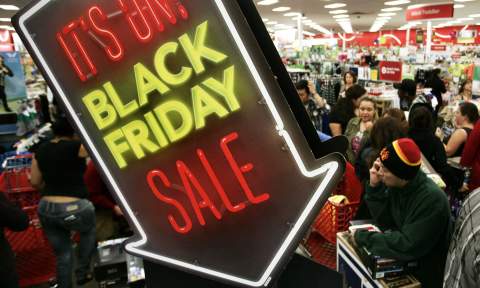
People tend to follow where the media points their noses. For example, “Black Friday.” People get all whipped up about “Black Friday” to the point where they are fighting each other in stores over a 40% discount on crap. (Even bringing stun guns to move other shoppers out of the way.)

PS you have 200 people in line, and you have 24 items on special sale, and you don’t think there’s going to be fighting and chaos? Really?

Here comes winter!

CLICK ON IMAGE TO ENLARGE

Tuesday, December 3, 2013

GOP: Healthcare.gov too fast now

The Borowitz Report

    December 1, 2013


    healthcare-gov-boro-580.jpg
    WASHINGTON (The Borowitz Report)—Republican critics of Obamacare rose up in anger today, claiming that, after two months of fixes, the healthcare.gov Web site is now “unacceptably fast.”

    Leading the howls of protest was the House Committee on Oversight and Government Reform chairman Darrell Issa (R-Calif.), who accused President Obama of designing a Web site that operates at a “blistering, breakneck speed.”

    “With pages loading in milliseconds, this Web site is insuring people before they know what hit them,” Rep. Issa charged. “Clearly, this is what the President and his team had in mind.”

    Additionally, Rep. Issa said, at such high speeds “it is questionable whether this Web site is even safe for consumers to use, particularly the elderly.”

    The California Republican said he would call for hearings this week to investigate the dangerous new velocity of healthcare.gov, telling reporters, “If anyone can slow this thing down, it’s me.”

    If minimum wage had kept pace it would be $20/hr.


    By Alan Pyke
    THINK PROGRESS/NEWS INVESTIGATION
    nationofchange.org

    If the minimum wage had grown at the same rate as the earnings of the top one percent of Americans the federal wage floor would be more than triple the current hourly minimum of $7.25. Instead, the minimum wage has been lower than a poverty wage ever since 1982.

    The New York Times compiled those and other basic facts about the minimum wage into an infographic. Together with demographic data about who actually holds minimum-wage jobs — less than a quarter of the minimum-wage workforce are teenagers, and nearly four in ten are over the age of 30 — the graphic makes the fundamental case for fighting inequality and economic hardship by raising the minimum wage. The horizontal red line in the Times graphic indicates the hourly wage necessary for a single parent working full-time with one child to avoid poverty.

    One puzzle piece missing in the graphic is race. Since racial minorities are over-represented among the minimum wage workforce, raising the minimum wage to just $10.10 would lift 3.5 million people of color out of poverty.

    The stagnation and collapse of minimum wage purchasing power has helped drive the divergence between the wealthiest and poorest segments of the U.S. workforce. As minimum-wage jobs have provided less and less stable economic footing for working people, the wealthiest sliver of the country has seen astronomical gains in their compensation. If instead the federal minimum wage had grown at the same rate as one-percenter earnings, it would sit at $22.62 per hour today — 212 percent higher than the current wage floor. A 212 percent raise may seem outlandish, but previous research indicates American workers have just about earned it. Worker productivity has more than doubled since 1968, and if the minimum wage had kept pace with productivity gains it would have been $21.72 last year. From 2000 to 2012 alone workers boosted their productivity by 25 percent yet saw their earnings fall rather than rise, leading some economists to label the early 21st century a lost decade for American workers.

    It’s no wonder, then, that low-wage workers have been agitating for pay increases this year. Strikes and protests at fast food and retail chains spread from New York City to another 60 cities all across this country this summer. Walmart workers have gone on strike in at least nine cities in the past several weeks. Service employees at federally-owned buildings in Washington, D.C., have walked off the job multiple times to call attention to the role of government contracts in subsidizing poverty wages for millions of working people.

    While some federal policy figures have tried to introduce a minimum wage hike — progressive Democrats have introduced bills to bring the wage floor in line with inflation, and President Obama recently came out in favor of a $10 minimum wage after calling for a less ambitious hike earlier this year — the action seems to have shifted to the local level. Voters have approved wage hikes in New Jersey and in the town that hosts the Seattle-Tacoma international airport. Lawmakers are pushing for higher wages in Massachusetts and Washington, D.C.. Activists are campaigning for hikes in states like Alaska, Idaho, Illinois, Maryland, Minnesota, and South Dakota.

    Bottled water leeches 24,000 chemicals into body


    By Elizabeth Renter
    Natural Society / News Report
    Published: Monday 2 December 2013

    Several companies have stopped using BPA in plastic production due to consumer outrage, but just because a plastic container says it is “BPA Free” doesn’t mean it’s free of potentially harmful chemicals. As a matter of fact, recent research out of Germany indicates there are more than 24,000 of such chemicals in any given bottle of water—with some of them causing serious hormone-disrupting effects.

    According to the story from Goethe University Frankfort, the researchers tested 18 different bottled water products in an effort to look for endocrine disrupting chemicals, or EDCs. They found far more than expected, identifying 24,520 different chemicals in their testing. After isolating the chemicals and determining their impact on the body, the researchers narrowed down those with anti-estrogenic properties to one: DEHF or di(2-ethylhexyl) fumarate. This finding was of major concern.

    Out of the 18 different bottled water products, 13 had “significant” anti-estrogenic activity, and 16 out of 18 inhibited the body’s androgen receptors by 90%. In other words, the bottled water was largely wrecking havoc on the human body.

    In addition to DEHF, however, the researchers determined there is some yet-unidentified EDCs at work. Something else is causing anti-androgenic effects.
    “We confirmed the identity and biological activity of DEHF and additional isomers of dioctyl fumarate and maleate using authentic standards,” the researchers reported in the online journal PLOS One. “Since DEHF is anti-estrogenic but not anti-androgenic we conclude that additional, yet unidentified EDCs must contribute to the antagonistic effect of bottled water.”
    Hormone disruption has the potential to cause serious effects on human life, from early maturation in children, to increased risks of certain types of cancers. You can see one of Mike Barrett’s earlier posts outlining some of the nasty effects of BPA. The findings of this recent study, therefore, are nothing to take lightly. We’ve discussed here before how the bottled water industry may encourage you to hydrate while offering a less-than-pure, expensive product.

    The researchers concluded:
    “Moreover, the antagonist activity was very potent. An equivalent of 3.75 ml bottled water inhibited estrogen and androgen receptor by up to 60 and 90 percent. Bottled water from six different countries has been found to contain estrogenic, antiestrogenic, as well as androgenic, progestagenic, and glucocorticoid-like chemicals. This demonstrates that a popular beverage is contaminated with diverse-acting EDCs.”

    Sunday, December 1, 2013

    'Mike (Voden) was in fear for his life.'


    EXCLUSIVE INTERVIEW WITH ACCUSED
    KILLER'S WIFE REVEALS ANOTHER
    SIDE TO WHAT YOU'VE BEEN TOLD


    (Gazette Blog Editor Jim Keyworth interviewed Mike Voden’s wife Pat Rollins on Saturday, Nov. 30.  Voden is accused of shooting and killing Randy Burnett during an altercation in his yard.  The questions and her complete answers are printed below with only minor editing.  If any statements prove to be incorrect, the Blog will gladly print a retraction.) 

    JK: So what happened?

    PR: It was just before 7 in the morning and you know my big green van – I park it right outside of where my back door is.  So if you’re in the house in the next yard, you can not see through the green van.  What took place was behind that green van.  I’m mentioning that because people are telling me the widow said she saw everything and all kinds of stuff that cannot possibly be true because there’s no way she could see it.

    He came through our private gate and brought at least one dog with him (although it’s not any dog’s fault).  He came up to the rear of the green van.  He couldn’t have seen Mike at that point.  And then he came around and saw Mike who was near the side door.

    He’s a huge guy by the way.  I want to emphasize that Mike is 5’ 6”.  He has a leg that doesn’t work right, screwed up by a local doctor, confirmed by a specialist in the Valley.  Worst knee job they ever saw.  So he can’t move very fast.  Mike has a heart condition too.  So here’s this huge guy – huge – he’s well over 6’, heavy girth, everything.  Came running at him with his fists raised and a look of fury on his face, making it clear he’s going to beat the shit out of Mike.  That’s what happened.

    JK: Was there anything between them before?

    PR: The only thing that I’m aware of is – they’d only spent one night there, so this was the morning after that first night.  But during that (first) day, the guy opened the gate and had his dogs roam around the garden and Mike had told him they dig up plants and we can’t have dogs in the yard.  That’s the only thing I know.

    But anyway, he came.  Mike waited until the last possible minute – you know, either get the shit beat out of him, and his only defense – he carries.  He has a permit to carry.  He waited until the guy was practically on top of him.  Now people say, "Why didn’t he go in the kitchen?"  He can’t run.  Number two, if he comes in the side door he puts both of us at risk – me too.  So he determined that wasn’t a good plan.  He just hoped the guy would stop and come to his senses and go back, but he didn’t.  So that’s why Mike shot him.

    JK: When did the 911 call take place?

    PR: It probably took place around 7.

    JK: Did he shoot him while he was talking to 911?

    PR: I don’t know. But Mike, not ever having shot anyone before, went into shock.  So they had to haul him by ambulance to the hospital where they had to work for hours to get his heart functioning again.  They finally did and the next morning at 10 they let him call me.  He said, “They’re moving me.  They managed to settle my heart down.”  He didn’t know where.  A friend tried to find out where.  There were all kinds of obstructions but he finally found him in the Globe jail.

    JK: So they didn’t keep you posted?

    PR: Nothing.  I assumed they would tell me and they didn’t.

    JK: So where were you when all of this was going on out in the yard?

    PR: In bed.

    JK: Were you aware that anything was happening?

    PR: Mike pounded on the window – my bedroom window.  I said, “What the heck is going on,” and I put my head up and looked through the slats and saw a dog.  But that’s all I could see.

    JK:  Did you hear the gunshots?

    PR: No.

    JK: How many times was the guy shot?

    PR: I think three.

    JK: Do you know where he was shot?

    PR: Probably in his gut or in that region, but don’t hold me to it.  I don’t want to do what the other person (the widow) has done.

    JK: What has the other person said?  I don’t read the Roundup either.

    PR: She’s made up all kinds of things.  That he wasn’t really coming to harm Mike.  That his hands were up in prayer.  That’s one of the things I’ve been told.  And she said she could see the whole thing.  No way.  It all occurred behind my huge green van.  So there’s no way she could’ve seen it.

    JK: So that will come out in court I would imagine?

    PR: That will come out in court, and we’re having a hearing on Thursday, Dec. 12 at 1 p.m. (in Payson). The attorneys say get as many friends and positive people there as possible.  Come early to the courthouse to get in.  It will help him to have people supporting him there.  We want as many people as we can to come out and support him.

    JK: Have you seen him at all?

    PR: Yes, I go once a week.  Somebody drives me to Globe.

    JK: What’s Mike tell you when you go see him?  What’s his state of mind?

    PR: Initially, he was just totally confused.  He can’t understand why it happened.  He was a member of the CERT team so he backed up the police all the time – Community Emergency whatever it is.  On Halloween he was helping out on Main Street.  I think he was directing traffic.  He’s been doing it for a long time.

    But Jim, there is something not right going on.  It makes no sense why they decided to just not look at the facts and throw the book at him.  There has to be something behind it.  I don’t know for positive what it is, but people are coming forward with other information for the first time.  I’m thinking, gee, this is bigger than I am.

    The other thing is – and Mike just wrote this (he’s writing me letters) – there was a gal here and she worked for Mike for awhile.  She was from Canada and she was a terrific worker.  But she was an illegal immigrant, and Mike let Don know he was kind of looking into it.  I mean, he’s scraping his brains to try to figure out why he’s in this situation.

    JK: Because it should have been clear that it’s self defense?

    PR: Absolutely.  The guy came through our private gate onto our property – all the way over to our house.  It’s just bizarre.

    JK: And he was physically threatening Mike when it happened?

    PR: The difference in the size of them too.  Mike wouldn’t have had a prayer if that guy started punching him.

    JK: Who is representing Mike?

    PR: I don’t have any money.  I’m living on retirement.  My father-in-law has gotten involved.  He’s 93 and he told me he wanted to hire another attorney.  I hired who I could get on a weekend.  Michael Kilsky.  And he’s done OK.

    JK: Is he a Payson lawyer?

    PR: Oh, you don’t get a Payson lawyer unless you want to get convicted.  No, he’s from Tempe.

    JK: So you’ve hired a second attorney?

    PR: Michael Bernays.  He’s also from Tempe.  My father-in-law hired him.  Mike’s dad has taken over and he wanted his own attorney.  Mike has had one meeting with him.  I was going to have to take out a second mortgage on the house, but Mike’s dad said, “Don’t you do that.  I’m handling all the expenses.”

    (Bernays) said he might be able to get 3-6 people to speak at the (Thursday, Dec. 12) hearing.  I have a list of 14 who’ve said they’re willing to testify to Mike’s character, and the first person to call and say he wants to be on the list is (former Star Valley mayor and Rim Country Gazette publisher) Bill Rappaport.  So he’s the most well known, but I have more than enough people.

    JK: I know Mike well enough to say that I was stunned. I know he wouldn’t do something without being really endangered.

    PR: You got that right.  All he does is volunteer work.  Both of us spend hours doing volunteer work.  It’s just incredible.

    JK: And what about the media coverage?

    PR: Here’s what I think about (Roundup Editor) Pete (Aleshire).  Pete’s an excellent writer, but he’s not a good reporter.  And that requires another, totally different skill set – and some integrity.

    JK: So they’re kind of convicting Mike?

    PR: Well I’m not reading it.  I absolutely refuse.  Somebody said, “You know the terrible things they put in the Roundup.”  I said, “I don’t want to know, because I need to remain positive and uplifted and that’s not going to do it.”  So I don’t read them, but people say, “You know, they lied about this.  They lied about that.”

    JK: What do you want people to know?

    PR: I want people to know that Mike was in fear for his own life and for my safety too.  This guy was huge and Mike’s a small man.  He’s small and now he’s frail.  He’s 5’6” and maybe 145 pounds.

    JK: So what can people do besides coming to the hearing?

    PR: That’s the first and most important thing they can do – come up to the courthouse and show their support because this has been a big miscarriage of justice.  He should have been out on bail way before now.

    JK: And what did they set the bail at?

    PR: One million dollars.

    JK: How old is Mike?

    PR: I’m 75 and Mike is 72.  We’ve been married for over 40 years.  Mike’s a veteran, an ex-Marine.

    JK: He’s not really a gun guy?  He keeps them for self defense?

    PR: He’s a Democrat who believes in the Second Amendment.

    JK: You’ve never seen Mike in a fight with anybody in 40 years of marriage?

    PR: Never, and Jim, when Robert Lantry got fired by PostNet, Mike brought his trailer to put Robert’s (printing) equipment in.  Mike was just standing there waiting when the owner of PostNet told his big son who’s like twice the size of Mike to go after Mike physically.  So he did and rushed toward him and tried to knock him over.  Mike didn’t lose his footing, but he borrowed a phone and called the police.  He didn’t pull his gun because he didn’t feel his life was threatened.

    JK: He had his gun and he didn’t pull it?

    PR: That’s right.

    Can't raise a family on Wal-Mart's poverty wages

    Article image


    By John Light
    Bill Moyers / Op-Ed
    Published: Saturday 30 November 2013

    It’s an odd thing we Americans do: The day we stay home and give thanks for what we have butts right up against a day when we go out and try and get a bunch of other stuff at low prices. And with six fewer shopping days this year and sales still down as a result of the recession, retailers are asking more from the low-wage workers who staff their stores. At the same time, with ongoing cuts to the safety net, these low-wage workers have even less to be thankful for this November.

    But some workers, from Target to Whole Foods, are making their voices heard.

    “Largest mobilization”

    Wal-Mart has been in the eye of the gathering storm. The store’s employees are protesting at 1,500 stores today in what organizers are calling “one of the largest mobilizations of working families in recent history.” They point out that, even as the company earns $17 billion annually, Wal-Mart still continues to pay its workers poverty-level wages.

    “We know that this company can do more with $17 billion in profits. We know the Walton family can do better with $44 billion in wealth,” Martha Sellers, a California Wal-Mart employee, said today.

    Wal-Mart was the subject of large protests during last year’s Black Friday as well. In the wake of the protests, the retailer punished some workers by firing them for violating their stores’ attendance policies. But the National Labor Relations Board ruled earlier this month that the reprisals were illegal, and ordered Wal-Mart to reinstate the workers and award them back pay. It also noted that Wal-Mart couldn’t threaten to punish its employees for protesting or striking.

    This year, the protests’ organizers want the retail giant to commit to paying its full-time workers $25,000 a year. More than half of the store’s full-time, hourly employees make less than that, the chain’s CEO, Bill Simon, told Goldman Sachs last month.

    The cost of low-wage work

    The store’s low-wages weigh heavily on the social safety net. A May congressional report found that “a single 300-employee Wal-Mart Supercenter in Wisconsin may cost taxpayers anywhere from $904,542 to nearly $1.75 million per year, or about $5,815 per employee. Wisconsin has 100 Wal-Mart stores, 75 that are Wal-Mart Supercenters.”

    But low-wage workers also have less help available to them this year than during recent Thanksgiving holidays. Food stamps have been cut, leaving recipients to exist on $1.40 per meal. The payroll tax increase at the beginning of this year also hit workers hard. And some employers’ attempts to “help” low-wage workers without actually raising their wages have resulted in embarrassment — McDonalds faced criticism earlier this year for an online guide to budgeting that encouraged its workers to get a second job, and Wal-Mart recently drew cries of outrage when a Canton, Ohio, store asked its low-wage workers to donate food to help its other low-wage workers.

    Black Friday on a Thursday

    The Wal-Mart protests come as many more stores have rolled Thanksgiving and Black Friday into one. The Associated Press reports:
    Macy’s, J.C. Penney and Staples will open on Thanksgiving for the first time. Toys R Us will open at 5 p.m., and Wal-Mart, already open 24 hours in many locations, will start holiday deals at 6 p.m., two hours earlier than last year. In recent years, some retail employees and their supporters have started online petitions to protest stores that open on Thanksgiving — but shoppers keep coming.
    But such potentially profit-maximizing moves like this may not even be worthwhile. Consumer confidence is shaky this year, and the push to get customers to come out for the lengthened shopping weekend may backfire.

    “In many cases, they’re doing so much business that provides very little margin that they’re really not generating enough business to really be worthwhile anymore,” Marshal Cohen, the chief retail analyst with NPD group, a consumer market research firm, told NPR’s Morning Edition. “They’ve only created an even greater level of promotion, rather than what used to be high-volume based on profit margin.” 

    Reuters notes that whether retailers’ Black Friday gambits succeed is largely dependent on the wealthiest Americans.
    Some say retailers’ fortunes depend a lot more on wealthier shoppers who have benefited from rising share and home prices this year.
    “There are two sides to the story. If you look at households with over $100,000 of income, those folks are going to spend twice as much as people of incomes under $100,000,” said FTI Consulting’s Steve Coulombe.
    It’s a fitting metaphor for an increasingly divided country. New York Times labor reporter Steven Greenhouse yesterday quoted Chardé Nabors, a mother of two who works as a $9-an-hour cashier at Sears in Chicago, and who can’t afford a Spider Man doll her 3 year-old son wants.

    “I’m here watching shoppers buy all these items, and I’m working to help these people, and I can’t even buy my children the same products,” Nabors said.

    The less Americans are paid, the less they can spend. And as the recovery drags on, Sellers, the California Wal-Mart employee, is quick to point out that low wages aren’t helping. “We can’t raise our families on these poverty wages,” she said. “And we can’t support local businesses and the economy without enough money in our pocket.”