Join us at our brand new blog - Blue Country Gazette - created for those who think "BLUE." Go to www.bluecountrygazette.blogspot.com

YOUR SOURCE FOR TRUTH

Tuesday, November 27, 2012

Was Romney done in by Mercury?

[Gazette Blog Editor's note: With apologies to my friend Randy and other calloused non-believers, the following seems to explain everything.]
 
By Ed Snow


Astrologers say it rarely happens.  But when the planet Mercury halts its forward progress on Election Day and starts moving backwards in the heavens it's Katy bar the door.

Planet is the word ancient Greeks used for the "wandering stars" they observed contrarily moving at different speeds - and at times in different directions - through a firmament bedazzled by less adventurous fixed stars. 

They didn't realize what they were observing was an astronomical illusion.

Because planets orbit the sun at vast and varying distances, from an earthly perspective they appear to move backwards in the heavens when orbiting earth  overtakes and passes slower moving outer planets.  Or when the faster moving inner planets (Venus and Mercury) overtake and pass the earth.

Less easy to explain is why retrograde motion changes the way we experience the planet's archetypal energies, astrologer Barbara Schermer says.

To the ancients, fast-moving Mercury was the revered "messenger of the Gods."

\Today, the planet is intellectually identified with such things as mental acuity, flexibility and duality.  And it is said to influence speech, writing, mathematical reckoning, information technologies and communications devices of all kinds.

When retrograde, Mercury is well suited for reflecting,planning or strategizing.  But under this influence human behavior becomes more quirky or mistake prone with problematic delays, uncertainty, false starts, miscommunication, miscalculations and the frustrating need to do things over.

According to Schermer Mercury's reputation as a trickster was largely earned during those times of the year when the planet was retrograde.

She says the Mercury retrograde phenomenon was apparent on Election Day 2000. In a tight race bedeviled by voting irregularities and delays, the U.S. Supreme Court stepped in to halt a recount of ballots in Florida that had been ordered earlier by jurists in the state.

The higher court's historic decision cleared the way for George W. Bush to win Florida's Electoral College delegtates and pushed the candidate over the top in the national race. But the spectacle witnessed live on TV by millions of Americans was hardly an inspiring portrait of democracy in action.

The indelible memory many have of this Election Day debacle is of election judges pouring over thousands of paper ballots abused by cranky voting machines.  The judges were tasked with the insane job of deciphering voter intent by counting hanging "chads" that were insufficiently punched out on some Florida ballots.

On Election Day 2012 there were no hanging chads to count on Florida ballots or need to ask the highest court in the land to step up and decide a winner. 

Florida election officials did need an extra day to tally statewide results, but by then the race already had been decided in other battleground states in favor of the incumbent.

Voters did suffer the indignity of having to wait in long lines to reach polling booths in some states.  But this development might as easily be attributed to deliberate efforts aimed at frustrating voter turnout and didn't seem to produce the desired result.

To everyone's surprise the networks were able to call the race much sooner than expected.  The losing campaign was so stunned by this unanticipated development it delayed conceding the election for more than 90 minutes after the outcome was obvious to evryone else.

Schermer says Mercury doesn't take sides in political elections.  But as a harbinger of things to come, technical glitches and communications snafus did appear to dog the Republicans throughout the campaign.

There was the surreptitous taping of a fund-raising pitch to well heeled supporters that was said to hurt the challenger's chances with ordinary voters.  But the cruelest blow to the campaign was delivered on Election Day when the GOP rolled out an IT system that campaign organizers believed would give the challenger an electronic equalizer to combat President Obama's vaunted ground game.

Called Orca, the system was named for the killer whale and was supposed to give the Romney campaign its own analytics on what was happening at polling places.  Also, it was expected to aid get-out-the-vote efforts in key battleground states.

The goal was to put a mobile application in the hands of 37,000 volunteers in swing states to help them track activity at the polls.  The information provided was to be monitored and analyzed by more than 800 volunteers at campaign headquarters in Boston.

"Obviously the campaign neglected to seek the advice of a competent astrologer. The system wasn't beta tested until election day when Mercury was stalled and poised to go retrograde - the worst possible timing for this sort of thing," Schermer said.

On the morning of the election thousands of enthusiastic volunteers were left without communications or instructions for what to do.  A series of deployment blunders and network and systems failures caused Orca to perform more like a floundering minnow.

"That's pure Mercury retrograde in action," Schermer says. 


Monday, November 26, 2012

Getting germs going to Grandma's


By Harriet Baskas, special for USA TODAY
Courtesy UA News
 
3:38PM EST November 14. 2012 - If you'll be among the many millions of people expected to be in an airport and on a plane this holiday period, Charles Gerba, the University of Arizona microbiology professor known as "Dr. Germ," has some important travel advice for you: Pack light and carry hand sanitizer.

Gerba, whose travel souvenirs often include test swabs from airplane lavatories, has identified the three germiest spots on airplanes -- toilets, tray tables and the latches on overhead bins.

He's found the norovirus, the influenza virus, diarrhea and MRSA on airplane tray tables, which he says are rarely disinfected. The latches on overhead bins also get "lots of touching, but no cleaning." 

Gerba says an average of 50 people (up to 75 on budget airlines) use the lavatory each flight and warns that even if everyone bothered to wash their hands before exiting, this is the ickiest spot on a plane. "The tap water shuts off on you when you try to wash your hands and the sink is too small for people with large hands," he said. 

Gerba has found that the lavatory exit door on airplanes usually has E. coli on it after a long flight.

He advises travelers to use hand sanitizer to clean their hands after leaving the lavatory or, better yet, "hold it if you can."

But don't assume you'll find complete relief once you make it to the terminal.
"If airplanes are number one, (lavatories at) airports are number two," said Gerba. He used to rank gas station restrooms high on this list, but has noticed that many service stations no longer even have restrooms available for customers.

Airport restrooms by busy gates can get messy quickly during high-traffic times, but many airports put a high priority on trying to keep those areas clean.

Charlotte Douglas International Airport has attendants in most restrooms that have received high marks (and a few YouTube video posts) for their attentiveness and good humor. Hartsfield-Jackson Atlanta International Airport has restroom attendants stationed inside all women's restrooms in the public areas and an attendant who floats between two assigned men's restrooms. The assignment: "Clean, restock supplies and make sure everything is serviceable," said ATL spokesperson DeAllous Smith.

At Phoenix Sky Harbor International Airport, QR codes are posted in the restrooms encouraging customers to notify airport officials if something needs attention. And on its website, the airport outlines the custodial staff's restroom routine:

"Depending on the traffic in the various restrooms, they are given one to two thorough cleanings during the first and second shift. This includes wiping off the fixtures, mopping the floors and cleaning the mirrors, Walters said. Then, every 30 to 45 minutes, staff re-enters the restrooms to check the floors, dispensers, and trash. During the night, a deep cleaning is performed which includes scrubbing the fixtures, walls, and floors…."

The PHX custodial staff doesn't just clean restrooms, it keeps a list of fun facts about restrooms supplies, reporting that more than 32,000 miles of toilet tissue and close to 15,000 miles of paper towels are used in the restrooms annually, along with more than 6,000 gallons of hand soap.

Gerba has praise for the handy gadget that automatically changes the toilet seat covers in bathrooms at Chicago O'Hare, but adds that "the fear of butt-borne diseases is overrated."

Even the cleanest airport bathroom can be no defense against catching the flu while traveling this time of year.

"Anytime there are a lot of people in a small area, such as on a bus, in a train station, in the airport or on an airplane, there's a lot of coughing, sneezing and touching things and an increased chance for spreading germs around," says John Zautcke, medical director of the University of Illinois-Chicago Medical Clinic at O'Hare Airport.

Zautcke recommends that travelers wash their hands often, try to steer clear of the most crowded areas of airports, and get a flu shot before hitting the road.

Busy travelers who don't have time to get a flu shot at home can take care of that task before or between flights at some airports.

Through the end of the year, flu shots ($30; pertussis/whooping cough and pneumonia shots also available) are being offered at the O'Hare Medical Clinic center and at several kiosks in the terminals.

Flu shots ($35; cash only) are also available at the AeroClinic in Hartsfield-Jackson Atlanta International Airport's Main Terminal (Atrium Level 3) and for $25 at both the Carehere! Walk-in Clinic and Wellness Store (Concourse C) at Nashville International Airport and the Airport Health Station (Ticket Lobby "B") at Memphis International Airport.

The SFO Medical Clinic in the Departures/Ticketing Level of the International Terminal Main Hall (A side) has flu shots available for $30. In Los Angeles, Reliant Immediate Care, near the entrance to Los Angeles International Airport is offering flu shots for $25, and in New York, flu shots are available at the Airport Medical Offices at John F. Kennedy and Newark Liberty International Airport (outside the terminals, but on airport property) as well.

"People are saying it's a mild flu season," said O'Hare's John Zautcke, "But the flu season hasn't really hit, so get the vaccine while the supply is plentiful."

Charles Gerba (Dr. Germ) agrees. "If you're at an airport and you have the opportunity, get in line."

Edward Jones sponsors Senior Christmas Angels

Local residents and businesses may help those less fortunate seniors in our community by stopping by any Edward Jones branch office during regular business hours to select a "Senior Angel" from Nov. 23 through Dec. 14.

You can shop for your angel and drop off all gifts which we will deliver to Payson/Pine area seniors in need.

Branch locations are: 411 South Beeline Hwy, Ste B and l13 W. Main St in Payson and 4010 N Hwy 87 in Pine.

The GOP's Fox problem

File photo, Fox News logo. (photo: Fox News)

By Eric Boehlert, Media Matters for America
25 November 12

oor Mitt Romney has become a Republican punching bag as leaders within the party denounce his post-election comments about how President Obama won re-election by promising government-funded "gifts" to minority groups and young voters. As Republicans jab Romney though, they're missing the larger, more pressing point: They don't have a Mitt Romney problem. They have a Fox News problem.

Romney's "gifts" put-down echoed the infamous claim Romney made during the campaign that 47 percent of Americans see themselves as "victims" and are overly dependent on the government. With the campaign concluded, lots of fellow Republicans now feel  free to bash Romney:
  • "It's nuts," said former House Speaker Newt Gingrich.
  • "I absolutely reject what he said," announced Louisiana Gov. Bobby Jindal.

  • "When you're in a hole, stop digging. He keeps digging," complained Sen. Lindsey Graham (R-SC).
Though prominent conservatives are now lashing out at the former presidential candidate, the truth is Fox News has loudly championed the divisive philosophy behind Romney's "47 percent" and "gifts" comments for months and practically authored them for the Republican candidate. Last week Fox talkers cheered Romney's "gifts" post-election critique, treating it as a universal truth. (According to Fox Business host Stuart Varney, Obama was "buying votes with taxpayer money. Handouts all over the place.")

And it's not just a Fox News problem. Republicans have an even more expansive right-wing media problem (television, radio, Internet, etc.), which now doubles as the face and voice of the GOP and which celebrates the kind of toxic "47 percent" and "gifts" rhetoric that's being condemned within the party. The far-right press is convinced Obama won re-election by "offering" voters a "check" in exchange for their support.

As Media Matters noted:
Fox host Bill O'Reilly said that voters feel economic anxiety and just "want stuff," while Fox host Eric Bolling said Obama is a "maker versus taker guy." Fox contributor Monica Crowley said that the election showed that "more people now are dependent on government than not." Rush Limbaugh compared the president to Santa Claus, saying that "small things beat big things" in the election and "people are not going to vote against Santa Claus."
In fact, O'Reilly and Limbaugh rushed to take credit for Romney's "gifts" comments last week, since both of them had been pushing the "maker vs. taker" narrative in the wake of Romney's election loss.

The split over Romney's "gifts" remark highlights the larger divide within the conservative movement between two distinct camps: activists and politicians who want to get more Republicans elected vs. right-wing media players who want to grow their audience.

Note that after the Republican flop on Election Day, talk radio's Laura Ingraham dismissed conservative hand-wringers who worried about the political future by stressing that "talk radio continues to thrive while moderate Republicans like John McCain and to some extent Mitt Romney continue to lose presidential elections." 

That's how hosts like Ingraham view the political landscape. That's how they determine success and failure, not by tallying the wins and losses posted by Republicans candidates, but by counting up the number of radio stations that carry their syndicated show.

The same is true with Daily Caller editor Tucker Carlson. Asked why the conservative media completely failed in their attempt to "vet" Obama, who easily won re-election despite four years of hysterical, far-right claims about him, Carlson told BuzzFeed his publication's work had been a success because traffic to the site was up. (Carlson also blamed the "legacy media" for being hostile to his site's supposed "journalism.")

I'm sure that's comforting news to RNC leadership. And I'm sure the Daily Caller chasing inane, anti-Obama conspiracy theories for the next four years will put the Republican Party on firm footing for 2016.

For now, it's easy to blame Romney. That's what losing parties often do after an election, they pile-on the vanquished candidate. The part that would take some guts and fortitude would be calling out the right-wing media that are generating the type of hate rhetoric that Romney embraced and routinely used during the campaign.

Republicans won't because they're intimidated by the right-wing media's power. That's why New Jersey Governor Chris Christie quickly got on the phone with Fox News owner Rupert Murdoch after Murdoch tweeted that Christie, in the wake of Hurricane Sandy and his bipartisan appearances with Obama, needed to re-endorse Romney or "take the blame" for the president's re-election.

Murdoch: Jump! Republicans: How high?

That unhealthy relationship is the reason why, when it comes to the simple question of whether America is divided between "makers and takers," and if the 62 million Americans who voted for Obama represent a decaying nation of moochers in search of handouts, there's a wide gulf within the conservative movement. The right-wing media consider the claim to be a central tenet, while Republican leaders think saying it out loud is completely batty and a prescription for an electoral losing streak.

So yes, those are conspicuous handcuffs the GOP is wearing: Fox News has hijacked the party's communications apparatus and is pushing the type of paranoid, blame-the-voter rhetoric that loses elections, and the type of rhetoric Romney's now being blamed for. But the GOP can't turn it off. In fact, most Republicans can't even work up enough courage to ask Fox News to turn down the volume.

Unwilling to acknowledge the GOP's future poses a long-term media problem (the topic is not to be discussed), Republicans pretend they have a short-term Romney one.

   READER COMMENTS   
+132 # tswhiskers 2012-11-25 09:05
I'm always amazed at the media take on things. "Fox News has hijacked the party's communications apparatus...." They have just noticed this? How is it that the people in the know took so long to figure this out? As far as I'm concerned, the Fox News problem is a gift to Democrats and those who have begun to wake up from the Far Right fog they've been caught in for so many years. As for the GOP's future, there's one thing I was forced to learn at a very young age; nearly everyone hates to face up to the truth, not my family, not any one. Most people love to live in denial; to admit a mistake is to lose face. And what is face but pride? I learned it's harder at first to admit a mistake and feel a bit foolish than to go into neverending denial and never solve the problem. Suits me. Go ahead GOP, run away from your problems. The country now sees your foolishness and is ready for a Congress that gets things done. Stick with Fox News, Grover Norquist and the sure knowledge that you have what the country wants. Leave the Dems free to govern with sense and compassion; those are traits Reps. haven't possessed since before Reagan.
+80 # WestWinds 2012-11-25 11:43
While I love your take on things and wish it were so, the Democrats are no white knights in shining armor. To the contrary, the vast majority of those Democrats in the Congress are on the corporate take through the lobbyists and will pervert and corrupt any bill to the best interests of the ultra rich as long as we go back to our SportsTV and beer.

Yes, we made a big effort to get them in, then we think the job is done and go home. WRONG! The minute we are gone from the halls of Congress, the THOUSANDS of paid former politicians (Chris Dodd and Dick Gebhardt, etc.,) move in to take the teeth from any bill that will do us any good. The Congress is only the tip of the ice berg. The real problem is the money in Mordor (DC). Until we get the money out (Citizens United) and put up a firewall (Glass-Steagall ; which BILL CLINTON dismantled,) We the People are vulnerable to the same-old-same-o ld. Getting a change from the Old Guard is only step one. Now, on to step two; get the money out!... and don't forget to Occupy along the way!!!

Saturday, November 24, 2012

'Scads' were in bed with Petraeus

Former CIA Director David Petraeus. (photo: unknown)

Fun while it lasted, but saga 
ends in 50 shades of khaki

[Dear Gazette Blog readers: As the Editor and the Consort wend their way home from Grandma's house on Sunday, here is a nice, long piece to help you pass the time.  It is well worth every minute you spend reading it.]

By Tom Engelhardt, TomDispatch
22 November 12

istory, it is said, arrives first as tragedy, then as farce. First as Karl Marx, then as the Marx Brothers. In the case of twenty-first century America, history arrived first as George W. Bush (and Dick Cheney and Donald Rumsfeld and Paul Wolfowitz and Douglas Feith and the Project for a New America -- a shadow government masquerading as a think tank -- and an assorted crew of ambitious neocons and neo-pundits); only later did David Petraeus make it onto the scene.
It couldn't be clearer now that, from the shirtless FBI agent to the "embedded" biographer and the "other other woman," the "fall" of David Petraeus is playing out as farce of the first order. What's less obvious is that Petraeus, America's military golden boy and Caesar of celebrity, was always smoke and mirrors, always the farce, even if the denizens of Washington didn't know it.

Until recently, here was the open secret of Petraeus's life: he may not have understood Iraqis or Afghans, but no military man in generations more intuitively grasped how to flatter and charm American reporters, pundits, and politicians into praising him. This was, after all, the general who got his first Newsweek cover ("Can This Man Save Iraq?") in 2004 while he was making a mess of a training program for Iraqi security forces, and two more before that magazine, too, took the fall. In 2007, he was a runner-up to Vladimir Putin for TIME's "Person of the Year." And long before Paula Broadwell's aptly named biography, All In, was published to hosannas from the usual elite crew, that was par for the course.

You didn't need special insider's access to know that Broadwell wasn't the only one with whom the general did calisthenics. The FBI didn't need to investigate. Even before she came on the scene, scads of columnists, pundits, reporters, and politicians were in bed with him. And weirdly enough, many of them still are. (Typical was NBC Nightly News anchor Brian Williams mournfully discussing the "painful" resignation of "Dave" -- "the most prominent and best known general of the modern era.") Adoring media people treated him like the next military Messiah, a combination of Alexander the Great, Napoleon, and Ulysses S. Grant rolled into one fabulous piñata. It's a safe bet that no general of our era, perhaps of any American era, has had so many glowing adjectives attached to his name.

Perhaps Petraeus's single most insightful moment, capturing both the tragedy and the farce to come, occurred during the 2003 invasion of Iraq. He was commanding the 101st Airborne on its drive to Baghdad, and even then was inviting reporters to spend time with him. At some point, he said to journalist Rick Atkinson, "Tell me how this ends." Now, of course, we know: in farce and not well.

For weeks, the news has been filled with his ever-expanding story, including private rivalries, pirate-themed parties, conspiracy theories run wild, and investigations inside investigations inside investigations. It's lacked nothing an all-American twenty-first-century media needs to glue eyeballs. Jill Kelley, the Tampa socialite whose online life started the ball rolling and ended up embroiling two American four-star generals in Internet hell, evidently wrote enough emails a day to stagger the imagination. But she was a piker compared to the millions of words that followed from reporters, pundits, observers, retired military figures, everyone and anyone who had ever had an encounter with or a thought about Petraeus, his biographer-cum-lover Paula Broadwell, Afghan War Commander General John Allen, and the rest of an ever-expanding cast of characters. Think of it as the Fall of the House of Gusher.

Here was the odd thing: none of David Petraeus's "achievements" outlasted his presence on the scene. Still, give him credit. He was a prodigious campaigner and a thoroughly modern general. From Baghdad to Kabul, no one was better at rolling out a media blitzkrieg back in the U.S. in which he himself would guide Americans through the fine points of his own war-making.

Where, once upon a time, victorious commanders had to take an enemy capital or accept the surrender of an opposing army, David Petraeus conquered Washington, something even Robert E. Lee couldn't do. Until he made the mistake of recruiting his own "biographer" (and lover), he proved a PR prodigy. He was, in a sense, the real life military version of F. Scott Fitzgerald's Jay ("the Great") Gatsby, a man who made himself into the image of what he wanted to be and then convinced others that it was so.

In the field, his successes were transitory, his failures all too real, and because he proved infinitely adaptable, none of it really mattered or stanched the flood of adjectives from admirers of every political stripe. In Washington, at least, he seemed invincible, even immortal, until it all ended in a military version of Dallas or perhaps previews for Revenge, season three.

His "fall from grace," as ABC's nightly news labeled it, was a fall from Washington's grace, and his tale, like that of the president who first fell in love with him, might be summarized as all-American to fall-American.

Turning the Lone Superpower Into the Lonely Superpower
David Petraeus was a Johnny-come-lately in respect to Petraeus-ism. He would pick up the basics of the imperial style of that moment from his models in and around the Bush administration and apply them to his own world. It was George W. and his guys (and gal) who first dreamed the dreams, spent a remarkable amount of time "conquering Washington," and sold their particular set of fantasies to themselves and then to the American people.

They were the original smoke-and-mirrors crew. From the moment, just five hours after the 9/11 attacks, that Secretary of Defense Donald Rumsfeld -- in the presence of a note-taking aide -- urged planning to begin against Saddam Hussein's Iraq ("Go massive. Sweep it all up. Things related and not..."), the selling of an invasion and various other over-the-top fantasies was underway.

First, in the heat of 9/12, the president and top administration officials sold their "war" on terror. Then, after "liberating" Afghanistan and deciding to stay for the long run, they launched a massive publicity campaign to flog the idea that Saddam Hussein had weapons of mass destruction and was linked to al-Qaeda. In doing so, they would push the image of mushroom clouds rising over American cities from the Iraqi dictator's nonexistent nuclear program, and chemical or biological weapons being sprayed over the U.S. East Coast by phantasmal Iraqi drones.

Cheney and Rice, among others, would make the rounds of the talk shows, putting the heat on Congress. Administration figures leaked useful (mis)information, pressed the CIA to cherry-pick the intelligence they wanted, and even formed their own secret intel outfit to give them what they needed. They considered just when they should roll out their plans for their much-desired invasion and decided on September 2002. As White House Chief of Staff Andrew Card infamously explained, "From a marketing point of view, you don't introduce new products in August."

They were, by then, at war -- in Washington. Initially, they hardly worried about the actual war to come. They were so confident of what the U.S. military could do that, like the premature Petraeuses they were, they concentrated their efforts on the homeland. Romantics about U.S. military power, convinced that it would trump any other kind of power on the planet, they assumed that Iraq would be, in the words of one of their supporters, a "cakewalk." They convinced themselves and then others that the Iraqis would greet the advancing invaders as liberators, that the cost of the war (especially given Iraq's oil wealth) would be next to nothing, and that there was no need to create a serious plan for a post-invasion occupation.

In all of this, they proved both masters of public relations and staggeringly wrong. As such, they would be the progenitors of an imperial tragedy -- a deflating set of disasters that would take the pop out of American power and turn the planet's "lone superpower" into a lonely superpower presiding over an unraveling global system, especially in the Greater Middle East. Blinded by their fantasies, they would ensure a more precipitous than necessary American decline in the first decade of the new century.

Not that they cared, but they would also generate a set of wrenching human tragedies: first for the Iraqis, hundreds of thousands of whom became casualties of war, insurgency, and sectarian strife, while millions more fled into exile; then there were the Afghans, who died attending weddings, funerals, even baby-naming ceremonies; and, of course, tens of thousands of U.S. soldiers and contractors, who died or were injured, often grievously, in those dismal wars; and don't forget the inhabitants of post-Katrina New Orleans left to rot in their flooded city; or the millions of Americans who lost jobs, houses, even lives in the economic meltdown of 2008, a disaster that emerged from a set of globe-spanning financial fantasies and snow jobs that Bush and his crew encouraged and facilitated.

They were the ones, in other words, who took a mighty imperial power already in slow decline, grabbed the wheel of the car of state, put the pedal to the metal, and like a group of drunken revelers promptly headed for the nearest cliff. In the process -- they were nothing if not great salesmen -- they sold Americans a bill of goods, even as they fostered their own dreams of establishing a Pax Americana in the Greater Middle East and a Pax Republicana at home. All now, of course, down in flames.

In his 1987 Princeton dissertation, David Petraeus wrote this on perception: "What policymakers believe to have taken place in any particular case is what matters -- more than what actually occurred." On this and other subjects, he was certainly no dope, but he was a huckster -- for himself (given his particular version of self-love), and for a dream already going down in Iraq and Afghanistan. And he was just one of many promoters out there in those years pushing product (including himself): the top officials of the Bush administration, gaggles of neocons, gangs of military intellectuals, hordes of think tanks linked to serried ranks of pundits. All of them imagining Washington as a battlefield for the ages, all assuming that the struggle for "perception" was on the home front alone.

Producing a Bedside Manual
You could say that Petraeus fully arrived on the scene, in Washington at least, in that classic rollout month of September (2004). It was then that the three-star general, in charge of training Iraq's security forces, gave a president in a tight race for reelection a little extra firepower in the domestic perception wars. Stepping blithely across a classic no-no line for the military, he wrote a well-placed op-ed in the Washington Post as General Johnnie-on-the-spot, plugging "tangible progress" in Iraq and touting "reasons for optimism."

Given George W. Bush's increasingly dismal and unpopular mission-unaccomplished war and occupation, it was like the cavalry riding to the rescue. It shouldn't have been surprising, then, that the general, backed and promoted in the years to come by various neocon warriors, would be the military man the president would fall for. Over the first half of the "surge" year of 2007, Bush would publicly cite the general more than 150 times, 53 in May alone. (And Petraeus, a man particularly prone toward those who idolized him -- see: Broadwell, Paula -- returned the favor.)

But there was another step up the ladder of perception that would make him the perfect neocon warrior. While commanding general at Fort Leavenworth, Kansas, in 2005-2006, he also became the "face" of a new doctrine. Well, actually, a very old and particularly dead doctrine that went by the name of counterinsurgency or, acronymically, COIN. It had been part and parcel of the world of colonial and neocolonial wars and, in the 1960s, became the basis for the U.S. ground war and "pacification" program in South Vietnam -- and we all know how that turned out.

Amid the greatest defeat the U.S. had suffered since the burning of Washington in 1814, counterinsurgency as a doctrine was left for dead in the rubble of Vietnam. With a sigh of relief, the military high command turned back to the task of stopping Soviet armies-that-never-would from pouring through Germany's Fulda Gap. Even in the military academies they ceased to teach counterinsurgency -- until Petraeus and his team disinterred it, dusted it off, polished it up, and turned it into the military's latest war-fighting bible. Via a new Army and Marine field manual Petraeus helped to oversee, it would be presented as the missing formula for success in the Bush administration's two flailing, failing invasions-cum-occupations on the Eurasian mainland.

It would gain such acclaim, in fact, that the University of Chicago Press would publish it as a trade paperback on July 4, 2007. Already back in Baghdad filling the role of Washington's savior, the general, who had already written a foreword for that "paradigm shattering" manual, would flog it with this classic blurb: "Surely a manual that's on the bedside table of the president, vice president, secretary of defense, 21 of 25 members of the Senate Armed Services Committee, and many others deserves a place at your bedside too."

And really, you know the rest. He would be sold (and, from Baghdad, sell himself) to the public the same way Saddam's al-Qaeda links and weapons of mass destruction had been. He, too, would be rolled out as a product -- our "surge commander" -- and soon enough become the general of the hour, and Iraq a success story for the ages. Then, appointed CENTCOM commander, the military man in charge of Washington's two wars, by Bush, he made it out of town before it became fully apparent that his successes in Iraq would leave the U.S. out on its ear a few years down the line.

The Fall of the American Empire (Writ Small)
Afghanistan followed as he maneuvered to box a new president, Barack Obama, into a new "surge" in another country. Then, his handpicked war commander General Stanley McChrystal, newly minted COIN believer, "ascetic," and "rising superstar" (who would undergo his own Petraeus-like media build-up), went down in shame over nasty comments made by associates about the Obama White House. In mid-2010, Petraeus would take McChrystal's place to save another president by bringing COIN to bear in just the right way. The usual set of hosannas -- and even less success than in Iraq -- followed.

But as with Saddam Hussein's mythical WMDs, it seemed scarcely to matter when there was no there there. Even though Afghanistan's two COIN commanders had visibly failed in a war against an under-armed, undermanned, none-too-popular minority insurgency, and even though the doctrine of counterinsurgency would soon be tossed off a moving drone and left to die in the Afghan rubble, Petraeus once again made it out in one piece. In Washington, he was still hailed as the soldier of his generation and President Obama, undoubtedly fearing him in 2012, either as a candidate or a supporter of another Republican candidate, promptly stashed him away at the CIA, sending him safely into the political shadows.

With that, Petraeus left his four stars behind, shed COIN-mode just as his doctrine was collapsing completely, and slipped into the directorship of a militarizing CIA and its drone wars. He remained widely known, in the words of Michael O'Hanlon of the Brookings Institution (praising Broadwell's biography), as "the finest general of this era and one of the greatest in modern American history." Unlike George W. Bush and crew who, despite pulling in staggering speaker's fees and writing memoirs for millions, now found themselves in a far different set of shadows, he looked like the ultimate survivor -- until, of course, books and "bedsides" resurfaced in unexpected ways.

In the Iraq surge moment, the liberal advocacy group MoveOn.org unsuccessfully tried to label him "General Betray Us." Now, as his affair with Broadwell unraveled into the reality TV show of our moment, he became General Betray Himself, a figure of derision, an old man with a young babe, the "cloak-and-shag-her" guy (as one New York Post screaming headline put it).

So here you have it, the two paradigmatic figures of the closing of the "American Century": the president's son whose ambitions were stoked by Texas politics after years in the personal wilderness and the man who married the superintendent's daughter and rose like a meteor in a military that could never win a war. In the end, as the faces of American-disaster-masquerading-as-success, neither made it out of town before shame caught up with them. It's a measure of their importance, however, that Bush was finally put to flight by a global economic meltdown, Petraeus by the local sexual version of the same. Again, it's history vs. farce.

Or think of the Petraeus version of collapse as a tryout for the fall of the American empire, writ very small, with Jill Kelley and Paula Broadwell as our Gibbons and the volume of email, including military sexting, taking the place of his six volumes. A poster general for American decline, David Petraeus will be a footnote to history, a man out for himself who simply went a bridge or a book too far. George W. and crew were the real thing: genuine mad visionaries who simply mistook their dreams and fantasies for reality.

But wasn't it fun while it lasted? Wasn't it a blast to occupy Washington, be treated as a demi-god, go to Pirate-themed parties in Tampa with a 28-motorcycle police escort, and direct your own biography... even if it did end as Fifty Shades of Khaki?

UA med center in Phoenix goes holistic

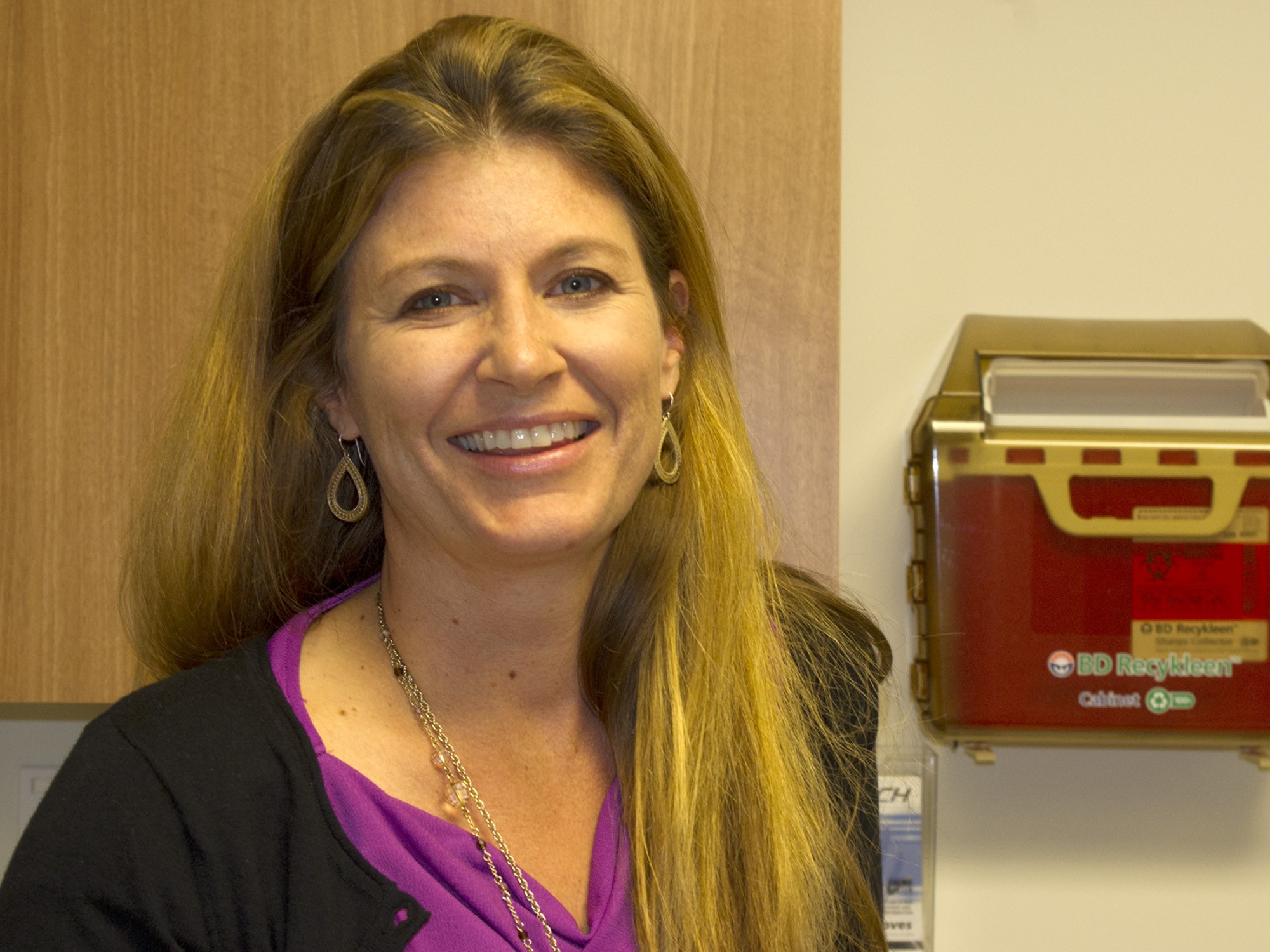
    Heidi Rula, medical director and integrative medicine physician at the University of Arizona’s new Integrative Health Center in Phoenix, says the center’s approach focuses on preventing health problems. (Cronkite News Service Photo by Lorri Allen)

    By LORRI ALLEN
    Cronkite News Service
     
    PHOENIX – Feeling a need to be more responsible for her health after her parents fell ill, Colleen McPherson said she was eager to try a new clinic blending conventional care with lifestyle coaching and stress-reducing techniques.

    “I don’t want to be afraid of getting old, and I think I was developing some anxiety about that,” she said. “Every birthday was not fun. I want this program to make me feel like I’m on top of it and doing the best I can.”

    The University of Arizona Integrative Health Center, which opened recently near downtown Phoenix, offers primary care but also acupuncture, chiropractic treatments, yoga classes, nutritional advice and physical training.

    It’s based on the vision of Dr. Andrew Weil, founder of the UA’s Arizona Center for Integrative Medicine.

    Another one is planned for Tucson in a year, followed by more across the nation, according to Heidi Rula, medical director and integrative medicine physician.

    “We’re trying to create a new way to deliver health care that is very prevention-focused versus the standard medical system, which is disease management,” she said. “Lifestyle issues are the most powerful things that can change the course of chronic disease, so we’re trying to maximize making those because they’re one of the hardest things to do. You need support to be able to do that.”

    The center accepts insurance, and patients fill out a 17-page intake form before they arrive. Then they have a 60-90 minute appointment with a doctor, Rula said.

    A typical patient is a female who’s interested in her health, has complex medical issues and hasn’t had successful treatment or who’s interested in getting off prescription drugs and turning to alternative therapies, according to Rula.
    “We look at a lot of lifestyle components like how happy are they in their daily life? 

    How are they sleeping? What’s their spirituality?” she said. “We’re addressing what their pain scores are, so we want to understand if they have any history of abuse and all those things that are important in understanding a whole person.”

    Dr. Michelle May, the Phoenix-based author of “Eat What You Love, Love What You Eat,” said the increasing interest in integrative health will sustain a patient base for the new clinic.

    “I like that it integrates both conventional and more of the complementary therapies. I think that’s the winning combination,” May said. “People are looking for more of that complete care for themselves and their families. They don’t want to be just a body or a number on a scale or a lab test or a diagnosis.”

    But May said that someone doesn’t have to go to an integrative center to get good health care.

    “Family physicians always had this perspective, and with the right doctor, you will get that anyway,” she said. “I think we ought not to look at any one thing as being the panacea. I think the value to something like this is to allow us to look at options for treatment.”

    At the Arizona Department of Health Services, Sheila Sjolander, assistant director of public health prevention services, said the center represents a positive trend toward what residents can be doing for their health.

    “The time for prevention is now,” she said. “There’s a growing awareness in Arizona.”
    Nationally, a critical prevention strategy began last year moving sick care to wellness, according to Sjolander.

    “Our department has a vision for health and wellness, recognizing that wellness means emotional health, occupational health, financial and social health,” she added. “We know how important it is to pay attention to physical activity, what we’re eating, managing our stress and making healthy choices.”

    Patient Colleen McPherson said she’s taking her daughter to the integrative clinic to get healthy nutritional habits started early.

    “They’re ahead of their time. This is really what health care reform is trying to do for the whole country,” she said.

    An integrative approach may be the answer to saving money and getting people healthier, according to Rula.

    “If you look at the amount of dollars we spend compared to other countries and then you look at markers of disease, we spend more than any other country in the world, but we don’t have that in terms of the wellness,” she said.

    To discover the effectiveness of integrative medicine, the center will be studying volunteers over several years, Rula said.

    “Corporations are taking the hit for the wellness of their employees,” she added. 

    “From productivity to absenteeism, there’s a strong interest in having a well employee.”

    McPherson said until recently she thought she was bulletproof.

    “What I’m hoping to get out of this is peace of mind,” she said. “I’m grateful for health. It’s a blessing.”

    About integrative care:
    • Takes into account body, mind and spirit
    • Uses conventional and alternative healing methods to encourage the body’s own healing response
    • Leans toward natural and less invasive techniques
    • Emphasizes prevention of illness
    Source: www.DrWeil.com

    Stowaway cat wants to go home


    By Debra Speakes
    Star Valley resident

    I had my new internet service installed Monday November 19. The Dishnet installer called to tell me he was running late because apparently at one of the last stops he'd made before the weekend, a cat had gotten into his service truck, had been trapped there all weekend, and WOULD NOT COME OUT. I told him to come on out to my place; I had managed ferals and had a trap and we could try to lure it out with some nice tuna cat food into the trap and then I would take care of it.  At this point we were assuming it was an untamed feral cat.

    The last place he had been was near the Pyle Ranch on the Control Road, but it is possible the cat may have stowed away at an earlier stop and he just didn’t realize it.  So she could have come from anywhere in the Payson area.

    He came out to my house and took out the stuff he needed to do my install. The cat was at the very front left corner of the truck, on top of a pile of boxes, pretty much squeezed into a four inch space between the boxes and the roof. We cleared out room for the trap and I baited it and put it in the truck and we closed the doors and left it alone. 

    I checked it awhile later and the trap was sprung but the cat wasn't in it. I moved out some more stuff to give it easier access and left it alone some more.

    Still no dice.

    I cleared off the side shelf in front of where the cat was, made a little tunnel from where the cat was to where the trap was, and started prodding the cat with a piece of pvc pipe.  I could see her left ear was tipped so I assumed she was feral and was careful not to get within biting or scratching range while I poked and prodded and pushed and coaxed to try to get her out. I got into the truck on my knees (ouch! textured steel floor!) so I could reach better and finally managed to shift her forward about a foot, whereupon I blocked her so she couldn't retreat and kept trying to get her to go forward into the cage.

    The installer came by about then and realized she was now close enough for him to reach in and touch her. She started pushing into his hand, making it clear that despite the tipped ear, she was NOT feral, she was someone's pet. He got hold of the scruff of her neck and pulled her out and held her in his arms while I pulled out the trap and he put her inside it.

    She's now in my garage in a big roomy cage with a litter box, blanket, food, and water and I pet her every day while I try to find her owners, who probably assumed the coyotes had gotten her when she disappeared for three days and are no longer looking for her.

    I notified the Humane Society and Friends of the Ferals about her, I've got flyers up and an ad running in the paper and I called Trades n Sales with her story and put her pics on the Trades n Sales web site.

    I will keep trying to find her owners for at least three weeks in case they are gone for the holidays.

    The cat is a tortoiseshell with tabby facial markings and is eartipped, so she may originally have been a feral cat that has since been domesticated.  She is very sweet and I’m sure someone is missing her terribly.

    If you know this cat, or know someone who is missing a cat, or know someone who wants a cat, please call me at 928-468-6167.  In addition to this sweet tortie, I have two other torties of my own that I am trying to find homes for since my other female hates them and I have to keep them separated.  These are indoor cats who have been spayed, one wants to be a lap cat and the other will make you laugh.

    I will not give the lost cat to anyone until enough time has passed to allow her owners to reclaim her.

    Please help me reunite this cat with her owners!