Join us at our brand new blog - Blue Country Gazette - created for those who think "BLUE." Go to www.bluecountrygazette.blogspot.com

YOUR SOURCE FOR TRUTH

Thursday, January 23, 2025

INAUGURATION PART III: THE POSTSCRIPT - Promises that will hurt you

By Emily Singer Daily Kos StaffAfter not putting his hand on the Bible as he took the oath of office, Donald Trump gave an extremely dark and lie-filled inaugural address on Monday in which he rattled off a list of his priorities—none of which will lower prices for Americans, as he promised to do.

In his speech, Trump bragged about his narrow victory, whined that he’s been “challenged more than any president in our 250 year history,” and ultimately declared that God himself saved Trump so he could “make America great again”—a totally humble thing to say.

He then went on to list his priorities, most of which were either immigration related or meaningless gestures meant to hurt vulnerable populations or make him feel macho.

In fact, after the official speech was over, Trump spoke to an overflow crowd of his supporters—who were kept out of the Capitol Rotunda where the speech took place so that the cadre of billionaire tech bros Trump pals around with could get front-row seats—telling them that his advisers really wanted him to talk more about inflation, but he refused.

"How many times can you say an apple has doubled in cost?" Trump said in a rambling speech in which he went on to complain about his 2024 victory again and said he would have won California if it were not for fraud—a complete lie.  

In any event, here are the promises Trump made in his inaugural address that won't help your pocket book and could actually make your finances worse:

1. He’s sending troops to the border. 

"I will send troops to the southern border to repel the disastrous invasion of our country,” Trump said, invoking the Nazi-esque language about immigrants seeking asylum at the southern border.

Deploying troops to deal with immigrants at the border will cost taxpayers money, and likely won’t make a difference as it is legal to seek asylum in the U.S.

2. “Drill, baby, drill.”

“America will be a manufacturing nation once again, and we have something that no other manufacturing nation will ever have, the largest amount of oil and gas of any country on Earth and we are going to use it,” Trump declared. “We will bring prices down, fill our strategic reserves up again, right to the top and export American energy all over the world. We will be a rich nation again and it is that liquid gold under our feet that will help to do it.”

Contrary to what Trump said, America is already producing a record amount of crude oil, and is currently the lead oil producer in the world for the sixth consecutive year.

What’s more, experts say his “drill baby drill” policy won’t actually lower prices.

“This will likely have little to no impact on #gasprices or fuel prices in the short-term, as a President can de-regulate, but there is no direct action that can be issued requiring oil companies to raise production,” Patrick De Haan, a gas prices expert, wrote in a post on X.

3. He claims he’s creating a new agency to collect tariffs. 

“I will immediately begin the overhaul of our trade system to protect American workers and families. Instead of taxing our citizens to enrich other countries, we will tariff and tax foreign countries to enrich our citizens,” Trump said. “For this purpose, we are establishing the External Revenue Service to collect all tariffs, duties, and revenues that will be massive amounts of money pouring into our treasury coming from foreign sources.”

Of course, foreign countries do not pay tariffs. Companies in the United States that import goods pay the tariffs, and then they pass those added costs down to consumers, raising prices and causing inflation to soar.

His new tariff policy will be destructive to the economy, and your pocket book.

4. Trump says he will “bring back free speech to America.”

“After years and years of illegal and unconstitutional federal efforts to restrict free expression, I will also sign an executive order to immediately stop all government censorship and bring back free speech to America,” Trump said.

There’s already a thing called the First Amendment that protects speech, so it’s unlikely a toothless executive order will do anything more than give Trump a piece of paper to sign at his big boy desk. 

5. Trump declares there are only two genders. 

“As of today, it will henceforth be the official policy of the United States government that there are only two genders, male and female,” Trump said.

This declaration will literally do nothing to make your daily life better, and instead will only hurt transgender Americans, who are already at risk of being targets of violence and discrimination.

6. Trump says he will change the name of the Gulf of Mexico to the Gulf of America. 

Trump wants to look macho by declaring he will unilaterally change the name of a major body of water. How will this help you, you ask?  It won’t. It’s literally a meaningless gesture. 

It was such a dumb promise that Hillary Clinton was seen laughing out loud in the audience.

7. Trump says he will rename Denali to Mt. McKinley.

“We will restore the name of a great president, William McKinley to Mt. McKinley, where it should be and where it belongs,” Trump said. “President McKinley made our country very rich through tariffs and through talent.”

Alaskans, where Denali is located, don’t even want this, but that’s not stopping Trump from using his sharpie to sign an executive order to make him feel like he’s accomplishing something. 

8. Trump declares he will take back the Panama Canal. 

“We have been treated very badly from this foolish gift that should have never been made and Panama’s promise to us has been broken,” Trump said. “The purpose of our deal and the spirit of our treaty has been totally violated. American ships are being severely overcharged and not treated fairly in any way, shape or form. And that includes the United States Navy and above all, China is operating the Panama Canal and we didn’t give it to China, we gave it to Panama and we’re taking it back.” 

There’s a lot to unpack here.

First, American ships are being charged the same as other ships in the canal.

And second, China is not operating the canal.

Trump has been telling this lie for weeks, leading Panamanian President Jose Mulino to declare publicly, “There are no Chinese soldiers in the canal, for the love of God. The world is free to visit the canal.”

Trump even threatened to use military force to take back the canal, which would violate Trump’s other inaugural speech promise of not starting any wars.

MSNBC’s Rachel Maddow pointed out that conflicting message after Trump’s inaugural address.

 “He pledged to be a president of peace and not start any new wars but also pledged to forcibly take another country’s territory,” Maddow said.

9. Trump says he’ll put astronauts on Mars.

“And we will pursue our manifest destiny into the stars launching American astronauts to plant the stars and stripes on the planet Mars,” Trump said, a line that really got co-President Elon Musk going. 

Finally, what he does will speak much louder than his Inauguration words

no image description available
Donald Trump Wants You to Shut Up and Do As He Says

Monday’s inauguration offers America’s yammering pundit class another opportunity to fall all over themselves dissecting the true meaning of President-elect Donald Trump’s words. You’ll see opinion pages clogged with analysis comparing Trump’s remarks to his 2017 “American Carnage” speech, speculating on how the president has or hasn’t changed, and wondering what we can learn about the administration to come.

What if that’s pointless? It should come as no surprise to any observant citizen that Trump is stamped from the same deformed mold that produces uninspired autocrats like Russia’s Vladimir Putin, Venezuela’s Nicholas Maduro and Hungary’s Viktor Orban. Those leaders and their historical counterparts should serve as reminders that in administrations like this, words are little more than a shield for far-reaching and often brutal official acts.

As Donald Trump delivers his second inaugural address inside the Capitol building his supporters attacked four years ago, Trump’s most loyal deputies will be at the White House printing out the draconian, far-right policies they’ve spent years crafting. Those papers will be stacked on the Resolute Desk in the Oval Office, ready and waiting for Trump’s jagged presidential signature. Those papers—not the words Trump says about them—are what matter.

Trump’s roster of priorities includes executive orders that will reshape the White House and realign Americans’ relationship to their government in ways that won’t be fully clear for weeks or months to come. Worse still, some of those changes will survive Trump’s four years in power and become permanently embedded in America’s governing power structure.

Long after Trump leaves office, it will be those surviving policies that continue to corrode and weaken our fragile democratic system. So forgive me if I don’t care to dedicate much time to parsing Trump’s prose.

White House senior adviser Stephen Miller listens to President Donald Trump speak during a cabinet meeting at the White House, Thursday, June 21, 2018, in Washington. (AP Photo/Evan Vucci)
Stephen Miller

Chief among Trump’s priorities is a perverting of the justice system to serve his partisan interests. We see this in the executive orders and regulatory decisions that Trump promises to enact within his first hours in office.

Those orders have been drafted by far-right extremists, including Stephen Miller and Corey Lewandowski, and have as their single goal the centralization of all executive power under Trump. It is a terrifying vision of America’s future, and there’s little anyone can do to stop it.

For his part, Miller has amassed a level of personal power within Trumpworld that has little parallel in modern American politics. His vague official role doesn’t do justice to the fact that he is now on par with (and on immigration issues superior to) Chief of Staff Susie Wiles. Trump’s words on Monday will come from Miller’s pen. More importantly, almost all of the signature Day One actions Trump has promised comes from Miller’s mind. What does that look like?

In short, like a horror show. Executive orders that Miller has helped author include one lifting ICE’s ban on raiding sensitive sites like schools, churches, and hospitals during immigration sweeps. Another removes civil service protections from thousands of government workers and replaces the meritocracy with a system of Trump loyalty tests for prospective government workers. Yet another puts the Department of Justice in the position of helping anti-abortion red states find and prosecute women who obtain abortions in places where reproductive freedom still exists.

With the stroke of a pen, the federal government will find its way into our schools, our bedrooms, and our doctors’ offices on a scope never before seen in American history.

Photo by: JT/STAR MAX/IPx 2021 3/5/21 Feds continue probe between US lawmakers and Capitol rioters. STAR MAX File Photo: 1/6/21 The United States Capitol Building in Washington, D.C. was breached by thousands of protesters during a "Stop The Steal" rally in support of President Donald Trump during the worldwide coronavirus pandemic. The demonstrators were protesting the results of the 2020 United States presidential election where Donald Trump was defeated by Joe Biden. While there was a significant police presence attempting to keep the peace - including law enforcement officers and agents from The U.S. Capitol Police, The Virginia State Police, The Metropolitan Police of The District of Columbia, The National Guard, and The FBI - demonstrators used chemical irritants to breach the interior of The Capitol Building. This, while the Democratic Party gained control of The United States Senate - sweeping the Georgia Runoff Election and securing two additional seats. (Washington, D.C.)
Jan. 6, 2021

Oh yeah, and the over 1,000 people currently in jail for violently attacking the federal government on Jan. 6, 2021? Expect most of them to receive pardons within Trump’s first month in office. That act will give Trump a core constituency of former federal convicts who have already proven their willingness to engage in violence on his behalf.

Think of it as a modern Praetorian Guard—or a new generation of single-minded pro-Trump brownshirts. Those militant MAGA warriors will be Trump’s personal enforcers as his orders and demands veer increasingly outside the rule of law.

For the communities targeted by Trump’s sweeping actions, the response has been a mix of fear and determination. In Colorado, immigration groups are rapidly retooling their strategies to account for a more severe ICE and the possibility of larger, more aggressive immigration raids.

But even those groups struggle with the sheer scope of the challenge ahead and the swell of federal resources Trump is prepared to dedicate to terrorizing communities he dislikes.

“We’re trying to help as much as we can. And I think the reality is that for thousands of families, there’s just no path,” Colorado Immigrant Rights Coalition Communications Director Raquel Lane-Arellano told local radio station KHOL 98.1. “There’s no way to make the next four years safer … so the alternative is to prepare for the worst, which is deportation.”

The terror will not stop there. Trump’s allies are preparing legal challenges to bedrock ideas of American equality, from attempting to overturn same-sex marriage rights to reversing the FDA’s efforts to ensure women can access the abortion medication Mifepristone. Trump will amplify those efforts with early executive orders ending federal protections for some LGBTQ+ workers and ending the government’s current policy of assisting women who must travel to obtain abortions.

It’s unclear whether most Americans fully recognize how quickly and deeply Trump will reshape the federal government in his own image. That’s the thing about the government we’ve built; so much can be undone in a matter of minutes, provided leaders are willing to face (or ignore) public criticism. T

rump has made clear he intends to make muscular use of the nearly limitless power afforded to the presidency. It’s a shame he’s choosing to use that power to achieve such toxic and divisive ends.

Regardless of what Trump says at noon on Monday, we can and must look past the bluster of his words and judge him based on his actions. If his team of advisors is to be believed, those actions will be quick in coming once Trump retakes his seat in the Oval Office.

For the MAGA movement, Monday represents not just an electoral victory but a generational, ideological one. It’s the rest of us who will pay the heavy price for that victory.

We must all fight back every day, in every conceivable way.  Every one of us.  Every day.


Wednesday, January 22, 2025

INAUGURATION PART II: THE PRESENTATION - Trump Believes He Has a Mandate to Upend America, Not Reform It

no image description available
Why didn't Donald Trump put his hand on the Bible?

Donald Trump was sworn in as the 47th president on Monday, and as is often the case with Trump, things were not normal. Here are just a few of the strange things the entire world saw as Trump took the oath of office.

Trump didn’t put his hand on the Bible

When Trump took the oath, he never placed his hand on the Bible held by his wife Melania Trump. By contrast, when Presidents Joe Biden and Barack Obama took the oath, they put their hands on the Bible.

Trump in the dumps

On his way in to take his oath, Trump didn’t look particularly happy to be there. He slowly walked in with a demeanor more appropriate for a funeral than a triumphant political victory.

Trump misses his kiss with Melania

The customary kiss for the presidential spouse was also a misfire. Perhaps due to the gigantic size of her hat, Trump gave his wife, Melania Trump, a mere air kiss instead of the real thing.

Oligarchs up front

Instead of congressional leaders, the people with the closest seats to Trump’s ceremony were billionaires who have bent the knee to him. They included co-president Elon Musk (the richest person in the world), Amazon and Washington Post head Jeff Bezos, Meta’s Mark Zuckerberg (fresh off of unleashing hate speech across his sites), and Apple head Tim Cook.

Guests including Mark Zuckerberg, Jeff Bezos, Sundar Pichai and Elon Musk, arrive before the 60th Presidential Inauguration in the Rotunda of the U.S. Capitol in Washington, Monday, Jan. 20, 2025. (AP Photo/Julia Demaree Nikhinson, Pool)

Elon Musk investigates the ceiling

Elon Musk gave a close inspection of the ceiling of the Capitol, instead of keeping his eyes on the ceremony.

Elon Musk arrives before the 60th Presidential Inauguration in the Rotunda of the U.S. Capitol in Washington, Monday, Jan. 20, 2025. (Chip Somodevilla/Pool Photo via AP)
The last time Trump occupied the White House for for years, it was an endless cavalcade of weirdness that turned out deadly for thousands of people. In his first day in office, it is clear the weirdness has returned.
 
 Next, both halves got exactly what they wanted in Trump's speech

Alon Pinkas / Haaretz

U.S. President Donald Trump's inauguration speech on Monday gave half of America what it wanted to hear, and will give the other half nightmares. While he may be better prepared than in 2017, when his administration was mostly dysfunctional, he will still struggle to achieve many of his pledges

It was "Liberation Day," President Donald Trump proclaimed with profound seriousness on Monday, referring to his election and inauguration. Just like Paris in August 1944 or East Berlin in 1989. Still, it's good he didn't use Martin Luther King Jr.'s "Thank God almighty, we are free at last," given that the inauguration coincided with MLK Day.

Split-screen America. Half of it was watching through joyous tears the inauguration of the person they believe is the last best hope of earth, a no-nonsense guy who hates everything they hate.

They watched a reality show featuring the man who speaks their mind and, just like them, has had it with liberal pontification and condescension. This is the man who will rid America of "woke culture," halve their Walmart bill, cut their taxes, punish bureaucrats, deport immigrants by the ton, return acceptable language and ethnic-sexist jokes to a 1970s level, and bring them all to the promised Greenland.

The other half was watching with tears of despair a twice-impeached, 34-counts-convicted felon; a sexual predator who instigated an insurrection after refusing to accept the 2020 election result. A man they viscerally and apoplectically hate, convinced he is on a mission to undermine American democracy; to undo everything that has been achieved since 1776 and turn America into a dystopian, authoritarian oligarchy in which experts are derided, abortions are illegal, the police can be brutal at will and the media is the enemy.

Who would have thought that after four years of record job numbers following the COVID pandemic, falling murder and other crime rates, one of the highest stock market performances ever, no U.S. troops involved in foreign wars and record energy production, "America's decline is over," as Trump declared. Why has the decline stopped? Easy – by virtue of his election.

In the end, both halves of America got exactly what they expected on Monday. Trump is Trump, and delivered a Trump speech.

The first half of America will get little from what they think he will deliver to them. The second half may have a four-year mental meltdown, but will hopefully find out in 2028 that America survived.

The campaign is over

On a cold January 20, 1961, John F. Kennedy made arguably the most famous presidential inaugural address in modern American history: "And so, my fellow Americans: Ask not what your country can do for you – ask what you can do for your country. My fellow citizens of the world: Ask not what America will do for you, but what together we can do for the freedom of man."

Trump's first inaugural address, on January 20, 2017, won rave reviews. As former President George W. Bush put it, "That was some weird shit."

There were other memorable inaugural addresses. On March 4, 1865 (before the 20th Amendment in 1933, the presidential inauguration was always on that date), Abraham Lincoln uttered the famous words: "With malice toward none, with charity for all, with firmness in the right as God gives us to see the right, let us strive on to finish the work we are in, to bind up the nation's wounds, to care for him who shall have borne the battle and for his widow and his orphan, to do all which may achieve and cherish a just and lasting peace among ourselves and with all nations." A month later, the Civil War was over.

On March 4, 1933, Franklin D. Roosevelt stated: "So, first of all, let me assert my firm belief that the only thing we have to fear is fear itself."

The shortest Inaugural address was a mere 135 words, made by George Washington on March 4, 1793, during the swearing-in for his second term: "This oath I am now about to take, and in your presence: That if it shall be found during my administration of the government I have in any instance violated willingly or knowingly the injunctions thereof, I may, besides incurring constitutional punishment, be subject to the upbraidings of all who are now witnesses of the present solemn ceremony."

For obvious reasons, Trump chose not to borrow that particular passage. However, nor did he go the length of the longest address in U.S. history – that of William Henry Harrison (8,445 words, six times the length of this article) on March 4, 1841.

The biggest question for Americans and the watching world ahead of Trump's speech was how much of his boisterous and far-reaching campaign promises would be rekindled.

The campaign is over, the transition period has ended. He is now president. Would he pledge mass deportations? Would he threaten political enemies and civil liberties? Would he repeat his promise to fire thousands of "disloyal" civil servants? Would he make any major foreign policy statements? He did. All along those campaign rally lines.

Even before his return to the White House, Trump has indicated on many occasions, and on a diverse set of topics, that he now regards presidential power – and his ability to exercise it – differently than he did in 2017. Eight years ago, still shocked and disoriented by his own surprise victory, an inexperienced Trump – hostile to government but unfamiliar with its machinations and Washington's political culture – was paralyzed.

He failed to govern effectively and his administration was mostly dysfunctional. He was easily distracted, course-corrected – or derailed according to him – by frequent confrontations and vitriolic friction with federal bureaucracy, which he depicted as a "deep state" out to get him.

Now he believes he is ready and knowledgeable enough to take them on from the outset.

Alarming promises, and more alarming promises

According to The New York Times, Trump already told people he wants to "sign around 100 executive orders" at the start, including what he boasts will be "the largest deportation operation in American history."

His list of campaign promises and pledges reads not like a major overhaul or reform but a full revolution upending what America is, how it has been governed and how it functioned for at least the least 50 years.

The framework is "Project 2025," a political initiative published in 2023 by conservative think tank the Heritage Foundation. Trump disavowed the project during the campaign after being attacked over it, claiming he had never heard of it. However, it resonated loudly and clearly in both his transition period statements and his inauguration speech.

Campaign is poetry and governance is prose, goes the cliché, and Trump will likely not achieve even 20 percent of his ambitious agenda. But it is still worthwhile recalling the laundry list of promises he made on the campaign trail.

Let's start with the easy part: foreign policy. Trump said he would "end the Ukraine war in 24 hours" once in office. "You're going to see peace in the Middle East." And, of course, "we will finish the process of reevaluating NATO's purpose and mission." If it comes to withdrawal from NATO, Trump will need congressional approval. But like everything he promises or entertains, that is easier said than done.

Immigration is his most blustery and contentious trademark issue. He proclaimed that he would begin a "mass deportation on Day One." He said he would close the border with Mexico, despite the fact that illegal immigration was down significantly over the last four years. That's a monumental undertaking that requires federal-state-municipal-multiagency law enforcement coordination, not to mention the horrid optics.

He also said he would end "birthright citizenship" for children born in the United States to illegal immigrants. The constitutionality of this will surely be challenged as a violation of the 14th Amendment to the U.S. Constitution. If that's not enough, he vowed to "end sanctuary cities" – a biblical term referring to American cities that refuse to cooperate with the federal government on deporting immigrants.

On the economy, Trump vowed to "end inflation" and "make America affordable again" – just like that. "We will lower grocery and car prices, and gasoline prices to under $2 a gallon," he said repeatedly.

Tariffs, one of Trump's favorite campaign and transition period topics, got a list of promises all to itself: a universal 10 to 20 percent tariff on all imported goods; a 25 percent tariff on goods imported from Canada and Mexico; and up to 60 percent tariffs on all imports from China. Warnings that this would raise prices and even inflation have been derided by Trump, as were threats by those countries to reciprocate.

Tariffs will be complemented by an extension and expansion of tax cuts from his previous term, particularly for the rich and corporations.

On energy, Trump said he would roll back federal incentives for buying electric cars and, simultaneously, increase and accelerate the production of oil and natural gas.

On crime and the police, he has pledged to increase the punishment for human and sex trafficking, impose the death penalty on illegal immigrants who commit deadly crimes, and substantially broaden policy immunity against lawsuits for alleged brutality and illicit practices.

On education and America's universities, he vowed to shut the Department of Education and delegate oversight authority to states, defund universities that have enacted DEI (diversity, equity and inclusion) and end the "transgender insanity."

His threats and warnings about the Justice Department are especially alarming to those who see him as an illiberal authoritarian intent on undermining American democracy.

He vowed retribution against his political rivals to such an extent that, on his last day in office, Biden issued preemptive pardons to people Trump was targeting. These included the entire January 6 inquiry commission, as well as the former chairman of the Joint Chiefs of Staff Gen. Mark Milley and Dr. Anthony Fauci – who dared call the coronavirus a pandemic and recommended the closure of public spaces and stores.

Trump promised to persecute media organizations whom he deems enemies (the ABC network's parent company, Disney, already rushed to pay $15 million to settle a defamation lawsuit the president filed against George Stephanopoulos' "This Week" show). He then guaranteed pardons to January 6 insurrectionists who were sentenced to jail terms for violently attacking the U.S. Capitol Building in D.C.

His biggest political challenge is not his real or imagined enemies but the GOP's razor-tight congressional majority, especially in the House of Representatives. It requires airtight discipline from Republicans on almost every important vote, and any political deviance could cost him critical legislation and momentum. This means that in terms of planning, his political window essentially stretches from now until the congressional midterm elections in November 2026.

Aware of this constraint, Trump has already indicated that he plans to begin governing through executive orders that circumvent Congress. Tomorrow, Americans may find out, is the first day of the rest of their democracy. For the world, it could be the beginning of the end of the "American order." Half of America thinks that's a good thing.

 Tomorrow: INAUGURATION PART III: The Promises (that will hurt you)

Tuesday, January 21, 2025

INAUGURATION PART I: THE PREFACE - "I Do Solemnly Swear...”: A Historic Oath That Suddenly Means Nothing

no image description available
(GAZETTE BLOG EDITOR'S NOTE: Inaugurations are supposed to be a big deal.  With that in mind, the Gazette has broken Trump's Tiring Tirade into manageable pieces.  Herein is "Part 1: The Preface" by beloved journalist Dan Rather.  Stay tuned.)
 
Pledge to uphold Constitution made by a man who incited insurrection against its very principles

“I Do Solemnly Swear...”: A Historic Oath That Suddenly Means Nothing   
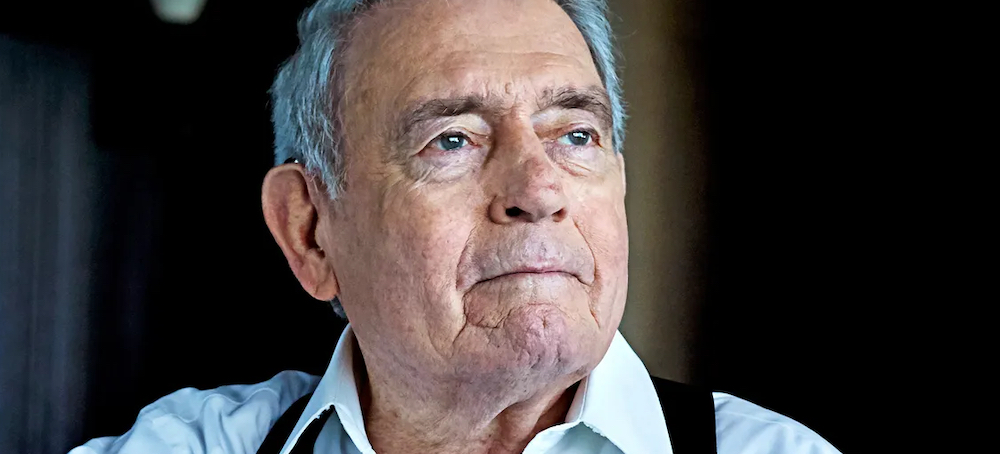
Dan Rather. (photo: Stewart Volland/Vulture)
Dan Rather / Substack

The quadrennial celebration of our democracy, the inauguration of an incoming president, should instill pride in every American. But come Monday many will see more farce than fanfare.

One week from today, January 20, 2025, at precisely 12 noon, the peaceful transfer of power will occur in Washington, D.C., when Chief Justice John Roberts reads and Donald Trump repeats these 35 words:

“I do solemnly swear that I will faithfully execute the Office of President of the United States, and will to the best of my ability, preserve, protect and defend the Constitution of the United States.”

The Presidential Oath of Office can be found in Article II, Section I, Clause 8 of the Constitution. These exact words have been spoken by every president since George Washington nearly 236 years ago.

The Constitution requires no elaborate ceremony, no parade, bands, or balls. It requires only a pledge by the incoming president to uphold the founding principles of our nation. In this case, that “pledge” will be made by a man who incited an insurrection against those very principles, and who has repeatedly said he will cherry-pick which constitutional principles to uphold.

The idea that Trump will once again be the guardian of our democracy is no doubt weighing on many of the 75 million Americans who didn’t vote for him and perhaps some who did.

The brief proceeding will begin with sharp irony as Chief Justice Roberts, whose Supreme Court has given the president immunity to act as he pleases, reads the oath. It will end with the absurdity of Trump responding that he will in fact preserve, protect, and defend a document that he has openly ridiculed. To wit:

The Constitution prescribes that Cabinet officers must be confirmed with the “advice and consent” of the Senate. Trump has said he wants to bypass the confirmation process in favor of recess appointments, meaning no congressional oversight.

The Foreign Emoluments Clause of the Constitution forbids the president from accepting money from foreign governments. According to a congressional investigation, Trump took in millions from other countries during his first term at his various properties.

Don’t forget the disqualification clause in the 14th Amendment that forbids former federal officials from seeking office if they’ve taken part in an insurrection. Trump dodged that one after the Supreme Court tossed the case.

Our founding document states that the president cannot repurpose money already approved by Congress. During his first term, Trump moved money appropriated for the military to build his border wall.

The Constitution guarantees freedom of speech, which includes the right to openly criticize those with whom we don’t agree. Trump, who famously holds grudges against those who challenge him, does not interpret the First Amendment that way. For him, freedom of speech is reserved for those who support him. If you don’t, look out. Especially if you are a journalist. The First Amendment states that Congress shall make no law that restricts freedom of the press. Trump has talked of jailing journalists and revoking broadcast licenses.

Then there is the freedom of assembly, such as the right to protest without fear of intimidation. Trump threatened to use the military to quell demonstrations after George Floyd was murdered.

How about the right to fair trial? That’s found in the Sixth Amendment. Trump has repeatedly said he will seek revenge against his perceived political opponents. Jack Smith, Liz Cheney, and others will need preemptive pardons or good lawyers.

The Constitution contains no laws, just the framework to make laws. It establishes three independent branches of government, each with its own powers, responsibilities, and checks on the powers of the other branches. For the next two years (at least), Trump will have control of both houses of a MAGA-led Congress that has not been shy in doing his bidding, even before he has taken the oath of office.

These are all provisions laid out in the Constitution. What about the norms that almost all preceding presidents have followed? Those we should be even more worried about.

The independence of the attorney general and choosing not to weaponize the Department of Justice to pursue a political agenda aren’t written anywhere and therefore not enforceable. They depend on the character of the president.

Let’s also not forget a federal judiciary stocked with Trump appointees, many of whom regularly hand down political-inspired decisions to benefit the president-elect. Trump’s classified documents case was dismissed by a judge he appointed.

The pomp and pageantry of our presidential inaugurations has always been emotional for me. After observing so much repression around the world, I was always proud to witness a peaceful and democratic transition of power here at home. That all changed four years ago when Trump incited a mob to overturn the election results, an action for which he will likely never be held accountable.

A reminder: The 22nd Amendment states that a president can serve only two terms. Trump has made noises about ignoring this stipulation, saying that because his terms were not consecutive, he can run again. That argument is meritless. The Constitution is clear.

Time to renew our hopes and prayers that our Constitution and our country survive a second and final Trump term.

Remember how he played through Covid causing an additional 80,000 Americans to die?  What will he play through this time around?

Monday, January 20, 2025

Thousands of Protestors March in Washington, D.C.

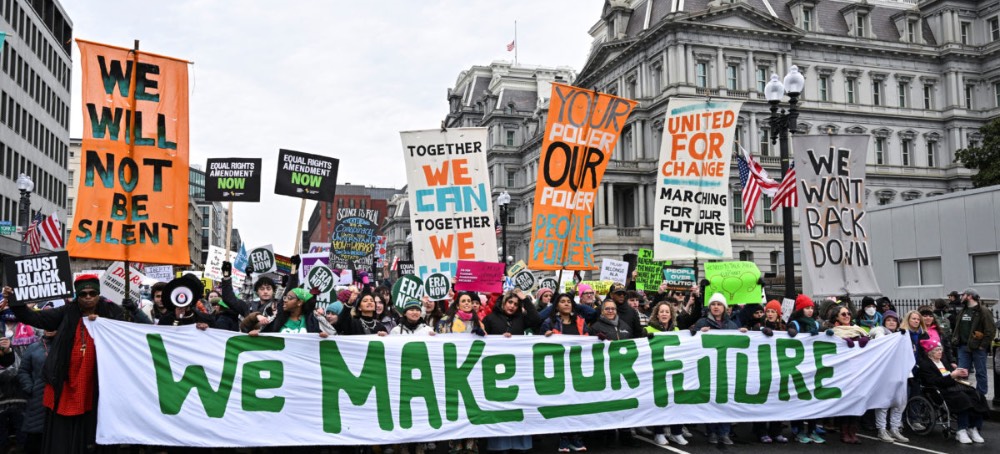
Days Before Trump Takes Office, Thousands of Protestors March in Washington, D.C. People attend the "People's March on Washington" ahead of the inauguration of President-elect Donald Trump, in Washington, D.C., Jan. 18, 2025. (photo: Jon Cherry/Reuters)

350 more marches taking place in every state

Linday Whitehurst and Ashraf Khalil / PBS 

Thousands of people from around the United States rallied in the nation’s capital Saturday for women’s reproductive rights and other causes they believe are under threat from the incoming Trump administration, reprising the original Women’s March days before President-elect Donald Trump’s second inauguration.

Eight years after the first historic Women’s March at the start of Trump’s first term, marchers said they were caught off guard by Trump’s victory and are determined now to show that support remains strong for women’s access to abortion, for transgender people, for combating climate change and other issues.

The march is just one of several protests, rallies and vigils focused on abortion, rights, immigration rights and the Israel-Hamas war planned in advance of inauguration Monday. Around the country, over 350 similar marches are taking place in every state.

Jill Parrish of Austin, Texas, said she initially bought a plane ticket to Washington for what she expected to be Democratic Vice President Kamala Harris’s inauguration. She wound up changing the dates to march in protest ahead of Trump’s swearing-in instead, saying the world should know that half of U.S. voters didn’t support Trump.

“Most importantly, I’m here to demonstrate my fear, about the state of our democracy,” Parrish said.

Demonstrators staged in squares around Washington ahead of the march, pounding drums and yelling chants under a slate-gray sky and in a chilly wind. Protesters then marched to the Lincoln Memorial for larger rally and fair, where organizations at the local, state and national level hosted information tables.

They held signs with slogans including, “Save America” and “Against abortions? Then don’t have one” and “Hate won’t win.”

There were brief moments of tension between protesters and Trump supporters. The march paused briefly when a man in a red Make America Great Again hat and a green camo backpack walked into a line of demonstrators at the front. Police intervened and separated him from the group peacefully as marchers chanted “We won’t take the bait.”

As the protesters approached the Washington Monument, a small group of men in MAGA hats walking in the opposite direction appeared to draw the attention of a protest leader with a megaphone. The leader veered closer to the group and began chanting “No Trump, no KKK” through the megaphone. The groups were separated by high black fencing and police officers eventually gathered around.

Rick Glatz, of Manchester, New Hampshire, said he came to Washington for the sake of his four granddaughters: ” I’m a grandpa. And that’s why I’m marching.”

Minnesota high school teacher Anna Bergman wore her original pink pussy hat from her time in the 2017 Women’s March, a moment that captured the shock and anger of progressives and moderates at Trump’s first win.

With Trump coming back now, “I just wanted to be surrounded by likeminded people on a day like today,” Bergman said.

Rebranded and reorganized, the rally has a new name — the People’s March — as a means to broaden support, especially during a reflective moment for progressive organizing after Trump’s decisive win in November. The Republican takes the oath of office Monday.

Women outraged over Trump’s 2016 presidential win flocked to Washington in 2017 and organized large rallies in cities throughout the country, building the base of a grassroots movement that became known as the Women’s March. The Washington rally alone attracted over 500,000 marchers, and millions more participated in local marches around the country, marking one of the largest single-day demonstrations in U.S. history.

This year, the crowd was far fewer than the expected 50,000 participants, already just one-tenth the size of the first march. The demonstration comes amid a restrained moment of reflection as many progressive voters navigate feelings of exhaustion, disappointment and despair after Harris’ loss.

“Before we do anything about democracy, we have to fight our own despair,” said one of the event’s first speakers, Rachel O’Leary Carmona, executive director of Women’s March.

The comparative quiet contrasts sharply with the white-knuckled fury of the inaugural rally as massive crowds shouted demands over megaphones and marched in pink pussyhats in response to Trump’s first election win.

“The reality is that it’s just hard to capture lightning in a bottle,” said Tamika Middleton, managing director at the Women’s March. “It was a really particular moment. In 2017, we had not seen a Trump presidency and the kind of vitriol that that represented.”

The movement fractured after that hugely successful day of protests over accusations that it was not diverse enough. 

This year’s rebrand as a People’s March is the result of an overhaul intended to broaden the group’s appeal. Saturday’s demonstration promoted themes related to feminism, racial justice, anti-militarization and other issues and ended with discussions hosted by various social justice organizations.

The People’s March is unusual in the “vast array of issues brought together under one umbrella,” said Jo Reger, a sociology professor who researches social movements at Oakland University in Rochester, Michigan. Women’s suffrage marches, for example, were focused on a specific goal of voting rights.

For a broad-based social justice movement such as the march, conflicting visions are impossible to avoid and there is “immense pressure” for organizers to meet everyone’s needs, Reger said. But she also said some discord isn’t necessarily a bad thing.

“Often what it does is bring change and bring in new perspectives, especially of underrepresented voices,” Reger said.

Middleton, of the Women’s March, said a massive demonstration like the one in 2017 was not the goal of Saturday’s event. Instead, it’s goal was focusing attention on a broader set of issues — women’s and reproductive rights, LGBTQ rights, immigration, climate and democracy — rather than centering it more narrowly around Trump.

“We’re not thinking about the march as the endgame,” Middleton said. “How do we get those folks who show up into organizations and into their political homes so they can keep fighting in their communities long term?”

We shall overcome.

Sunday, January 19, 2025

Allies Are Assets, You Morons

Allies Are Assets, You Idiots  
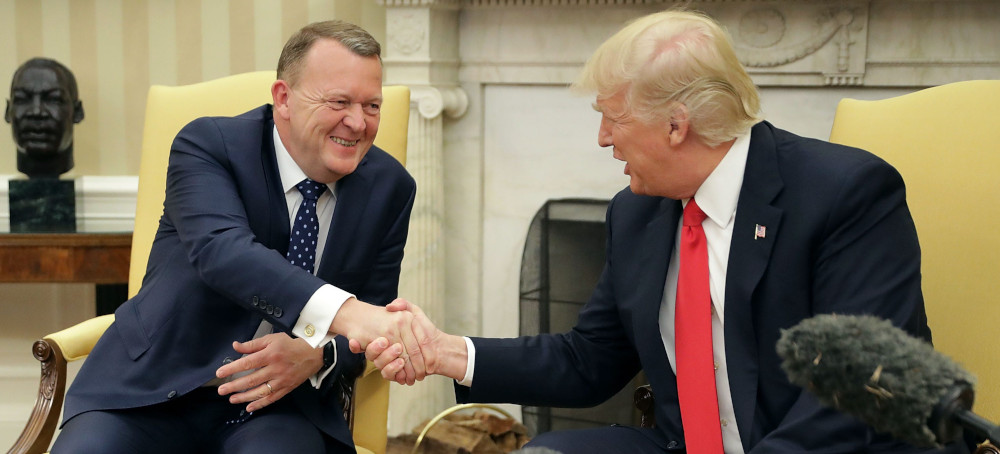
Then-President Donald Trump shakes hands with Lars Lokke Rasmussen, the then-prime minister of Denmark, in the Oval Office on March 30, 2017. (photo: Chimp Somodevilla/Getty)
 
"Threatening allies and partners is stupid and self-defeating"
 
Nicholas Grossman / The Bulwark  
 

Donald Trump is threatening America’s foreign partners. The United States, he says, will buy or take over Greenland (which is officially part of Denmark and doesn’t want to sell), turn Canada into the fifty-first state, and (re)take the Panama Canal.

He’s doing it in the “just joking (or maybe not)” style of internet trolls, which gives the troll an out—“I’m just kidding, lighten up”—while also laying the groundwork for future action if he decides that, actually, he wasn’t kidding. Does he really mean it? And if so, to what extent, intending which actions? Chances are he himself doesn’t know, and hasn’t put much thought into it. But whatever the level of seriousness, it harms U.S. interests.

Nevertheless, a variety of politicians and media rushed to defend the threats, or “sanewash” them by treating them as a coherent policy that must have a smart reason behind it somewhere. Besides the many Republicans who try to paint a rational, intellectual veneer on Trump’s impulses, there’s Democratic Sen. John Fetterman praising the Greenland threats as “smart.” Meanwhile, think tanks put out explainers like “Everything you need to know about Trump’s Greenland gambit,” and newspapers publish reports on public opinion asking, for example, “Do Americans want Trump to acquire Greenland?”—as if it were a normal policy proposal going through normal discussion.

All that misses the point. Whatever Trump’s intentions or lack thereof, threatening allies and partners is stupid and self-defeating. Following up with more verbal threats, economic pressure, or even military force would harm the United States.

Allies are assets. A good relationship means resources and knowledge to help with mutual challenges, access to foreign territory, economic benefits, and avoiding the costs of trying to force a foreign country to do something an ally would do upon request. Some international partners can be liabilities—for example, if they drag the United States into ill-advised wars—but Denmark, Greenland, Canada, and Panama haven’t done anything like that, and aren’t a threat to.

There’s no possible negotiation aided by these threats that will yield more for the United States than the good relationships do. And no possible military action, no matter how smooth, that would leave the United States in a stronger international position.

It’s true that Greenland is important to American national security interests. It’s a large island in the north Atlantic, part of a land-hopping path between North America and Europe. But the U.S. military is already the dominant power there. The region is controlled by the North Atlantic Treaty Organization, the U.S.-led alliance that includes Denmark.

The U.S. military already has a base on Greenland, active since 1951 (which shows the depth of the relationship). If there were a need to increase America’s force posture on Greenland, the United States could do it quickly, and Denmark would likely help, as would other regional allies, such as Canada and the United Kingdom. From a U.S. national security perspective, this situation is in hand and functioning well. NATO has unquestioned military superiority, with information flowing among mutually trusting allies.

Disrupting this situation would be detrimental to U.S. national security. America’s position would be considerably weaker without local buy-in—and cost a lot more. There’s no plausible scenario in which undermining America, Greenland, and Denmark’s relationship of mutual trust would be a national defense improvement.

Greenland has resources, such as rare earth minerals, and more may be discovered as the glaciers retreat. The easiest, most economically efficient path to exploiting those resources is a development deal with local authorities. The bedrock of security and economic cooperation is already in place, and ensuring locals get a piece of the windfall is almost always less expensive than suppressing their anger over being looted.

A SIMILAR POINT APPLIES TO CANADA, which Trump has been antagonizing with talk of making it the fifty-first state.

The United States gains a lot from its close partnership with Canada: a long land border that requires minimal military protection, extensive support for competition with Russia and others over the Arctic—increasingly important as sea ice melts, opening shipping lanes and easing access to natural resources—plus trusted intelligence sharing as a member of the closely knit “Five Eyes.” There are no potential U.S. national security benefits to disrupting the U.S.-Canada alliance, and many potential downsides.

Per the North Atlantic Treaty, Canada responded to the September 11th attacks on the United States as if they had been attacks on Canada. The Canadians not only housed Americans caught in the air when the United States closed its skies, but also helped defend American airspace against possible follow-on attacks as part of Operation Eagle Assist. And they deployed troops alongside American forces in Afghanistan. Denmark sent troops as well, and like Canada authorized them to conduct combat operations, which not all coalition members did. After Americans and Brits, Canadian forces endured the third-highest total number of deaths, while Denmark saw the highest losses per capita. If they weren’t there, those deaths would’ve been American.

Maybe Trump’s issue with Canada isn’t a security matter but an economic one. Trade, after all, is what Trump focuses on when he speaks ill of Canada, claiming that the United States heavily “subsidizes” its northern neighbor, by which he means that America has a trade deficit with Canada. But that’s absurd, as any economist can tell you, and many have surely told him. Trump has, over the years, often seemed not to grasp the concept of a trade deficit, but it’s not very complicated: A trade deficit means American consumers and corporations voluntarily buy more from Canada than Canadians buy from America. It’s not a problem—if anything it’s a sign of the health of the American economy. At the risk of oversimplifying, my employer has a trade deficit with me (they give me money in exchange for services) and I have a trade deficit with the supermarket (I give them money in exchange for food). We’re all benefiting.

Canada is one of the two biggest markets for American exports—vying year after year with Mexico—buying more from the United States than the twenty-seven EU countries combined, and more than twice as much as China. Canada’s biggest export by far to the United States is crude oil, which goes to American refineries, primarily on the Gulf Coast, to be shipped around the world at a profit for U.S. companies. America would lose out if more of the Canadian crude went elsewhere.

CANADA AND DENMARK ARE TREATY ALLIES of the United States, which Panama is not, but it is still an international partner that yields benefits for America. The United States built the Panama Canal early in the twentieth century. In the following decades, U.S. control caused increasing problems for U.S.-Panama relations, and in 1977 both sides signed a treaty that gave Panama control of the canal after 1999. American commercial and military ships traverse it when they want, and under the treaty, Panama accepted America’s right to use force if any foreign threat tries to disrupt the canal’s operations, so the United States has everything it needs from this arrangement.

Trump, however, claims that China controls the canal’s operations, which is a blatant lie. He claims Chinese spies are active there, which is probably true—they’re active just about everywhere, including Trump’s resort home, Mar-a-Lago—but the United States is in a much better position to counter it with the Panamanians friendly rather than hostile. The same point applies to Trump’s inaccurate claims that Panama controlling the canal hurts America economically. It’s cheaper for the United States if Panama runs it.

The U.S. military could take over the Panama Canal without much difficulty, at least in military terms. But that hardly means it’s costless. The United States invaded Panama in December 1989 after military dictator Manuel Noriega rejected election results. Ousting him took a month and a half, killed 23 Americans (with more than 300 injured) and 314 Panamanian military members, along with hundreds of Panamanian civilians. It cost $163.6 million on top of the normal military budget—more than $400 million in today’s dollars. And that’s just for a limited military operation that partnered with local opposition forces and left shortly thereafter. Maintaining military control of the canal would impose ongoing costs on the United States, especially if any Panamanian insurgency developed in response to foreign occupiers taking their major national asset. Then add the costs to international shipping—including between the East and West Coasts of the United States—when the canal closes, or is damaged, because of the ongoing military operations around it.

The friendly, treaty-governed relationships with Panama, Canada, and Denmark all serve U.S. national security and economic interests. The only thing Americans don’t currently get from those partnerships that they get from Trump’s threats is the bullying itself.

Voluntary, mutually beneficial partnerships are a core component of American power. Trump and everyone going along with him are throwing it away. And for what?

Y'all don't know what a tinhorn banana republic dictator is truly capable of until you see Der Draft Dodging Donald lead the charge on Greenland.