Join us at our brand new blog - Blue Country Gazette - created for those who think "BLUE." Go to www.bluecountrygazette.blogspot.com

YOUR SOURCE FOR TRUTH

Friday, October 23, 2015

Will Any Presidential Candidate Support Banning Handguns?


GunBans

Politicians generally avoid proposing handgun bans. But with another mass shooting terrorizing the American public, which presidential candidate will reveal a plan to close the gun sale loopholes?

With yet another mass shooting terrorizing the American public, some facts are in order. 

* Mass shootings in public places are on the rise in America over the past few years, but they still represent an infinitesimal amount — less than one percent — of the 33,000 deaths (as of 2013) due to guns each year.

* In fact, the overall murder rate is at it’s lowest point since at least 1960. The annual murder rate per 100,000 people peaked at 10.2 in 1980. In 2014, it was at 4.5.

* Most gun deaths, 63 percent, are from suicide, not homicide, let alone mass homicide.

* And unlike the murder rate, the suicide rate is going up, from 10.4 in 2000 to 12.6 in 2013.

* Furthermore, most gun deaths are from handguns and not assault rifles. According to the FBI, 68 percent of homicidal gun deaths in 2014 were from handguns. Only 3 percent were from rifles of any sort.

* A similar percentage of suicides by gun are estimated to involve handguns.

If you want to reduce the number of gun deaths in America, the conclusion is inescapable: ban handguns, along with assault rifles.

Politicians generally avoid proposing handgun bans because the position doesn’t fit into the frame of exempting “responsible gun owners” from new regulations. No one needs an assault rifle to hunt or to protect themselves. But plenty of Americans keep handguns thinking that it will protect them from harm. Politicians are loathe to advocate that the government “take their guns away.”

However, the reality is, as physicist David Robert Grimes put it, “actually owning and using a firearm hugely increases the risk of being shot.”

Of course, this is a political impossibility for the foreseeable future. The current Republican Congress won’t even pass an expansion of background checks, and a previous Republican Congress allowed the Clinton-era assault weapons ban to expire. A handgun ban also could run afoul of the Supreme Court, as it is currently constituted.

But will any presidential candidate be willing to push the envelope, shake up the debate, and put a handgun ban on the table?

It’s unlikely to be Sen. Bernie Sanders. Gun control is pretty much the only area where Sanders, long-time representative of rural hunting state, could be classified as a moderate. 

He opposed background checks in 1993, though supported them in 2013. He once supported a law protecting gun manufacturers from lawsuits, but he also voted for the assault weapons ban and supports closing the so-called gun show loophole. His rhetoric on the subject involves a bit of triangulation, “I think that urban America has got to respect what rural America is about, where 99 percent of the people in my state who hunt are law abiding people.”

It’s unlikely to be Hillary Clinton. While she is stressing gun control in her campaign — a rare opportunity for her to get to Bernie’s left — she is a pragmatist at heart. Democrats for years have been careful to avoid sounding like “gun grabbers,” skirting the gun control issue so they can be competitive in states with high gun ownership like Colorado, Iowa and Nevada.

In fact, if Democrats had not pursued this strategy, arguably Barack Obama never would have become president.

For Clinton to push the issue now is shift left from where Obama was rhetorically in 2008 and 2012. But what’s on the table are provisions like “universal background checks, cracking down on illegal gun traffickers, and keeping guns out of the hands of domestic abusers and stalkers.” A handgun ban is not in the cards.
But what about former Gov. Martin O’Malley?

He too is pushing gun control hard, laying out a multi-pronged strategy to reduce gun violence, including universal background checks and a national gun registry. (An O’Malley Super PAC even ran a negative ad against Sanders regarding guns.)
Yet he hasn’t gone as far as banning handguns.

O’Malley, languishing near zero percent in the polls, is a candidate in need of a breakout issue, one that would animate base voters and distinguish himself from the pack.

Merely proposing a handgun ban certainly wouldn’t make it become law anytime soon. But it would refocus the debate on the actual source of most of our senseless gun deaths.

Thursday, October 22, 2015

Jeb Bush Declares War on Stuff

DES MOINES (The Borowitz Report)—Hoping to stem the fallout from his comment in the aftermath of the Oregon rampage that “stuff happens,” former Florida governor Jeb Bush said today that as President he would declare an ambitious “war on stuff.”

“Make no mistake: I will not sit idly by when stuff happens if there’s stuff we can do about that stuff,” Bush told supporters in Iowa. “In a Bush Administration there will be a zero-tolerance policy on stuff.”

Pressed for specifics, Bush said that, in addition to preventing stuff from happening, he would also “work tirelessly to stop junk.”

“If I see junk happening that will harm the American people, I will not put up with that junk,” he said, adding for emphasis, “or stuff.”

Citing an example, he said that as President he would demand that Russian President Putin stop “the junk he is doing in Syria.”

“I would be like, ‘If you think you can do that kind of junk and we’re just going to lay back and not do stuff about it, you are sorely mistaken about that stuff,’ ” he said.

Striking a resolute tone at the conclusion of his speech, Bush told his supporters: “Read my lips: no junk stuff.”

Wednesday, October 21, 2015

Bernie Sanders 'Un-Demonizes' the Word 'Socialist' on 'Real Time'

Bernie Sanders. (photo: Marius Bugge/The Nation)

By Daniel Kreps, Rolling Stone
17 October 15
readersupportednews.org
 
"We want to deal with the grotesque level of income and wealth inequality in America," Democratic hopeful says

ust days after the first Democratic presidential debate, Bernie Sanders visited Real Time With Bill Maher Friday, where the host, a Sanders supporter, hoped to "un-demonize" the word "socialist," a term that scares off 53-percent of voters.

"When they hear 'socialist,' they think 'herpes,' Bernie," Maher warned the Vermont senator. Sanders then explained what he means by socialism, and how that frightening word actually aligns with many of the things the American people – both Republican and Democratic voters – want.

"We want to deal with the grotesque level of income and wealth inequality in America, very few people think that it is expectable or moral that the top one-tenth of one percent owns almost as much wealth as the bottom 90 percent," Sanders said. "What we have got to do is remind fellow Americans that every other major country on Earth guarantees health care to all people as a right, and they do it more cost-effectively than we do. We have got to inform the American people that we are the only major country on Earth that doesn't guarantee paid family and medical leave."

Sanders and Maher then listed the government programs that are rooted in socialism: Social security, Medicare, Veterans Affairs and more. "We have to make the movement to correlate what we're talking about, because on every one of the major issues I am talking about, the American people agree," Sanders said.

"Do the American people agree that public colleges and universities should be tuition-free as they are in many other countries? Do the American people believe that the largest corporations and the wealthiest people – who today are doing phenomenally well while the middle class shrinks – do people believe they should asked to pay more in taxes? The American people say yes."

Sanders' message continues to resonate with potential voters, as the candidate was the most-Googled politician following the Democratic debate. "The last man your age to cause this kind of excitement, I gotta think, is Mick Jagger," Maher told Sanders.

Comments

+15 # CL38 2015-10-17 15:30
It would help for Bernie to keep educating viewers on what he means by 'socialism', other kinds of programs he would establish, as well as include written information on the costs of free education compared to how much he would raise with a tax on Wall Street.

Same with universal health care costs vs ALL costs we pay now for insurance industry healthcare.

Same with any other programs. Take the republican-gene rated fear out of Democratic socialism.
 
+3 # Karlus58 2015-10-18 09:48
Why folks don't understand that health insurance cartels are merely middle men taking from the system. They provide no input into the healthcare system other than profiteering.
+9 # Street Level 2015-10-17 22:50
I'm so glad that Bill is bringing this to light. We really need to take control of the word "Socialism" and clearly define it before the opposition makes it inseparable with something negative and feared.
+1 # Robbee 2015-10-18 10:29
democratic socialism equals popular government programs, well-explained! go bernie!

0 # Saberoff 2015-10-18 11:07
Except I do not think Bernie did un-demonize the word socialism.

Here we have Maher telling Bernie he "Wants to see him get the nomination" followed by "You always say that."

I'm feeling a bit like that, too. I suggest: The campaign assures us that it is about us, and not just about Bernie. If that's the case, why not consult us? Seek our concerns, ideas/thoughts. The people have proven to the campaign, too: we get it! We're on the same page, we're energetic, committed, see things from the field (forever now).

The campaign needs to spell out, write down and present to America (Every time Bernie speaks, henceforth) how his plans will be implemented and paid for. The campaign needs to do this right now. The People have heard and believe in the vision. Now, how do we get there?

And Debbie Washerwoman Schultz has guaranteed us: There is very little time to explain.

Bernie Sanders for President!
+1 # ericlipps 2015-10-18 11:23
Quote:
The campaign needs to spell out, write down and present to America (Every time Bernie speaks, henceforth) how his plans will be implemented and paid for. The campaign needs to do this right now. The People have heard and believe in the vision. Now, how do we get there?
Never mind implemented; how does it even get passed by Congress? A President Sanders couldn't do it all by decree, and the usual suspects in the House and the Senate would stand shoulder to shoulder against it.
0 # Saberoff 2015-10-18 11:54
What's the alternative? Just get him there.

If the People of the United States elect Bernie Sanders their president, truth be told! The people endorse his proposals. The mind is lighted.

And maybe, the "usual suspects" will not be seated (sooner, or later).

No one is saying this Kong-Sized-Amer ican-Sea-Change will be fast and/or easy.

Bernie for Beginning!

Tuesday, October 20, 2015

El Nino could mean wet winter for Arizona

NOAA predicts El Niño will continue through winter

By SAMANTHA WITHERWAX Cronkite News 

PHOENIX – Fresh off another punishing storm, Arizonans likely can expect to see a wet winter as El Niño conditions heat up the Pacific Ocean.

The National Oceanic and Atmospheric Administration said on Monday that El Niño conditions are present and there is a 95% chance they will continue through the winter. The weather patterns are on track to be the strongest since 1997, NOAA said in its winter forecast.

“At this point, we are fairly certain that El Niño will remain on the current trajectory, and we will see one of the top three strongest events on record since 1950,” Ben McMahan, Research, Outreach and Assessment Specialist for Climate Assessment for the Southwest, said in an email following the forecast.

For Arizona, El Niño usually means a cooler, wetter winter. Rising ocean temperatures and the current weather patterns are closely tracking the fall of 1997.

Recent Arizona weather likely can be tied to El Niño, according to McMahan.

“The increased tropical storm activity in the eastern Pacific has pushed a number of storms into the Southwest, and we tend to see more tropical storm activity in the Southwest in El Niño years,” McMahan said. “The tropical storm season is waning, but we might see a few more systems push in this season.”

El Niño events are unpredictable but generally bring above average precipitation to the Southwest, McMahan said.

“Going forward, the forecast does favor wetter-than-average conditions all the way into the spring, with the January – March season the most likely 3-month period to be wetter than average,” Mike Halpert, Deputy Director for the Climate Prediction Center, said in an email.

El Niño is a climate pattern tied to the warming of sea surface temperatures in the equatorial Pacific. It occurs about every two to seven years. Sea surface temperatures across the central and eastern Pacific, and Indian Ocean have been above average in the past four weeks, according to Halpert.

Although precipitation is historically higher than average with a strong El Niño, encountering rain everyday should not be expected.

“In the 1997–1998 event—the strongest El Niño event on record—most of Arizona and New Mexico received above-average precipitation in December but below-normal precipitation for all of January before returning to normal or above-normal precipitation in February and March,” McMahan said.

Monday, October 19, 2015

Dems nix entitlement changes in budget talks


leaders_gty_629.jpg
Democrats are making clear that there will be no changes to those benefits as part of a deal intended to eliminate the threat of a government shutdown from the presidential primary season. | Getty


Democrats are drawing an early line in the sand for this fall's budget negotiations, saying they will reject any effort to make changes to entitlement programs as part of the talks, according to a source familiar with the discussions.

The declaration effectively limits the scope of the budget talks to a small-ball deal to fund the government for one year, possibly two. Republican senators said in a series of interviews they're more likely to agree to higher funding levels if they can slow down mandatory spending on Social Security and Medicare.

But congressional Democrats are making clear that there will be no changes to those benefits as part of a deal intended to eliminate the threat of a government shutdown from the presidential primary season, as well as stave off budget cuts from sequestration, which are restricting both military and domestic spending.

Democrats do not believe there is a realistic scenario to find more than about $80 billion in new spending for the military and domestic programs, potentially restricting budget negotiators to a deal that does not last through the election. That would mean lawmakers would have to strike another spending deal in the fall of 2016.

Congressional Republicans want budget cuts or fee increases to pay for any increases in spending, and wringing billions out of the budget for a spending bill is always a difficult exercise. Republicans said they were still optimistic there might be a broader deal.

“We’re not ready to throw in the towel and still believe there are smarter ways to reduce the deficit while providing multi-year certainty for defense planning,” said a senior GOP aide.

The budget talks are being conducted almost entirely at the staff level, including representatives from Senate Majority Leader Mitch McConnell (R-Ky.), Senate Minority Leader Harry Reid (D-Nev.), House Speaker John Boehner (R-Ohio) and House Minority Leader Nancy Pelosi (D-Calif.).

The negotiations have been complicated by Boehner’s impending resignation as speaker and have now been mostly decoupled from the battle to raise the debt ceiling. The current funding bill runs out on Dec. 11, but the debt ceiling must be lifted by Nov. 3, according to the Treasury Department. That makes it very likely that the spending package and debt limit increase will move independently of each other. 
 
As part of a possible budget deal, Republicans had floated cost-of-living adjustments for Social Security and raising Medicare eligibility, which was first reported by CNN. But Democrats say that’s outside the bailiwick of the talks.

“If there’s going to be any cuts and savings in Social Security it will be kept in Social Security so that the program will last longer,” said Senate Minority Whip Dick Durbin (D-Ill.). “It isn’t as if we are going to transfer money out of Social Security to cover our budget needs.”

Congress finally agreed on a permanent change to Medicare payments to doctors in the spring after such an agreement eluded them since the 90s, raising hopes among Republicans that entitlements would again be on the table this fall. And, for the budding budget talks, the problem with avoiding entitlements is it creates much less incentive for fiscal conservatives to go along with a budget deal, Republican senators said.

“We’ve got to get into mandatory spending, those are the cuts, the savings that stick. And most of us would trade higher discretionary spending to do it,” said Sen. Jeff Flake (R-Ariz.).

Instead Democrats are open to revenue raisers like spectrum sales or the grab bag of money in the Senate-passed highway bill. But Republicans said Thursday that they were unlikely to raid the carefully crafted transportation bill to pay for other domestic spending.

Sunday, October 18, 2015

New ‘Chip-and-PIN’ credit cards to change way consumers pay, businesses operate


BIZ-New cards 2
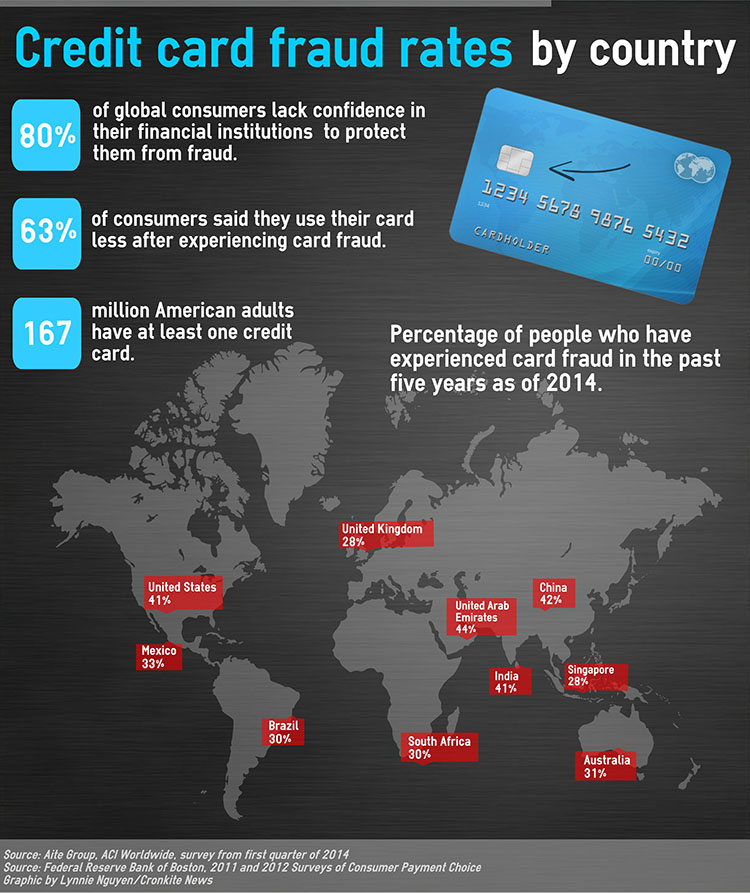
BIZ-new cards 3emv infographic
TOP: Chris Damron, senior vice president of sales at Digital Financial Group, shows how to use new EMV technology at Arizona Sports Complex in Glendale. (Cronkite News photo by Lynnie Nguyen)
MIDDLE: Consumers already have begun using the new chip-and-PIN cards when they make purchases. (Cronkite News photo by Lynnie Nguyen)
BOTTOM: Click on map to enlarge.


By LYNNIE NGUYEN
Cronkite News 

GLENDALE – When Carson Greene saw purchases show up on his credit card bill from California – places he had not visited – he became suspicious.

Turns out somebody had fraudulently used the Phoenix resident’s credit card, twice. The thieves charged about $250 worth of goods during the first incident, and he said in an email that he found about 20 suspicious transactions in all.

Greene said he appreciates the extra security credit card companies have taken to reduce fraud.

By 2016, the estimated 167 million U.S. residents who have a credit card will receive new “EMV” or “chip-and-PIN” cards, which include embedded microchips, in the mail to beef up security.

The change means credit card companies will spend millions more to produce the cards. It means businesses will have to buy new readers to accommodate the cards. And it means customers may have to spend a little extra time during checkout.
And for consumers like Greene, that’s just fine.

“It’s just that one little hurdle to feel secure about the purchase rather than swipe and go and wonder if that’s going to be picked up somewhere else in the world on purchases I didn’t make,” said Greene, a technical director at KTAR.

Chris Damron, senior vice president of sales from Digital Financial Group in Peoria, said these new cards contain a security chip that generates a unique code when used that makes it harder for fraudsters to steal information. His company provides new card terminals for Arizona businesses.

The cards require users to insert the card into a machine instead of swiping it, and the process can take up to a minute. Eventually, consumers will have to punch in a PIN – a personal identification number – or sign after inserting the card into the new EMV terminals to make purchases.

“Almost a week doesn’t go by that we hear about another data breach, and these data breaches are costing consumers, businesses, Visa, Mastercard, millions of dollars,” Damron said.

In 2014, 41 percent of people in the United States said they had experienced credit card fraud in the past five years, according to a study by Aite Group LLC.
In response, banks are changing the system for processing credit cards. The transition has been underway since 2012.

Starting Oct. 1, business owners must make adjustments to accommodate for these new cards. If they don’t, banks won’t accept liability when someone falls victim to card fraud, Damron said. The business will have to take on that burden.

Business owners must buy or lease the new EMV card readers, which cost between $450 to $1,500, said Robert Scalf, who co-owns a Peoria bike shop.

Scalf said it’s “par for the course.”

“It’s the cost of doing business, absolutely,” he said. “We’re happy to do it. It’s not necessarily an unexpected thing.”

Scalf, who co-owns Bikers Edge Cycle and Fitness, said he heard about this transition from telemarketers. He said he receives four to five phone calls a day from merchants trying to sell him new EMV compliant terminals.

Eric Fullmer, a general manager at Arizona Sports Complex in Glendale, said one thing businesses and customers will have to remember is to insert these new cards into the portal instead of swiping them.

“Once we get past that training and that education, then there’s no downside to it,” Damron said.

These new smart cards cost banks more to manufacture, Damron said. Each chip-and-PIN card costs about $3 to produce while the older swipe cards cost $1.

“That has been really the reason we are so far behind in making this migration is just because the price of the card,” Damron said.

The United States is one of the last countries to make the switch to EMV cards, according to Aite Group.

Consumers can expect more changes with credit cards in the future. New credit cards will feature “near-field communication,” which means people can wave their cards over the terminals and pay that way, Damron said. This is similar to Apple Pay.

Saturday, October 17, 2015

Carson: Pompeii Victims Should Have Outrun Lava

Ben Carson. (photo: Getty)

By Andy Borowitz, The New Yorker
08 October 15
readersupportednews.org


itizens of the Roman town of Pompeii who were victims of Mt. Vesuvius’s eruption in 79 A.D. could have survived if they had “just outrun the lava,” the neurosurgeon Ben Carson told Fox News on Wednesday.

“Most of the plaster casts we have of Pompeii victims show them basically just lying down and whatnot,” he said. “If I had been in Pompeii and I heard Mt. Vesuvius erupting, you can bet I would have made a run for it.”

He said another option open to residents of Pompeii would have been “to fight the volcano.”

“Archeologists estimate that the population of Pompeii was about eleven thousand,” he said. “You can’t tell me that if eleven thousand people put their minds to it they couldn’t beat one volcano.”

Carson said he would spend the next week on the campaign trail dispensing helpful tips about how people can defeat earthquakes, tsunamis, and giant asteroids.