Join us at our brand new blog - Blue Country Gazette - created for those who think "BLUE." Go to www.bluecountrygazette.blogspot.com

YOUR SOURCE FOR TRUTH

Friday, November 24, 2023

Still more voter fraud by Republicans

no image description available

All that Republican screaming about voter fraud and stolen elections can’t quite hide the fact that most cases of actual fraud come from Republicans. The latest case in point: Kim Taylor, the wife of an Iowa county supervisor and former congressional candidate, was just convicted of 52 counts in a ballot fraud case.

Taylor’s husband Jeremy ran in a Republican congressional primary in 2020 and, when he lost that race, ran successfully for county supervisor. Federal prosecutors say that in both races, she “submitted or caused others to submit dozens of voter registrations, absentee ballot request forms, and absentee ballots containing false information. Taylor completed and signed voter forms without voters’ permission and told others that they could sign on behalf of relatives who were not present.”

The Des Moines Register reports that Taylor, a native of Vietnam, targeted “voters of Vietnamese heritage with limited English comprehension.”

The scheme was discovered when two voters requesting absentee ballots learned that they had supposedly already voted absentee. The first, fraudulent absentee ballots were pulled so that the real people could vote for themselves. On election night, election workers realized that they were seeing a lot of absentee ballots with the same handwriting, prompting the investigation.

Jeremy Taylor is an unindicted co-conspirator in his wife’s voter fraud scheme. Kim Taylor was found guilty of 26 counts of providing false information in registering and voting, three counts of fraudulent registration, and 23 counts of fraudulent voting.

Cases involving dozens of counts of voter fraud are unusual—and it’s not because Republicans haven’t been looking for Democrats to charge with the crime—but a common thread in the remarkably few proven cases of voter fraud in recent years is that they’ve mostly been committed by Republicans. In January, a former elections official in upstate New York pleaded guilty to identity theft for a scheme in which he used voter information to request absentee ballots. A local Republican official in Ohio voted in two states, once in the name of his late father. A Pennsylvania Trump voter voted for himself and for his long-dead mother. An Alabama state legislator has been charged with voting in a district where he didn’t live. A North Carolina absentee ballot fraud scheme was so serious an election had to be invalidated.

While it’s incredibly rare for fraud to affect more than a handful of votes, the frequency with which Republicans do it isn’t a coincidence. It’s a direct result of a party that is undermining democracy at every turn and—importantly—telling its voters that the other side is going to cheat anyway, leading them to the conclusion that they might as well cheat, too, since everything is rigged. Most Republicans won’t do it, but the number that do show us the message is being received.

To help neutralize Republican voter fraud, Democrats need to turn out the vote like never before.  Our way of life is literally riding on it.

Thursday, November 23, 2023

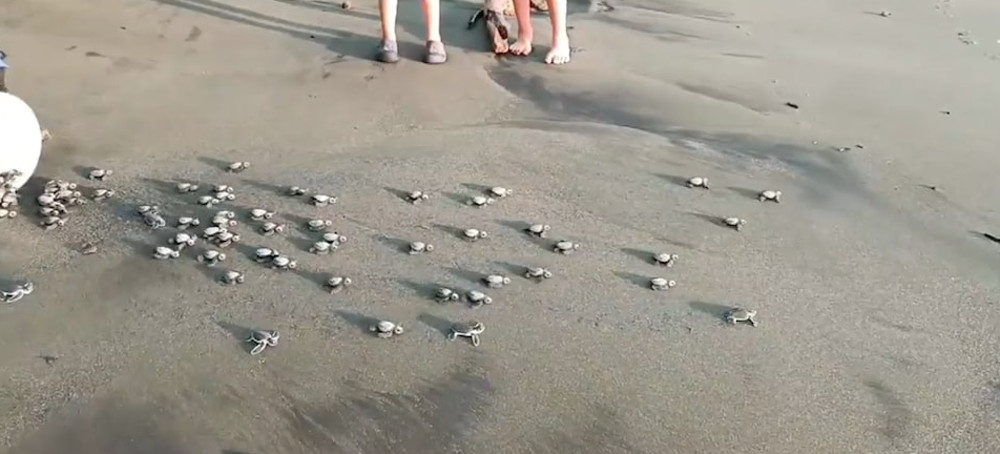
A KIND-OF-GOOD-NEWS T-DAY STORY: Costa Rica's Coast Guard Rescues Hundreds of Sea Turtle Eggs Destined as 'Bar Snacks'

Costa Rica's Coast Guard Rescues Hundreds of Sea Turtle Eggs Destined as 'Bar Snacks'  Costa Rica’s National Coast Guard released baby turtles on Nov. 18 in Punta Banco de Pavones after recovering the reptiles from poachers. (photo: Storyful)
 

But they still face daunting odds, including entanglement in nets, habitat destruction and worsening climate change
Michael J. Coren / The Washington Post

A mass abduction on an idyllic beach in Costa Rica has concluded with happy endings — 736 of them.

Poachers snatched hundreds of sea turtle eggs from nests along Costa Rica’s southern coast, a crucial refuge for olive ridley, green and hawksbill and other critically endangered sea turtles. The nest raiders planned to sell them as “bar snacks” before the eggs were recovered by Costa Rica’s National Coast Guard, according to the country’s Ministry of Public Security. Turtles eggs are often (and erroneously) regarded as aphrodisiacs.

Nearly 200 eggs were returned to nests along the black sand beaches of Punta Banco, and more than half the eggs had already hatched, according to local media. The newborn turtles successfully made it to the ocean Saturday.

The rescued sea turtles, and their unhatched siblings, still face a lethal gantlet. Scientists estimate the odds of a baby sea turtle surviving to adulthood are 1 in 1,000 to 1 in 10,000 due to entanglement in nets, habitat destruction, pollution, poaching and climate change. That has made Costa Rica one of the world’s most important refuges, as sea turtles struggle to recover after centuries of exploitation.

Since the 1950s, the country has pioneered sea turtle conservation, declaring key nesting beaches protected areas as well as retraining former poachers as tour guides and researchers. Five of the world’s seven species of sea turtles return to lay eggs on Costa Rica’s beaches, according to the Oceanic Society. In Punta Banco, conservationists, the coast guard and local residents have collaborated since 2004 to provide 24-hour protection to prevent eggs from reaching the black market, local media report.

Earlier this year, Panama granted sea turtles the legal right to thrive in a healthy environment, part of a growing movement to award animals legal protections typically reserved for humans. Advocates have used this newfound legal leverage to push for greater safeguards at a time when many species face major environmental threats.

But if you want to spend future Thanksgivings in a democratic country, here's a gentle reminder: don't let your guard down!

Wednesday, November 22, 2023

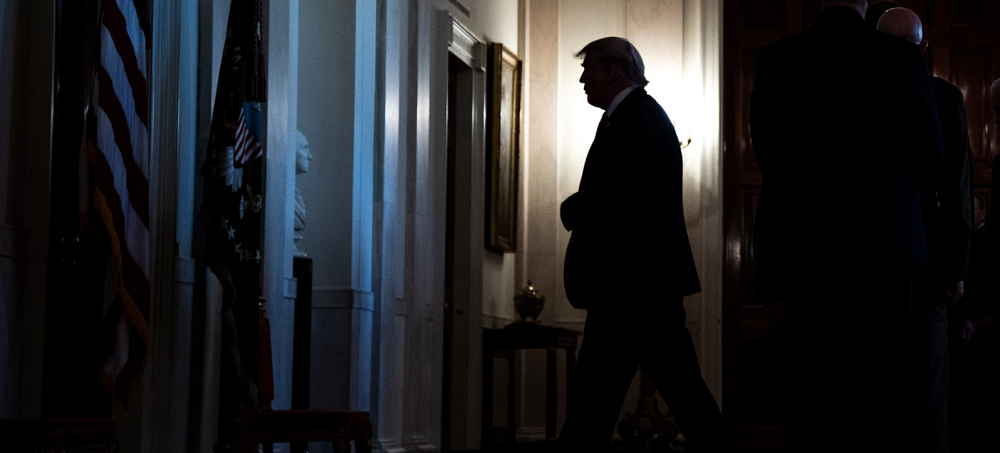
Speaker Mike Johnson treks to Mar-a-Lago for official kissing of Trump’s ring

WASHINGTON, DC - FEBRUARY 04:  U.S. President Donald Trump is greeted by Rep. Mike Johnson (R-LA) before the State of the Union address in the House chamber on February 4, 2020 in Washington, DC. Trump is delivering his third State of the Union address on the night before the U.S. Senate is set to vote in his impeachment trial. (Photo by Leah Millis-Pool/Getty Images)
Donald Trump and House Speaker Mike Johnson, furthest right

By Joan McCarter

Daily Kos Staff

REPUBLISHED BY:

Blue Country Gazette Blog

Rim Country Gazette Blog

New House Speaker Mike Johnson has already made a public and enthusiastic endorsement for 2024: “I’m all in for President Trump,” Johnson said on CNBC’s “Squawk Box” last week. "I have endorsed him wholeheartedly," he added. Now he’s made it official with a pilgrimage to Mar-a-Lago to kiss the would-be dictator’s ring. He was also attending a fundraiser there held by GOP Rep. Gus Bilirakis of Florida, according to Punchbowl News.

That’s an about-face from a younger, perhaps more idealistic Johnson, who as a state legislator said in 2015 that Trump “lacks the character and the moral center we desperately need again in the White House.” He also said Trump was likely to “break more things than he fixes,” being “a hot head by nature,” which “is a dangerous trait to have in a Commander in Chief.”

Wild that after all those predictions that all came true, Johnson is so enthusiastic to endorse Trump for 2024. But of course, that conversion came during Trump’s disastrous administration, so much so that Johnson became an architect of the insurrection. As Mark Sumner wrote at Daily Kos, “No member of Congress did more to overturn the 2020 election.”

That was bad. This is worse. Johnson is the highest-ranking official to make the endorsement: It has the stamp of the House of Representatives on it. Even former Speaker Kevin McCarthy has been careful enough of appearances to hold off on making a 2024 endorsement official before the primaries. So when Johnson says he’s one of the “closest allies President Trump has in Congress,” he means it. And now he’s got the “pilgrimage to Mar-a-Lago” badge to prove it.

He also could have been thanking Trump for his endorsement in the speaker election. "My strong SUGGESTION is to go with the leading candidate, Mike Johnson, & GET IT DONE, FAST!" Trump wrote on fake Twitter after all the other candidates flamed out. Trump’s first choice was Rep. Jim Jordan, but now he’s got an even better puppet in Johnson, who cleans up a lot better than Jordan.

Johnson is likely trying to ease the coming weeks of fighting with the hardcore MAGA faction of his conference, who are incensed that he decided to keep the government funded and operating with the help of Democrats. He might be looking for Trump’s help in smoothing over those hard feelings. But it’s not a great thing for the non-MAGA wing of the conference, particularly the “Biden 18.” Those swing-district representatives need all the distance they can get from Trump.

 
Mike Johnson is the latest to see the image of Der Fuhrer in his morning toast.  Sieg heil, oh mighty toast.

Tuesday, November 21, 2023

Liz Cheney slams 'nutball conspiracy theorist' Utah Senator Mike Lee for pushing Jan. 6 lie

WASHINGTON, DC - MARCH 21: Sen. Mike Lee, R-Utah, makes an opening statement during the confirmation hearing for Supreme Court nominee Ketanji Brown Jackson on Capitol Hill March 21, 2022 in Washington, DC. Judge Ketanji Brown Jackson, President Joe Biden's pick to replace retiring Justice Stephen Breyer on the U.S. Supreme Court, will begin four days of nomination hearings before the Senate Judiciary Committee. If confirmed by the Senate, Judge Jackson would become the first Black woman to serve on the Supreme Court. (Photo by J. Scott Applewhite-Pool/Getty Images)
Sen. Mike Lee looking so sincere and very pained.  He's a pain alright - in the arse.

Republican Sen. Mike Lee of Utah took time away from saying the Pentagon is waging an abortion war on American babies to promote huge lies on social media about the nature of the Jan. 6, 2021, insurrection on the Capitol grounds in Washington, D.C.

House Speaker Mike Johnson’s announcement of the release of hours of footage from Jan. 6 led the right-wing-o-sphere (and shills like Lee) to begin posting all of the footage they could find where nothing was happening. It is sort of like reviewing 7 AM’s security footage from Sept. 11, 2001, to prove there was no attack on the World Trade Center towers. This has led to many right-wingers trying to use the footage to prove that the entire Jan. 6 insurrection was manufactured by the FBI.

Former Republican Rep. Liz Cheney decided to post footage to her X (formerly Twitter) account showing the actual siege of the Capitol building, writing, “Here’s some January 6th video for you.” Lee decided to respond to this, writing, “Liz, we’ve seen footage like that a million times. You made sure we saw that—and nothing else. It’s the other stuff—what you deliberately hid from us—that we find so upsetting. Nice try. P.S. How many of these guys are feds? (As if you’d ever tell us).”

Then Lee retweeted a post from former West Virginia lawmaker and guy who apologized profusely and pled guilty to his part in the Jan. 6 insurrection, Derrick Evans. Evans now sells himself as a political prisoner. He posted a screenshot accompanied by the question, “Is this person flashing a badge? If so, this would prove there were undercover federal agents disguised as MAGA.” Lee responded to Evans, “I can’t wait to ask FBI Director Christopher Wray about this at our next oversight hearing. I predict that, as always, his answers will be 97% information-free.”

Of course, it ain’t a badge in the picture. It’s a vape. The guy in the image has been identified as a man named Kevin Lyons—and Lyons isn’t a G-man. In fact, as readers added context to Lee’s reckless retweet of misinformation, Lyons was sentenced to more than four years in a federal prison for stealing a wallet as well as “a framed photo of the late civil rights icon Rep. John Lewis from then-House Speaker Nancy Pelosi's office.”

Cheney took advantage of this thoughtless bit of dangerous buffoonery on the part of Lee to call him out: “You’re a lawyer, Mike. You’re capable of understanding the scores of J6 verdicts & rulings in our federal courts. E.g. https://justice.gov/usao-dc/capitol-breach-cases. You didn’t object to electors on J6 because you knew what Trump was doing was unconstitutional & you know what you’re doing now is wrong.”

Lee is a liar and misinformation machine. The past few years have seen video and audio evidence of how duplicitous Lee is when it comes to his craven desire to destroy Social Security. While he may not present himself as chaotically as fellow Republican Rep. Marjorie Taylor Greene, he’s the exact same type of a hot mess. 

Here's another angle for you, Senator Lee.  I don't think you're in Utah anymore. Even Utah Senator Mitt Romney can't take Republican BS any longer.  He's bailing while the bailing's good.  You know, before the whole party goes fascist.

Monday, November 20, 2023

THE ECONOMIST: Donald Trump Poses the Biggest Danger to the World in 2024

Donald Trump Poses the Biggest Danger to the World in 2024  Former president Donald Trump. (Photo: AFP)


What his victory in America’s 2024 presidential election would mean

The Economist

A SHADOW LOOMS over the world. In this week’s edition we publish The World Ahead 2024, our 38th annual predictive guide to the coming year, and in all that time no single person has ever eclipsed our analysis as much as Donald Trump eclipses 2024. That a Trump victory next November is a coin-toss probability is beginning to sink in.

Mr Trump dominates the Republican primary. Several polls have him ahead of President Joe Biden in swing states. In one, for the New York Times, 59% of voters trusted him on the economy, compared with just 37% for Mr Biden. In the primaries, at least, civil lawsuits and criminal prosecutions have only strengthened Mr Trump. For decades Democrats have relied on support among black and Hispanic voters, but a meaningful number are abandoning the party. In the next 12 months a stumble by either candidate could determine the race—and thus upend the world.

This is a perilous moment for a man like Mr Trump to be back knocking on the door of the Oval Office. Democracy is in trouble at home. Mr Trump’s claim to have won the election in 2020 was more than a lie: it was a cynical bet that he could manipulate and intimidate his compatriots, and it has worked. America also faces growing hostility abroad, challenged by Russia in Ukraine, by Iran and its allied militias in the Middle East and by China across the Taiwan Strait and in the South China Sea. Those three countries loosely co-ordinate their efforts and share a vision of a new international order in which might is right and autocrats are secure.

Because MAGA Republicans have been planning his second term for months, Trump 2 would be more organised than Trump 1. True believers would occupy the most important positions. Mr Trump would be unbound in his pursuit of retribution, economic protectionism and theatrically extravagant deals. No wonder the prospect of a second Trump term fills the world’s parliaments and boardrooms with despair. But despair is not a plan. It is past time to impose order on anxiety.

The greatest threat Mr Trump poses is to his own country. Having won back power because of his election-denial in 2020, he would surely be affirmed in his gut feeling that only losers allow themselves to be bound by the norms, customs and self-sacrifice that make a nation. In pursuing his enemies, Mr Trump will wage war on any institution that stands in his way, including the courts and the Department of Justice.

Yet a Trump victory next year would also have a profound effect abroad. China and its friends would rejoice over the evidence that American democracy is dysfunctional. If Mr Trump trampled due process and civil rights in the United States, his diplomats could not proclaim them abroad. The global south would be confirmed in its suspicion that American appeals to do what is right are really just an exercise in hypocrisy. America would become just another big power.

Mr Trump’s protectionist instincts would be unbound, too. In his first term the economy thrived despite his China tariffs. His plans for a second term would be more damaging. He and his lieutenants are contemplating a universal 10% levy on imports, more than three times the level today. Even if the Senate reins him in, protectionism justified by an expansive view of national security would increase prices for Americans. Mr Trump also fired up the economy in his first term by cutting taxes and handing out covid-19 payments. This time, America is running budget deficits on a scale only seen in war and the cost of servicing debts is higher. Tax cuts would feed inflation, not growth.

Abroad, Mr Trump’s first term was better than expected. His administration provided weapons to Ukraine, pursued a peace deal between Israel, the UAE and Bahrain, and scared European countries into raising their defence spending. America’s policy towards China became more hawkish. If you squint, another transactional presidency could bring some benefits. Mr Trump’s indifference to human rights might make the Saudi government more biddable once the Gaza war is over, and strengthen relations with Narendra Modi’s government in India.

But a second term would be different, because the world has changed. There is nothing wrong in countries being transactional: they are bound to put their own interests first. However, Mr Trump’s lust for a deal and his sense of America’s interests are unconstrained by reality and unanchored by values.

Mr Trump judges that for America to spend blood and treasure in Europe is a bad deal. He has therefore threatened to end the Ukraine war in a day and to wreck NATO, perhaps by reneging on America’s commitment to treat an attack on one country as an attack on all. In the Middle East Mr Trump is likely to back Israel without reserve, however much that stirs up conflict in the region. In Asia he may be open to doing a deal with China’s president, Xi Jinping, to abandon Taiwan because he cannot see why America would go to war with a nuclear-armed superpower to benefit a tiny island.

But knowing that America would abandon Europe, Mr Putin would have an incentive to fight on in Ukraine and to pick off former Soviet countries such as Moldova or the Baltic states. Without American pressure, Israel is unlikely to generate an internal consensus for peace talks with the Palestinians. Calculating that Mr Trump does not stand by his allies, Japan and South Korea could acquire nuclear weapons. By asserting that America has no global responsibility to help deal with climate change, Mr Trump would crush efforts to slow it. And he is surrounded by China hawks who believe confrontation is the only way to preserve American dominance. Caught between a dealmaking president and his warmongering officials, China could easily miscalculate over Taiwan, with catastrophic consequences.

The election that matters

A second Trump term would be a watershed in a way the first was not. Victory would confirm his most destructive instincts about power. His plans would encounter less resistance. And because America will have voted him in while knowing the worst, its moral authority would decline. The election will be decided by tens of thousands of voters in just a handful of states. In 2024 the fate of the world will depend on their ballots.


Sunday, November 19, 2023

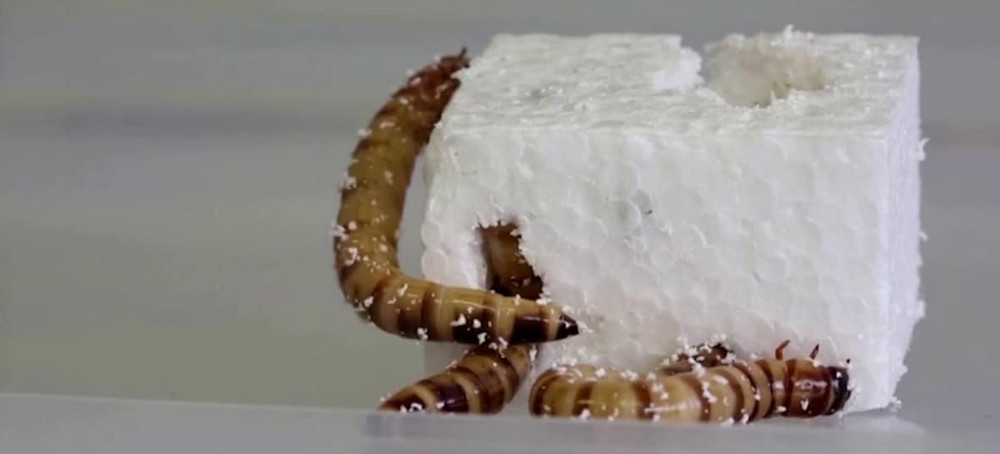
How Plastic-Eating Bugs Could Help With the World's Trash Problem

 How Plastic-Eating Bugs Could Help With the World's Trash Problem  Australian researchers reported on June 9, 2022 that darkling beetle larvae can survive solely on Styrofoam, a promising development for waste management. (photo: Reuters)


Allyson Chiu / The Washington Post 

One way to help tackle the growing plastic pollution problem could be all around us: microscopic bacteria and fungi.

A growing body of research has identified a host of microorganisms, some of which can be found in the bellies of certain larvae and other insects, that contain enzymes capable of breaking down common types of plastic.

“In no small part because of just how much plastic we’ve polluted across the planet, in nearly every environmental type, microorganisms are starting to interact with plastic more,” said Anja Brandon, a plastics expert with Ocean Conservancy, a nonprofit group. “We’re finding some that are starting to either evolve and be able to handle this material or, fortuitously, we’re able to get to actually start breaking this down.”

Research is still in the early stages, and it remains unclear how much plastic microorganisms could break down. But given the scale of plastic pollution, some experts say, it’s necessary to explore a variety of strategies.

There are more than 170 trillion pieces of plastics in the world’s oceans — an amount that is doubling about every six years, according to a major study released in March.

The most obvious way to curb plastic pollution, advocates say, is to stop producing the material. But that’s challenging for many reasons, including that it’s difficult to find plastic substitutes that are as cheap and effective.

The world’s nations have moved to create a global treaty on plastic pollution, but they have struggled to agree on how to address the problem.

Bacteria and fungi capable of breaking down plastics could help support traditional recycling efforts — if scientists can figure out a way for the microorganisms to do it at scale.

“To even make a small dent in managing our plastic waste, we really need to be able to scale up and speed up these systems, which also comes with its own potential complications,” Brandon said. “Scaling up is never quite as simple as like, ‘Oh, I’ll just make more of it.’”

Plastic eaters

There is a strong incentive for microorganisms to evolve to eat plastics, said Brandon, who studied biodegradation using mealworms.

Research suggests a number of these organisms appear to have figured out that plastics could be a valuable food source. In 2015, researchers from Stanford University found mealworms could live off polystyrene, or what’s widely known as plastic foam. Soon after that, Japanese scientists documented bacteria that could eat plastic bottles. More recently, a team from the University of Texas created an enzyme that can digest polyethylene terephthalate, a common plastic resin found in clothes, liquid and food containers. Meanwhile, researchers in Australia showed that the larvae of a darkling beetle can survive solely on plastic foam.

How these organisms degrade the durable material can lead to different results. Most bacteria, for instance, secrete certain enzymes that allow them to break large molecules into smaller ones, Brandon said. In some cases, these enzymes can chop up a big molecule into its building blocks. Those simple monomers could be recovered and used to make new plastic, effectively recycling the material, she said.

It’s also possible for microorganisms to break down plastics into water, carbon dioxide and organic material known as biomass, other experts say.

Picky and slow

But many of the known life forms that want to munch on plastics are picky about what they eat. Most of the microorganisms identified by researchers will only eat certain kinds of plastic, experts said. That means if recycling centers want to use this approach, they would still need to sort trash by material, a complicated process that limits the kinds of plastics they can recycle today.

“There are too many different types of plastic resins, thousands of different chemical additives and different colorants,” said Judith Enck, a former senior Environmental Protection Agency official under President Barack Obama who now heads the Beyond Plastics advocacy organization. “One size does not fit all.”

These organisms also need time to break down plastics. Brandon’s research into mealworms that eat polystyrene showed that on average, 100 of the critters could consume 20 to 30 milligrams of plastic per day. That means it would take 3,000 to 4,000 mealworms to process a single Styrofoam coffee cup. At this rate, more than a quadrillion mealworms would be needed to eat just one day’s worth of the world’s plastic production.

“Even the fastest microorganisms that we found really just pale in comparison to the amount of plastics we’re making and using in a single day,” Brandon said.

Researchers at Harvard’s Wyss Institute for Biologically Inspired Engineering say they’re developing a solution to these obstacles by not only identifying organisms that can naturally degrade plastic, but also using genetic engineering to boost their ability to efficiently break down the material.

The Harvard team is starting by looking for these plastic-eating microorganisms, said Sukanya Punthambaker, one of the project’s lead researchers. Then, they plan to isolate the enzymes and work on ways to speed up their functions.

“It’s a natural solution, so we’re just trying to work with what nature has already figured out millions of years ago and we’re trying to expedite that process,” Punthambaker said.

Still at the lab stage

Much of the research into the ability of microorganisms to biodegrade plastics remains at the laboratory stage. But some experts say if the approach is scaled up and made to be more efficient, it could have some use in the real world.

The organisms could help supplement the existing recycling system, Brandon said, particularly for trash recovered from the environment. These plastics are often degraded and not suitable to go through most recycling facilities, so they often end up in landfills.

Still, Brandon and other experts emphasized there is a way to go before these types of solutions can be readily deployed.

Bacteria and enzymes “are incredibly cool and very innovative, and I can see value for them in the future,” she said. “But in terms of being the solution or the get out of jail free card from our plastic pollution crisis, it is simply not the case.”

We have the ways, but do we have the will to save human existence?

Saturday, November 18, 2023

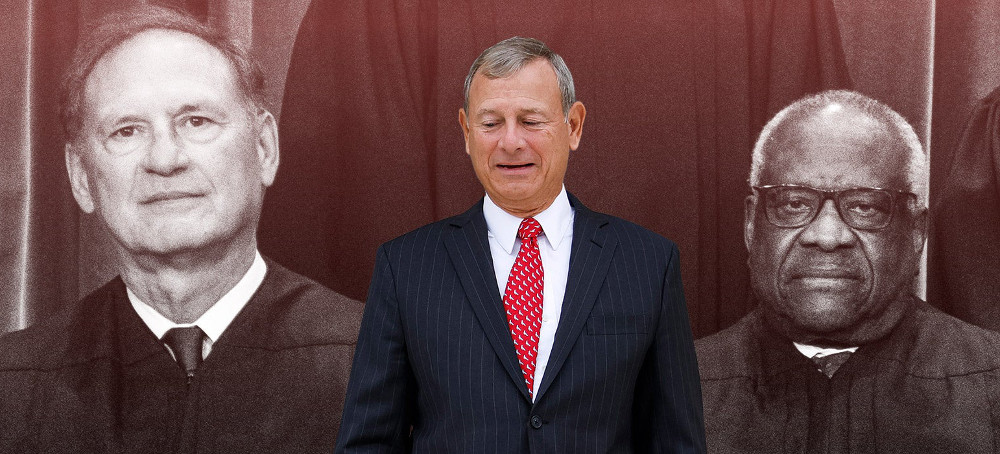
Here's the Thing About That  Trust the same justices who declined to follow the old rules to better adhere to the new ones? Good luck with that strategy.      (photo: AFP)


Dahlia Lithwick / Slate 

On Monday, the justices of the Supreme Court issued an extremely confusing statement laying forth the court’s brand-new ethics code for the justices themselves. These justices would like, through the announcement, to reassure us there is nothing actually “new” about the new code: “For the most part these rules and principles are not new,” the justices write. “The Court has long had the equivalent of common law ethics rules, that is, a body of rules derived from a variety of sources, including statutory provisions, the code that applies to other members of the federal judiciary, ethics advisory opinions issued by the Judicial Conference Committee on Codes of Conduct, and historic practice.” So what is “new,” then, is that the old rules are now binding on the justices?

No! Because of course the new/old rules are not precisely binding on the justices. That’s because the old rules, like the new ones, lack any sort of enforcement mechanism. So if the old rules were advisory principles, to which the old justices could look for guidance in deciding whether or not to adhere to them, so too the new rules, which are binding, will mainly serve as guidance to which the justices may newly look for guidance. Or, as the Associated Press plainly put it: “The code leaves compliance to the justices themselves and does not create any other means of enforcement.”

The most interesting question answered by the promulgation of the new/old rules, therefore, is who it was that was confused about the old rules to such an extent that they needed to be laid down. And as the court notes in its statement regarding the code of conduct:

The absence of a Code, however, has led in recent years to the misunderstanding that the Justices of this Court, unlike all other jurists in this country, regard themselves as unrestricted by any ethics rules. To dispel this misunderstanding, we are issuing this Code, which largely represents a codification of principles that we have long regarded as governing our conduct.

In other words, it is not the justices who have misunderstood the various sources, canons, common law provisions, etc. when they failed to disclose gifts from donors with cases before the court, or when they attended Koch events that granted access to them for high-dollar donors, or even when they failed to recuse in cases in which they had an interest. The confusion, in reading the old rules, was evidently ours and ours alone. In order to dispel a public misunderstanding of the old rules— and why some members of the court declined to abide by them—the court is repromulgating virtually the same rules, which they themselves will enforce, but this time assuring us that we got it wrong the first time when we didn’t think they alone should enforce them. Trust the same justices who declined to follow the old rules to better adhere to the new ones, they urge. This time they really will unilaterally and in secret make better choices. Then and only then will your confusion desist.

Because there is no mechanism by which rule-breaking can be investigated, or adjudicated, the new code serves largely as what one can only describe as a compendium of old whines in new bottles. Come for the whining about bodily attacks on jurists, stay for the whining about how they need book revenue. If all of this material sounds extremely familiar, that’s because the substance of it is all stuff other judges have been doing for years, as the justices have continued to explain on repeat why they can only try to be bound by as much of it as they choose.

The new code further commits to “uphold the integrity and independence of the judiciary” and to “avoid impropriety and the appearance of impropriety in all activities.” This is of course the lodestar of the old rules and of an April statement in which the justices collected all these old rules as part of an old, new pledge to“reaffirm and restate” their commitment to said rules. Surely yet to come will be the graphic novel version of the old rules, the Netflix version, and the collectors’ edition action figurines, each of which will affirm that the rules—once confusing to the public but always crystal clear to the justices—are now crystal clear to everyone, even if still left entirely to the justices’ discretion to enforce on their own, without oversight or actual enforcement powers.

What’s also clear from the new/old rules: The “appearance of impropriety,” a test that has to do with how we the public define impropriety, is also being, once again, left entirely to the court to determine and uphold. In the event that a future justice fails to, say, repay a loan on a recreational vehicle, or says that he took an open seat on a private jet because nobody was using it, we can all rest assured that the impropriety therein is our own. And the tone throughout—the patient parental explanation that this is our stupidity in forcing this issue—is deeply worrisome coming from a chief justice who refused to testify on these very matters last spring and a justice who has said in a newspaper interview that Congress has absolutely no role to play in regulating the court.

Finally, there are lots of places in the new/old code where you will find sections that appear to have been reverse-engineered to paper over the misconduct that we have learned of this year with caveats about “knowingly” and “now in effect.” Old failures to disclose? Bygones. There is a lengthy explanation of why the need to have nine justices on most cases, “the rule of necessity,” will trump the need for an individual recusal. There is language that attempts to clean up judicial participation at political events and Federalist Society dinners, use of staff for judicial book sales, and some financial disclosure loopholes, but the tell, again, is that on these matters, the justices believe the confusion has been yours; they have been perfectly consistent all along.

If there is a lesson, still, to be learned from the ethical revelations of the past year, and the ethics industrial complex that journalism has erected to continue to mine the infractions, it is that newsgathering matters—that when the justices are left to their own ethical devices, misconduct happens, it goes ignored by the other justices, and it becomes weaponized by wealthy entities seeking to alter outcomes in cases, such that an entire infrastructure of corruption goes undetected for years. Being granted a peek into the tent in which judicial monarchists nod sagely and pinkie swear they are still adhering to the rules they ignored does little to assuage a public that still wants to know how Leonard Leo seated three justices and made a ton of bank on a project predicated in ignoring ethical rules.

On Monday, after immense pressure from the public, journalists, good-government groups, and Congress, the court’s answer seems to chiefly be that this is annoying. And that if they explain again that they are following the old rules, we can all go back to the days of undisclosed luxury salmon fishing and big donor meet-and-greets at the Supreme Court historical society and Koch junkets. This entire document reads like a great big “it’s not me, it’s you” to a public that continues to understand that we the public are not, in fact, the primary ethics failing of the Supreme Court.

Props to the justices for signing onto a thing, even if it’s an old thing recast as a new thing, principally drafted with the intention of instructing us that they still can’t be made to do anything. It was probably difficult to get some of the court’s present membership to concede even that the public is hopelessly confused and needs a tune-up. My guess is that this unenforceable new set of old rules will mollify close to nobody. But insofar as it’s phrased to imply, perhaps for the first time since this ethics mess began, that the court is aware of public opinion, it’s a tiptoe in the right direction. Maybe the fact that the court is finally willing to admit that there’s a problem—even while insisting it’s the public with the problem—signals that this is a conversation and not a sermon from the mount. And maybe that’s the best start we can hope for.

Coke Can Clarence's wife Ginni Thomas is laughing at the new code all the way to the bank.