Join us at our brand new blog - Blue Country Gazette - created for those who think "BLUE." Go to www.bluecountrygazette.blogspot.com

YOUR SOURCE FOR TRUTH

Wednesday, October 26, 2022

It's Time for Progressives to Unite Against the Fascistic Republican Party

It's Time for Progressives to Unite Against the Fascistic Republican Party  
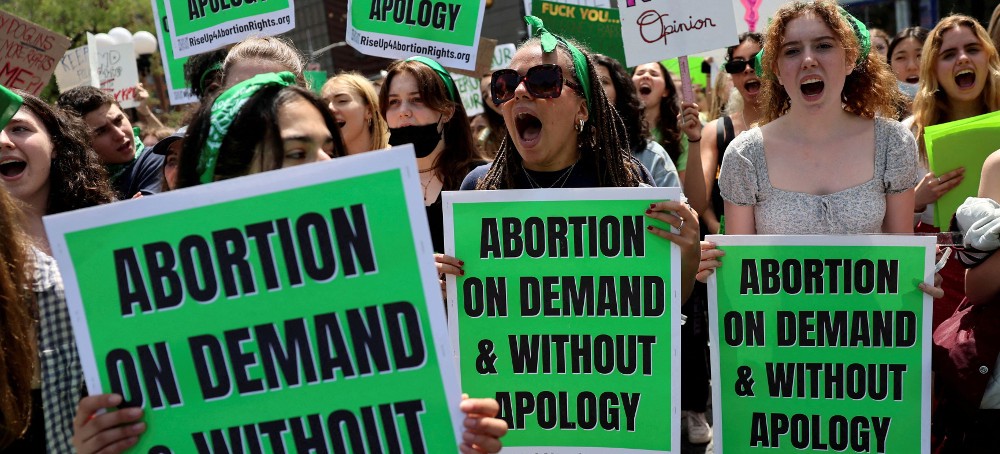
People protest for abortion rights in Union Square in New York City on May 5. (photo: Mike Segar/Reuters)

Norman Solomon / Reader Supported News

Six months ago, people on the left in France faced a crucial choice. None of their candidates had gotten enough votes to make it into the presidential runoff election. On the upcoming ballot were the neoliberal president Emmanuel Macron and the neofascist challenger Marine Le Pen, who had trailed the incumbent in the first round by less than 5 percent. What to do?

Rather than sit out the decisive election and enable the far-right candidate to take power, millions of leftist voters held their nose and voted for Macron.

Now, in the United States, progressives face similar choices. In key House districts and states with pivotal Senate races -- including Arizona, Colorado, Florida, Georgia, Nevada, New Hampshire, North Carolina, Ohio, Pennsylvania and Wisconsin -- leftist voters could tip the balance of congressional power. At this point, in the balloting that ends on Nov. 8, the choice is binary: neoliberalism or neo-fascism.

While the GOP is in a strong position to win a majority in the House of Representatives, the latest polling indicates that control of the Senate is on a knife’s edge. No doubt Sen. Mitch McConnell is hoping that enough progressives won’t vote for Democrats so he can run the place starting in January.

You don’t have to tell me how corporately awful the Democratic Party leadership is. On foreign policy, other than on such matters as climate and the Iran nuclear deal, the two major parties have similar approaches, including widely destructive militarism. But on domestic matters -- while the Democrats’ tepid reformism falls far short of addressing the crises we face -- their policies are vastly better than the increasingly racist Republican Party as it offers extreme versions of free-marketism and Christian fundamentalism. Claiming that there are no significant differences between the two parties is a form of super-ideological gaslighting on automatic pilot.

Abortion rights, judicial appointments, climate, environmental protection, taxation, racial justice, voting rights, labor rights, LGBTQ rights, misogyny and so many other basic matters are on the line. Yes, the Democrats are often anemic on such issues. At the same time, the Republicans are much worse. And their agenda now includes nothing less than destroying electoral democracy.

Republicans in office and even more extremist candidates seeking to join them are blending in with political scenery they’ve created to normalize gliding farther and farther rightward. They’re the electoral shock troops of a party now fully engaged in what scholar Jason Stanley, in his book How Fascism Works, calls “fascist politics.” What seemed dangerously outrageous not long ago can soon come to seem normal.

In Stanley’s words, “Normalization of fascist ideology, by definition, would make charges of ‘fascism’ seem like an overreaction, even in societies whose norms are transforming along these worrisome lines.... The charge of fascism will always seem extreme; normalization means that the goalposts for the legitimate use of ‘extreme’ terminology continually move.”

Progressives have overarching responsibilities to oppose the corporate power that ushers in oligarchy and also to oppose the far-right forces that lead to tyranny. Focusing on just one of those responsibilities while dodging the other just won’t do.

It’s accurate to say that the neoliberalism of the Democratic Party has been creating and exacerbating conditions that fuel right-wing engines. But at certain times -- which definitely include the next two weeks, through Election Day on Nov. 8 -- electoral battles come to a decisive fork in the road. We will be living with the consequences of this crossroads for the rest of our lives.


Norman Solomon is the national director of RootsAction.org and the executive director of the Institute for Public Accuracy. He is the author of a dozen books including War Made Easy. His next book, War Made Invisible: How America Hides the Human Toll of Its Military Machine, will be published in Spring 2023 by The New Press.


The Problem of War, Part 3

"Eve seduced Adam into biting the apple creating original sin. What’s a guy going to do?"

The Problem of War, Part 3

By George Templeton

Gazette Blog Columnist

Editor's note: This is the third in a 5-part series by Gazette Blog Columnist George Templeton entitled "The Problem of War."  

 In part 2, I discussed the science of information, knowledge, and communication. As Jonathan Haidt puts it, we are like the little man riding the big elephant who erroneously thinks he is in charge. The powerful elephant is our subconscious emotion. It goes where it wants to. We are the rider, trying to be rational, to no avail.

In part 3, I discuss the war to end all wars. One image of war emphasizes its courage, gallantry, and duty. Another sees it as the pointless suffering of the innocent. Life isn’t fair.

Jorge Luis Borges wrote a short story The Rose of Paracelsus (1983). One of its many interpretations is that proof destroys faith. The Rose also brings classical math, the subjective and the objective, the intuitive and the formal, into computational intelligence. It has implications about the nature of human consciousness and the meaning of life. (Reference Gregory Chaitin’s 2005 book, “Meta Math! The Quest for Omega”)

Religious people are right that science is flawed. It sees that reality is discreet, a particle, measurable, having a trajectory in time and place. But that particle is also a wave which is everywhere. It works every time, but it is not common sense.

When we contemplate war our intelligent emotions present a quandary. They are common to all humans, and subject to conditioning by culture and experience. We make our judgments accordingly.

Biblical Ethics

God said: "Whoever sheds the blood of man, by man shall his blood be shed…" Genesis 9:6. "If any harm follows, then you shall give life for life, eye for an eye, and a tooth for tooth…" Exodus 21:24 “He who resists the authorities resists what God has appointed, and those who resist will incur judgment.” Romans 13:2.

The great deceiver, the anti-Christ is a world leader. Did God appoint him? Even the devil can quote scripture!

Eve seduced Adam into biting the apple creating original sin. What’s a guy going to do?  

Consider Numbers 25 and 31. Moses gets angry because of the sexual misbehavior of his troops. He blames his women instead of the whores of the opposing tribe who seduced and cajoled his men into worshiping a false God. “Kill every male among our little ones, and kill every woman of our tribe who has known man by lying with him.  But all the young girls who have not known man by lying with him, keep alive for yourselves.”  It is an example of how rewards destroy the truth.

Our Righteous Mind

Jonathan Haidt’s book, “The Righteous Mind”, claims it is evolutionary. We are born with it.

In our parlance, it means "just, upright, or virtuous". If you are a lawyer, righteousness comes from justice and fair play. If you are religious, it means that you act in accordance with God's wishes. If you are God, it explains your harsh judgment and the reason people should fear you.

There is such a thing as righteous anger. What is more important, love or righteousness? Are we to be sentimental or ethical?  Is war more evil than self-defense? Can we overcome evil with truth, goodness, and self-sacrificing love? It seems that self-defense is when you cannot tolerate people who think differently than you. It needs no attacking army. It can be pre-emptive.

In our “Dog Eat Dog" world sovereign states seek to maximize their security and power. They coddle the minds of their people. They won’t let outsiders influence their weaker neighbors. That would curdle minds. This justifies the use of war, considered inevitable in “Real War Theory”. But we fight because of tribalism, ideology, and belief. They can change.

Assisted Living

The news warned me. We should not accept the war-torn Ukraine (2022) as civilized because of their dismal care of their severely retarded. These were adults who could only moan and groan, cry and scream, and pound their heads on their bed rails. They could not walk, feed themselves, or wipe their behind. They were piles of emaciated skin and bones.

The year was 1962. I had just turned 18 years old. I drove to see my grandmother, the person who raised me, in the care facility selected by my aunt. It reeked of urine. There was no TV, plants, or window for sunshine that would cut the gloom. I struggled to move between the pushed-together beds. Adjacent to my grandmother resided a seemingly healthy 15-year-old girl. She wanted to play ABC blocks with me, but she never got it right.  Her family warehoused her there. My grandmother would be bedridden for three years. It would be four years until I graduated from college and another year until my wife rescued me from my single life of loneliness.

The “news” would protect us from reality, but don’t we need to know? You can’t write uncertainty into a contract with the private equity owners of assisted living facilities. Bad things happen to good people.

Mere Christianity

What keeps it all going is being part of a shared project, and contributing to the team effort. It requires a belief system having deep emotional roots.

C. S. Lewis, in his book Mere Christianity, wrote: It is in my opinion perfectly right for a Christian soldier to kill an enemy. Semi-pacifism gives people the idea that though you have to fight, you ought to do it with a long face as if you were ashamed of it. Christian service is the natural accompaniment of courage – a kind of gaiety and wholeheartedness. If I and some young German had killed each other simultaneously and found ourselves together a moment after death, I cannot imagine that either of us would have felt any resentment or even any embarrassment. I think we might have laughed over it.

C. S. Lewis conjectured about Christians in opposing armies who didn't mind that they killed each other. Lewis was experienced. He was wounded in WW I. What did history record?

The British attacked, in the Battle of the Somme, by walking, as though they were on a parade ground. They suffered sixty thousand casualties and twenty thousand killed in the first hour. In less than four months they gained only five miles at a cost of 420,000 British, 200,000 French, and 450,000 Germans.

The fighters in the fetid stench of the muddy diseased and dying in the trenches realized the futility of it all. Both sides temporarily put down their guns to celebrate Christmas in 1914 together. “We don’t want to kill you, and you don’t want to kill us, so why shoot”? Christianity simultaneously embraces war and peace. The moral history of Homo sapiens proves that we need a better guide.

Are wars like this? Or is it more like the lyrics of The Green Fields of France?

Green Fields of France

“Oh, how do you do, young Willy McBride? Do you mind if I sit here down by your graveside and rest for a while in the warm summer sun?

I've been walking all day, and I’m nearly done and I see by your gravestone you were only nineteen when you joined the great fallen in 1916.

Well, I hope you died quick and I hope you died clean, oh Willy McBride, was it slow and obscene? And did you leave a wife or a sweetheart behind? In some loyal heart is your memory enshrined? And though you died back in 1916, to that loyal heart you're forever nineteen.

Or are you a stranger without even a name, forever enshrined behind some old glass pane in an old photograph torn, tattered, and stained and faded to yellow in a brown leather frame?

The sun shines down on these green fields of France, the warm wind blows gently and the red poppies dance. The trenches have vanished long under the plow. No gas, no barbed wire, no guns firing down, but here in this graveyard that's still no man’s land the countless white crosses in mute witness stand till' man's blind indifference to his fellow man and a whole generation were butchered and damned.

I can't help but wonder, oh Willy McBride do all those who lie here know why they died? Did you believe them when they told you the cause? Did you believe that this war would end wars? Well the suffering, the sorrow, the glory, the shame, the killing and dying it was all done in vain. Oh, Willy McBride, it all happened again, and again, and again, and again, and again.”

Is morality irrational and just a servant of our emotions?

What if God commands?

In Deuteronomy 20, God said: “When you go forth to war against your enemies, and see horses and chariots and an army larger than your own, you shall not be afraid of them, for the Lord your God is with you …” When Israel behaved, God rewarded them with victory. But when they misbehaved, God taught them a severe lesson.  Christians believe that self-sacrifice redeems and changes evil. The hardest thing to do is to empathize with the enemy. It may be that Jesus chose crucifixion so he could liberate us from sin through his example. Everyone instantly recognizes the symbol of the cross. If we choose to not defend America, the world will not look at it the same way. Jesus could turn the other cheek. He had no H bombs to contend with. Should a nation court martyrdom and disarm totally?

Hatred is the motivating force behind war and genocide. Jesus did not trust using force to right a wrong. By his standard, success is forgiveness by the wronged party. But the injured expect repentance from the wrongdoer.  When you kill and destroy, there is nothing left to redeem. Our law expects payment for damages. Reparations to pay for the damage caused by war seemed unfair to starving Germans.

The problem with religion is that what “God said” can’t be wrong. A TV minister explained that it was moral to torture the enemy. But if torture is morally permissible, what isn’t? Does God use war to reveal his justice and righteousness? The problem with the lack of religion is that anything goes.

Bonhoeffer explained that God's command is something beyond the ethical. "It embraces the whole of life. It is not only unconditional; it is also total. It does not only forbid and command; it also permits. It does not only bind; it sets free, and it does this by binding… God's commandment leaves man no room for application or interpretation. It leaves room only for obedience or disobedience… If God's commandment is not clear, definite, and concrete to the last detail, then it is not God's commandment."

Tuesday, October 25, 2022

The Problem of War, Part 2


"Hitler claimed that if his genocide of the Jews was wrong, God would have stopped him."

The Problem of War, Part 2

By George Templeton

Gazette Blog Columnist

Editor's note: This is the second in a 5-part series by Gazette Blog Columnist George Templeton entitled "The Problem of War."  

In part 1, I wrote about morality.  It is a subject of much discussion on the web, especially concerning artificial intelligence.  The writings of brilliant innovators imply that there is little knowledge on their part of the many theories of morality. 

Politics is unavoidable in any social project.  We don’t know everything and we don’t know the future.  So, we pick a solution within the field of possibility.  We see what happens and we make adjustments.  It is the method of trial and error.  But some things are just plain evil.  That isn’t politics.

Essential reading is the 2000 book by Douglas Groothuis, Truth Decay.  Douglas is a professor of Philosophy at the Denver Seminary.

In part 2, I turn to philosophy.  We have to do this if we want to be sensible.  My reference is a 2015 book by Gary Gutting, endowed chair in philosophy at the University of Notre Dame.  His 2015 book is “What Philosophy Can Do”.

Sensibility requires communication and consciousness.  This is where philosophy overlaps with psychology and physics.  It provides a perspective for what I am trying to say.  If you pay any attention to political discourse you might discover that there is a problem with the truth.

Metaphysics

Ruth walked down the street with her two grandchildren.  A friend stopped to ask her how old they were.  Ruth replied:  “The doctor is five and the lawyer is seven.”  Every life has a purpose.  A machine has no autonomous purpose.

Heidegger argued:  Time connects everything.  Our mortality shapes our lives.  It makes us conscious of what we could be and the short time we have to do it.  It changes our focus to concentrate on what could happen within our lifespan, our children’s, and our children’s children.  There are no geologic epochs here.  They exist only within mathematical expectation and the law of large numbers.

As soon as we try to perceive anything, it becomes not “in itself” but reality for us.  Heidegger coined the term Dasein.  He was us, thrown into the world, trapped by the world.  He was reality, an explanation for probability, and a justification for a God who takes all possibilities simultaneously.   To define God would objectify him.  Our God is an idol of subjectivity.  His destruction “opened up a place for a more divine God” that was neither subjective nor objective.  After all, didn’t he create us in his image?  Doesn’t that give us a sacred worth and a responsibility?

God throws us into a world where his love does not save us from the consequences of sin.  It reveals his anger.  Hitler claimed that if his genocide of the Jews was wrong, God would have stopped him.  Instead, Hitler killed God in the eyes of millions of people.  God could not do such an evil thing!  Does God’s love have to come out of catastrophe?  Is there no disaster but deserved disaster?  Where was the miracle that would have proved God’s existence?  Perhaps we do not deserve to know.  That would have destroyed faith, a process, not a thing.  When will we learn?      

Leibniz believed that God created the best of all possible worlds.  God gave us the least amount of evil possible.  It did not mean that there was no evil.

In physics, nothing happens for a purpose.  In Leibniz’s universe things seemed to cause one another because God ordained a pre-established harmony for them.  Space, time, causation, and material objects are all illusions.  The birds, bees, and even the rocks have a “mind” (sort of).  They have perceptions, feelings, desires, choices, and a soul.  We don’t know what life is let alone the soul.  Perhaps the flickering stars, forever distant, are alive.

Leibniz combined the subjective and objective in a view of reality that explained things like good, evil, and free will in a non-mechanistic way.  It was not atomic, but it was more complete than Newton's universe.

But isn’t man so much more than the rocks?  He has an identity that defines his virtues, character, and integrity.  He imposes boundaries and constraints on them.  Understanding this cannot prevent horrors.  Passive ignorance keeps them going.  As some politicians say, we have to be “strong”, but how so?

Information Died

We know that information is not a substance.  It isn't necessarily true.  You can copy information.  That is the only requirement.  Information is not a substitute for thinking.  Knowledge, on the other hand, must be capable of perpetuating its existence.  But when it tells you a fact that you already know, it does not add to your knowledge.  The question is:  How much information does it take to accurately convey a message?  Are one’s and zero’s, true or false, enough?  More information is required whenever anything is uncertain.  The more we know, the less remains to be known.  Information changes probability.  We call that learning.

Exactly what is information?  To be scientific it has to be something measurable in time and space.  It needs units like pounds, inches, or degrees F.  That would objectify it.  But nature did not give us the “proof” in our bottle of rum.  These things are interactions with human consciousness.  They are different in thermal physics and information theory.  Information is like chemistry.  It requires a catalyst (humanity), an engagement, to become knowledge.  But you could be wrong.

Is information just one or zero, a computer bit, or is it also an organization of bits, a byte?  What about things bumping into each other, altering their initial arrangement and consequent human interpretation?  Every moment contains the information to determine the following moments.  There is only one way in, and one way out.  Some arrangements become “emergent properties”.   We encounter them at a higher level in the world hierarchy. The information in the universe seems to go on forever.  What will we do with it?

Artificial intelligence has opened the door to qualitative data analysis.  It is not like algebra or plane geometry.  It is algorithmic and sequential, a rubber or pliable geometry that can be stretched and twisted to reveal reality, to find otherwise hidden form.  

Imagination and intuition are more important than beliefs.  Any belief which is certain requires no information to convey its message.  Your emotions are intelligent and private.  Those are the ones engaged with, and coming from your experience.  They are personal, but not feelings, gossip, prejudice, or physiological upset.  You can’t be human and capable of rational choices without emotion.  Try reading tables of logarithms.  All the numbers seem the same.  There is nothing to focus your attention on, no valuation without emotion.  It is emotion, not reason that compels us to drop the bomb, to risk ending civilization.

 Emotions matter because they influence your friends, religion, politics, economics, health, and common sense.  We can’t explain what “blue” looks like, but we know it when we see it.  My blue might not be the same as yours.  Likewise, emotions don’t happen to us.  We control them.  Look inward!  By contemplating our emotions we can change our outlook on life, war, and peace.

Evolution Destroys Truth

For any event to be random, it has to have no structure or pattern.  We can compress digital photos because the color at one location changes the probability of the color in an adjacent position.  A truly random object cannot be compressed or simplified.  It is what it is.

Rare catastrophic events are outside of our experience.  Consequently, they are not part of our plans.  Order emerges from disorder.  That is what life is.  Don’t let the seeming randomness of the roulette wheel fool you!  Most people do not decide rationally.  Their beliefs are only as good as they compress information into a smaller, simpler set of assumptions.  

We live in a world where a lie is better than the truth because a lie can be anything you want it to be.  It satisfies your wants and needs.  It has a payoff.  Survival depends on them.  We evolved to survive, not to see what’s actually there.

A prominent sociologist explained that facts are insignificant.  They really don’t matter in the scheme of things.  Hatred of the “other” makes the world go around.  Tell that to a scientist who sees that the progress of the world is driven by facts.  Hatred is not a force in physics.

Theories must be falsifiable and independently verifiable.  New theories have to explain the old.  Reality might not be “more of the same” but unlike religion and politics, science corrects itself.  But it cannot prove itself.

A world governed by prejudice and bigotry is not fundamentally part of business.  It is about profit and healthy competition.  It does not care about the “Mexican” on the saw blades.  That was the politics of one of our elected representatives.

Our intellect pales insignificantly in comparison with instinct.  When we see that someone belongs to a group, we understand that they share in the properties of the group.  This tribalism makes atrocities acceptable by overwhelming the morality of a group's members.   Our leaders pressure us from above.  Our neighbors pressure us horizontally.

Words About Ukraine That Americans Need to Hear

The Words About Ukraine That Americans Need to Hear  
"Two kinds of words are needed: those explaining why the fight for Ukraine is important to American security and welfare, and those making the case on moral grounds." (photo: Alex Wong/Getty Images)
 
Wars are won by deeds—but also by persuasive moral arguments.

Eliot A. Cohen / The Atlantic 

“Deeds, not words,” is the motto of the 22nd Infantry Regiment, a credo that befits a fighting unit that has seen service from the Civil War to Iraq. But wars are won by words as well as deeds, which is one of the reasons President John F. Kennedy, quoting Edward Murrow, said that Winston Churchill “mobilized the English language and sent it into battle.” And now, in Ukraine, the United States and the West in general need much better words to put into the fight in addition to the long-range artillery and guided missiles, air-defense systems and drones, accurate artillery shells and bullets that they are shipping—belatedly, insufficiently, occasionally hesitantly—into battle.

President Volodymyr Zelensky, the most inspiring Western war leader since Churchill, knows the power of language. “I need ammunition, not a ride,” will make the history books. His speeches to Congress, the U.K. Parliament, and the Bundestag were outstanding examples of impassioned persuasive speech. But something more is needed from the president and prime ministers of his friends and allies.

The United States and its allies have had a remarkably, perhaps perilously easy time in persuading their people to go along with extensive aid to Ukraine, despite high inflation and energy shortages. To some extent, this is the result of the West’s muscle memory from the Cold War, when Soviet ideology was relentlessly hostile and Soviet internal practice stunningly brutal. Soviet external behavior, from the subjugation of the Baltic states and Eastern Europe to the invasion of Afghanistan, was menacing as well as repellent. And even though the Cold War is more than a generation behind us, when the Russians behave like brutes—“orcs,” as the Ukrainians refer to them—that muscle memory is triggered.

Americans are used to seeing the Russians as the bad guys, and thus our institutions, including the armed forces and the CIA and its foreign counterparts, have a deep repertoire of actions ready in response. The Russians launched an unprovoked war against Ukraine, committed atrocities on a massive scale, and have daily compounded their crimes by attacking civilian infrastructure abroad and brutalizing their own people at home. It is easy (and correct) to conclude that they remain the bad guys today. That we can see the bombed playgrounds and hospitals and the tortured bodies of their victims on Twitter makes it so much easier to mobilize against them.

The tests are coming, however, particularly if Europe has a cold winter that makes Russian cutoffs of energy supplies bite. In the United States, the likely next speaker of the House of Representatives, Kevin McCarthy, in a gesture to the neo-isolationist wing of the Republican Party, has indicated that it is time to curtail aid to Ukraine. The motley collection of so-called realists (who think that Russia’s crimes are irrelevant), isolationists, admirers or tools of Russia, and America-Firsters have kept up a running if muted line of criticism, not so much of the Zelensky government as of the American burden in supporting him.

McCarthy’s views have nothing to do with principle, because he has none. Rather, he is a weather vane, acutely sensitive to the winds that blow from Mar-a-Lago and the wing of his party that has always resented America’s presence in the outside world. The isolationist and even xenophobic traditions of one faction in the Republican Party run deep. Suppressing them for the past several generations was the great achievement of politicians like Dwight D. Eisenhower and intellectuals like William F. Buckley. But they are back and need to be addressed, as do comparable movements on the left of the Democratic Party.

Even more important, average Americans, properly worried about inflation, recession, and a bitterly divided political class, need to hear why it is important to weigh in, wholeheartedly and with vigor, on Kyiv’s side.

Two kinds of words are needed: those explaining why the fight for Ukraine is important to American security and welfare, and those making the case on moral grounds. No American policy can succeed in the long run without addressing both our interests and our values. When the two coincide, as they did during World War II and the Cold War, the United States can show remarkable perseverance. When they diverge or are weak, as became the case in America’s interventions in Afghanistan and the Middle East, policies collapse.

A good speech on Ukraine will not invoke the phrase “rules-based international order,” which might resonate in a freshman introduction to international relations, but not with an audience of normal people. Rather, Americans and Europeans need to hear about the consequences if Russia were to crush Ukraine; about the invasions and depredations that would surely come next in the Baltic states, and quite likely beyond; about the conclusions a no less ruthless Chinese government would draw; and about how a failure to take a stand here would mean something much bigger and more dangerous in a few years’ time. They need to hear how staunchness now, even in the face of nuclear threats, is infinitely better than a large-scale, possibly global war in a decade. They need to hear that world war is not just the stuff of history books or their grandparents’ or great-grandparents’ lives, but a possibility for us if we are not prudent now.

They also need to hear about the semi-genocidal nature of the Russian attack on Ukraine—not just the extensive torture, murder, and rape of the civilian population, but the kidnapping of thousands of children, and the attempt to wipe out Ukrainian language and culture.

Americans also need to hear a celebration not only of Ukrainian courage and tenacity, but of their skill. On January 20, 1940, Churchill gave a speech in which, among other things, he reflected on Finland’s astonishing early defeats of the Soviet armies that had attacked it a few months before.

Only Finland—superb, nay sublime—in the jaws of peril—Finland shows what free men can do.

And he issued a warning:

If the light of freedom which still burns so brightly in the frozen North should be finally quenched, it might well herald a return to the Dark Ages, when every vestige of human progress during two thousand years would be engulfed.

Now is a moment for Churchillian rhetoric and insight, suitably modified to the limitations of those who may share his instincts but lack his brilliance.

Modern politicians very rarely speak this way, but they need to try, and they will be heard if they do so. They do not have to reach Churchillian heights. The opposition to aid to Ukraine is still divided, hampered by its own crankiness and embittered introversion, and undermined daily by Russian barbarity, and no less, the astonishing Julius Streicher–like candor with which its propagandists howl for the blood of innocents.

Ukraine’s struggle for freedom and for its very existence is the struggle of a much larger order, not just in Europe but globally, and indeed of the human spirit. It needs to be understood not only in the somnolent rhythms of bureaucratic choice or academic analysis, but in language that sings. The situation calls for sound policy, no doubt; it also calls for eloquence that soars. There is an epic speech to be delivered here; let us hope that there is someone who can deliver it.


Monday, October 24, 2022

GEORGE TEMPLETON: The Problem of War, Part 1

"In 1949, Mao started the Chinese Great Leap Forward.... Utopian societies and moral theories never seem to work out."

Editor's note: Today begins a 5-part series by Gazette Blog Columnist George Templeton entitled "The Problem of War."  

Who is George Templeton?

I became the man of the house at age twelve, and was 100% on my own by the second semester of my first year, working my way through college.  I studied electronics and physics.  In college, I lived in a religious monastery.  I met my wife when I was the sound engineer for a campus coffee house.  It was love at first sight.  America’s fear of the Russians founded my life in power electronics.  I am guilty of destroying jobs and creating new ones through automation and overseas relocation.  I ran the department of “arcs and sparks”.  During my career I was a project manager and a scientist supporting international business.  I experienced the evolution of computer math.  I was one of two engineers starting a small company in America.  I am an introvert, don’t like crowds, and I never participated in a demonstration.   Now, my favorite recreation is watching the squirrels run up and down the tree.

The Problem of War, Part 1

By George Templeton

Gazette Columnist 

My grandfather was a commander in the Veterans of Foreign Wars and an MP in the Philippine War.  Imbued with the ethos of Teddy Roosevelt, he knew what it was to be a man.  My father, an officer and aircraft mechanic, fought in Italy against Mussolini.  His generation gave us international responsibility.  I was unintended collateral damage.  My mother died giving birth to me because antibiotics were going to the war front.  My generation believed in the Emerald City, in Walt Disney’s future land, and that science, math, and an industrialized America could solve the world’s problems.  Today many worship self-interest and fundamentalist religion that didn’t use to be political.  They did not experience the military draft.  But their war will be nuclear, an atrocity beyond the scale of comprehension.  If we don’t change the game, it will eventually happen.

The Land of Oz extends far beyond the Emerald City.  Our minds can revel further than the thing itself.  It can be rewarding.  I search for a pragmatic conception.  Reference:  Humanity, Jonathan Glover, 1999.

Morality

A professor of business ethics explained that the morality of an action depends on how things turn out!  At the very least it seems to move judgment into the future.  Do your things turn out because of their purpose or mechanism?  How do you measure “right”?  Rationality is more than math and logic.  It also requires caring about the right things.  Do you measure your goodness by how much others envy you?  Do you grovel before majesty, hoping to ride its coattails?

Regardless, you have to choose.  There isn’t anyone or anything that can help you with that.  How you choose will shape the reality of your world and in some measure the reality of everyone else’s world.

We don’t have any choice about our history, our particular society, and our time.  When we do not live authentically, we take all of these for granted.  We accept without question momentarily popular conventions.  But no choice is a choice.  By default we select the kind of life we will lead and what our life’s meaning will be.

We have to pick carefully because our lives are limited.  We have to pick goals that are achievable, not everything simultaneously.  The chorus sings out, “That won’t fix things”.  But every social problem must be solved one small step at a time.  There is too much inertia for it to be otherwise.

Mental health professionals are working overtime to deal with hurricane damage.  What will happen when nuclear Armageddon comes to our homeland?

Unpleasant things do not upset us when we look away.  We have sympathy for those people, but not empathy.  We can’t, don’t want to, feel their pain.  What is more important, peace of mind or living a passionate life?

The news warned me to look away.  It wanted to protect us from disturbing emotions.  It showed war deaths.  It did not warn me about the video of starving babies in Somalia.  When we see the crimes of others we argue that our role was harmless.  We excuse wicked heroes.

Does it have anything to do with democracy, war, sustainability, or the myth of “liberal progress”?  Mankind’s history has been full of massacres, torture, and every imaginable cruelty.  Our struggle for the right to exist goes beyond morality.  The “Holy Spirit” may be present in man, but his saga exposes the fragility of civilized behavior.

Martin Puchner’s book, The Written World, credited the Communist Manifesto with shaping people, history, and civilization.  Since the 1917 Russian Revolution, the Soviet regime has killed over 60 million people who disagreed.  Centralized control required people to be the same and think the same.  Hitler agreed, but he hated and feared the communists.

The Nazis wanted to exterminate “diseased” people so they could take their country back.  The extinction of inferior people was just as moral as being “pro-life”.  To restore Germany to a land of wild forest creatures having blue eyes, blond hair, and huge frames, they dehumanized Jews, promoted forced sterilization, and euthanatized mentally defective people.  Their Aryan lineage showed that Jesus, who was a Jew, did not suffer from the common defects of his race.  How could this happen?

The criterion of demarcation has been race, religion, politics, and sovereign nationalism.  Never mind that physical chemistry has proven the inevitability of the force of diffusion.  It exists between regions of higher and lower concentration.  It exists socially because of communication, travel, commerce, and the discovery of alternative solutions to the challenge of life. 

It traces back to the Council of Nicea in the year 325 C.E.  Instead of simplifying the theory of Jesus, Christians made him into God.  Then they blamed the Jews for killing him.  Rome viewed them as being against nature itself and hating the whole human race.  The Romans thought they were stronger and nobler than everyone.

What did the Jews do to deserve the simmering resentment of the world?  They had to do something wrong to be forgiven!  They were not.  They were different.  They needed the suppressed envy of the community they lived within to foster its hatred and self-abasement.  Shaming proved Jewish rightness.  Up became down.  You see, Christianity won.  The word was more powerful than the bomb, greater than self-interest.

Eugenics, the unproven pseudo-science of the time, held that dark skin, dark hair, and short skulls were aboriginal, not advanced in intellectual and social instinct like those of the godlike race, the Aryans.

The Egyptian bondage corrupted the Hebrews.  They had guilt and “thou shalt not “as their ethos.  They were cowards instead of conquerors.  But they believed in the sanctity of human life, personal responsibility, marriage, and compassion for others.  They were “soft”.

The meek would not inherit the earth.  It would go to those having strong flavor, vigor, and curiosity.  Good people had a “privileged aristocratic soul”.  They were rich, noble, powerful, high-stationed masters, and high-minded commanders.  They were heroes, unlike the mediocre, work-slave common man.  They were not plebian and low.  They defined themselves as “good” and that was proper, decent, and right-thinking, not merely useful.  But that did not agree with the Judo-Christians who advocated universal human dignity including rascals, good-for-nothings, the poor, and the downtrodden.

The morality of the rise of the bomb and fall of the word traces back to Nietzsche’s 1887 Genealogy of Morals.  It inspired Ann Rand’s 1964 Virtue of Selfishness motivating those in the business world who disregarded the concept of “win-win” and the fact that “The Worm Turns”.

There is no truth value in normative ethics.  They are cultural and written by men.  But the Judo-Christian ethos is the only bookish religion, dating back to the primeval period in 4000 B.C.  God blesses the wretched, the suffering, and the deprived.  It made the master race sick.

God’s Old Testament covenant was with the Jews.  They became successful.   The stage was set for envy’s primacy.  The German public came to resent the Jews and finally took revenge.  Eugenic pseudo-science said Jews were not so human.  The world did not want them.  They could not escape.  There was enough blame to go around following the war to end all wars.  It was easy for Hitler to scapegoat the Jews.  Germany industrialized murder to exterminate six million of them as quickly as possible.  It wouldn’t be the only genocide.

In 1949, Mao started the Chinese Great Leap Forward.  He planned to create an idealistic socialistic economy that would eliminate poverty, improve health, liberate women, and educate his people.  Between 1958 and 1962 it killed 30 million people.  Mercy to the enemy was cruelty to the people.

Utopian societies and moral theories never seem to work out.  Stephen Toulmin, the author of the 2001 book, Return to Reason, understood that abstract theory was never reasonable even when it was useful.  We have to temper our theories with awareness of human consequences.  How could hope replace our doubts?

No creature in nature has been so brutal. What is our excuse? Does our species have the latent morality necessary to overcome the evil lurking within us?

Is it limited to internal things like character, virtue, and individual actions which are the foundation of social responsibility and laws?  Christ’s ethic was individualistic as was his culture.  But the Bible speaks of the “Kingdom of God”, made “right” by the second coming, won by warfare with unwilling people.

Today, we rest upon a tipping point.  Its sharpness comes from our clash of values, whether our neighbor is inherently good or bad, distrust, control by force, an unsustainable climate, economic sanctions, modern user-friendly nuclear bombs, and artificial intelligence.  Some people want to save the world, but others insist that they will hurt the world.  We believe in the “survival of the fittest”.  We accept “me first and mostly me”.  They are our justification.  Bringing out and nourishing the worst in humanity becomes heroic when it is consonant with group identity. 

Aren’t foreign affairs different than friendship between dictators?  Aren’t countries different from people?  Policy is not the same as loyalty.  Things which are harmful to the individual can be moral and beneficial to society.  Laws are necessary for people to live in groups.

Somehow, God gets into it all.  It starts with philosophy, goes to science, to social conflict, and then to moral war theory.

Sunday, October 23, 2022

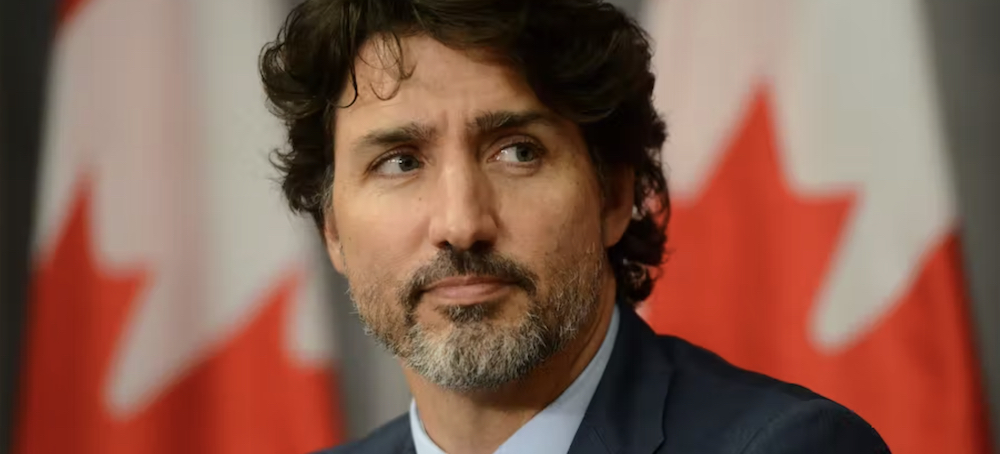
PM Justin Trudeau Orders an Immediate Freeze on the Sale and Import of Handguns in Canada

Trudeau Orders an Immediate Freeze on the Sale of Handguns in Canada  Justin Trudeau. (photo: Naresh777/Shutterstock)  
 

readersupportednews.org

Giulia Heyward / NPR

Canadian Prime Minister Justin Trudeau is placing a nationwide freeze on the sale, purchase and transfer of handguns, effective immediately.

The handgun freeze is the latest in an ongoing battle among Canadian lawmakers over gun control measures. In parliament, legislators are still debating the passage of a bill, introduced in May, that would be one of the strongest pieces of gun control legislation in decades. The new handgun freeze is an "immediate action" the Trudeau administration said it is taking as conversation around the bill continues.

"When people are being killed, when people are being hurt, responsible leadership requires us to act," Trudeau said at a news conference on Friday, announcing the new measure. "Recently again, we have seen too many examples of horrific tragedies involving firearms."

In addition to a ban on handgun sales, it is also now forbidden to bring newly acquired handguns into Canada. The freeze is being met with elation from gun reform groups who welcomed the immediate action.

"Reducing the proliferation of handguns is one important example of the evidence-based measures Canada needs to reduce gun violence and save lives," Canadian Doctors for Protection from Guns tweeted in response to the news.

If Canada can do it, so can we.  In fact, the vast majority of us want to, but Republicans just won't go there.

Saturday, October 22, 2022

What we suspected was all too true: Trump killed thousands by forcing the CDC to lie and paint a rosy picture of COVID-19

WASHINGTON, DC - APRIL 22: Dr. Robert Redfield, Director of the Centers for Disease Control and Prevention (L) and U.S. President Donald Trump participate in the daily briefing of the coronavirus task force at the White House on April 22, 2020 in Washington, DC. Dr. Redfield, has said that a potential second wave of coronavirus later this year could flare up again and coincide with flu season. (Photo by Drew Angerer/Getty Images)
Dr. Robert Redfield, former director of the Centers for Disease Control and Prevention (L), and former President Donald Trump participate in the daily briefing of the coronavirus task force at the White House on April 22, 2020.

I remember it clearly and also try to put it out of my mind: Former President Donald Trump’s nightly news briefs with heads of the Centers for Disease Control and Prevention (CDC) presenting a fake narrative about COVID-19 being handled while we all knew it was spreading like wildfire. Turns out our fears were valid. A new report shows that Trump was controlling the CDC’s response to the pandemic.

“After a February 25, 2020, CDC telebriefing ‘angered’ President Trump, the White House wrested control of coronavirus communications away from CDC and mandated on February 26 that all media requests related to the pandemic be approved by the Office of the Vice President prior to release,” the newly released report reads.

Adding, “Trump Administration officials blocked CDC from conducting telebriefings on critical, emerging public health issues for three months and restricted scientists from participating in interviews—at a time that coincided with a rapid explosion in coronavirus cases.”

The House select subcommittee on the coronavirus crisis concluded that former CDC Director Robert Redfield, former CDC Principal Deputy Director Dr. Anne Schuchat, and others felt “bullied” by Trump and his administration and that their jobs were threatened if they did not paint a rosy enough view of the pandemic, according to The Washington Post.

“For a while, none of our briefings were approved,” Redfield told the select subcommittee, adding that the American public “should have heard from the public health leaders” during this period. “There was a point where they [CDC staff] stopped asking because they [Trump Administration officials] kept saying no,” Schuchat said.

The report also outlines that “Trump Administration officials repeatedly sought to alter CDC and HHS press materials to promote positive news, downplay coronavirus risks, and attempt to redirect blame away from the Trump Administration for its poor handling of the coronavirus pandemic.”

Martin Cetron, director of the agency’s division of global migration and quarantine, said during an interview included in the report that White House adviser Stephen Miller was at the center of using the pandemic as a way to restrict immigration to the U.S. with Title 42, the Post reports.

Although Cetron disagreed with the federal order, Redfield signed it in March 2020.

“This prioritization of politics, contempt for science, and refusal to follow the advice of public health experts harmed the nation’s ability to respond effectively to the coronavirus crisis and put Americans at risk,” Democratic Rep. James E. Clyburn, who chairs the panel, said in a statement. 

The panel has spent two years creating the 94-page report, which draws on 2,100 pages of interviews and testimony from former White House COVID-19 officials.

The panel also found that Trump appointees hoped to “alter the contents, rebut, or delay the release” of 18 Morbidity and Mortality Weekly Reports (MMWRs) from the Department of Health and Human Services.

As reported by the Post, Jay Butler, the CDC’s deputy director of infectious diseases, told the panel in a November 2021 interview, “Was I concerned that there was an attempt to alter the scientific content of the MMWR? Yes. Do I think they were successful? No.”

How many people did Trump kill by distorting COVID-19 realities?