Join us at our brand new blog - Blue Country Gazette - created for those who think "BLUE." Go to www.bluecountrygazette.blogspot.com

YOUR SOURCE FOR TRUTH

Sunday, November 12, 2023

Clarence and the Supremes return to days of yore when men were expected to batter their wives

WASHINGTON, DC - OCTOBER 07: United States Supreme Court Associate Justice Clarence Thomas poses for an official portrait at the East Conference Room of the Supreme Court building on October 7, 2022 in Washington, DC. The Supreme Court has begun a new term after Associate Justice Ketanji Brown Jackson was officially added to the bench in September. (Photo by Alex Wong/Getty Images)
Well vacationed Supreme Court Justice Clarence "Coke Can" Thomas.

By Hunter for Daily Kos

Daily Kos Staff

REPUBLISHED BY:

Blue Country Gazette Blog

Rim Country Gazette Blog

The Supreme Court heard arguments on Tuesday in United States v. Rahimi, a case that questions whether a person with a domestic violence restraining order against them can possess a firearm. Once again, we’ll see if the court's hardest-of-hard-right interpretations of the Second Amendment outweighs Americans’ right not to get shot.

NPR has one of the better explainers out there. The newly reactionary Supreme Court brought this case on itself after 2022's New York State Rifle & Pistol Association Inc. v. Bruen nullified an as-of-yet-unknown number of federal and state gun restrictions by imposing a new, very particular test.

Sixteen months ago, the conservative court majority broke sharply with the way gun laws had been handled by the courts in the past. In a landmark decision, the six-justice majority ruled that in order to be constitutional, a gun law has to be analogous to a law that existed at the nation's founding in the late 1700s.

Sound familiar? Yes, we're back to the foundational question posed by Justices Samuel Alito, Clarence Thomas, and rest of the hard-right bench: Are each of this nation's current laws compatible with the thoughts of 16th- to 18th-century witch hunters, wifebeaters, and slaveholders who believed that women lacked the intelligence necessary to vote, own property, and choose their own husbands?

At the time the Constitution was being drafted, domestic violence laws did not exist because it was generally accepted (by white men, who were the only ones allowed to vote on these things) that men had the right to beat their wives if that is what it took to achieve proper submission. So long as a man did not take things far enough for someone in the woman's family to demand a duel or simply drag his ass out behind the carriage house, such abuse was taken as a given.

The Supreme Court's insistence that none of the clarifications of "civil rights" be stuffed into our laws since that can outweigh the primal instincts of Sir WitchHunter T. WifeBeater, Esq., who wrote down his beliefs between bloodletting sessions and hunting down women who knew a suspicious amount of math, now puts us in a position where this guy is claiming that the Second Amendment allows him to pack a firearm:

The defendant in the case, Zackey Rahimi, is something of a poster child for why Congress passed the law in 1994. In 2019 he assaulted his girlfriend in a parking lot, and after realizing that a bystander saw the assault, he fired a gun at the witness, and threatened to shoot his girlfriend if she told anyone. Two months later, a Texas court granted her a protective order, suspended Rahimi's gun license, and warned him that possession of a gun while the order remained in effect is a federal felony.

Rahimi repeatedly violated the court order, threatened another woman with a gun and fired a gun in five different locations in a period of one month—incidents that ranged from shooting a gun repeatedly at another driver after a collision, to firing multiple shots in the air after a fast-food restaurant declined a friend's credit card.

This asshole shouldn't be allowed to own a gun, a car, power tools, steel-toed boots, or an electric toothbrush, but "gun rights" schemers have propped him up as the example of someone who's being abused by a system that stripped him of those rights after five separate incidents of shooting at and near others in fits of incompetent, burbling rage.

We didn't learn much from oral arguments today. The low point was probably when Thomas chose a bizarre aspect of the case to express his skepticism on.

This is precisely what happens when the Supreme Court turns to decision-making via seance. Once you’ve decided that the foundations of the case will rely on Constitution-era musings of the six or seven spirits that Thomas, Alito, and the other conservative justices will now attempt to summon via scented candle, you hardly need to consult the docket for the specifics of the case in front of you.

It is possible that Thomas did absolutely no reading before turning his well-vacationed noodle to the question of whether this particular incarnation of The Worst Person In America still needed unfettered access to his pointy-shooty stick. It's also possible that this court believes that opening fire in public five times in one month is precisely what the Founding Fathers did intend America to look like, because that’s what the scented candle told them and who the hell are you to argue otherwise?

Conservatives (that is, Republicans) have focused obsessively on stacking federal benches with judges willing to say that the writings of misogynistic half-mystics from nearly 300 years ago must hold priority over each refinement of human rights to have happened since. It would not be out of character for this court to hold that, since there's no specific Constitutional restriction against domestic abuse, you can't restrict the "rights" of gun holders to purchase guns expressly for that purpose.

We'll find out. It's shocking that the Supreme Court wanted to hear this case. The notion that supposed "gun rights" of Americans with a documented history of threatening others outweigh the rights of the rest of us to not be murdered in one of their fits of rage is apparently a hard sell for Thomas, at a minimum.

And it doesn't appear to be a love for guns that's driving these decisions, but a deep-seated anger at civil rights in general. The current Supreme Court reserves its most radical decisions for cases that question whether the rights granted to 18th-century white men of privilege really do extend to every other class of American, or whether believing so was a mistake that now needs to be rectified.

If this couple weren't so scary, they'd be hilarious.


Saturday, November 11, 2023

Trump Promises He Will Use FBI to Go After Political Rivals if Elected in 2024

 Trump Suggests He Would Use FBI to Go After Political Rivals if Elected in 2024 Trump reposts image of U.S. Capitol on fire. (photo: X, formerly Twitter)


Sam Levine / Guardian UK 

Trump said: ‘If I happen to be president and I see somebody doing well and beating me very badly, I say indict them.’

Donald Trump has suggested he would use the FBI and justice department to go after political rivals should he return to the White House next year in a move which will further stoke fears of what a second period of office for Trump could mean.

Trump made the comments during an interview with the Spanish-language television network Univision. The host Enrique Acevedo asked him about his flood of legal problems saying: “You say they’ve weaponized the justice department, they weaponized the FBI. Would you do the same if you’re re-elected?”

“They’ve already done it, but if they want to follow through on this, yeah, it could certainly happen in reverse,” Trump replied. “They’ve released the genie out of the box.

“When you’re president and you’ve done a good job and you’re popular, you don’t go after them so you can win an election. They’ve done indictments in order to win an election. They call it weaponization,” Trump added. “But yeah they have done something that allows the next party, I mean if somebody, if I happen to be president and I see somebody who’s doing well and beating me very badly, I say go down and indict them, mostly they would be out of business. They’d be out. They’d be out of the election.”

Prosecuting political rivals is a hallmark of authoritarian regimes and Trump’s remarks are the most candid public revelations so far of the anti-democratic power he would bring to a second term as president.

The former New Jersey governor Chris Christie, who is challenging Trump but has lagged in the polls, said the remarks were alarming. “This is outrageous,” he said on CNN on Thursday evening.

He also warned that unlike Trump’s first presidential term, there would not be lawyers and other officials around Trump to stop his most authoritarian pushes. Trump allies are already preparing an effort to install far-right attorneys in the federal government who can back up Trump’s fringe ideas.

“You had good folks like Bill Barr who were keeping him on the rails and stopping him from doing stuff like this at the justice department,” Christie said. “Nobody as good and decent and honest as Bill Barr is gonna agree to be Donald Trump’s attorney general if he ever becomes president again.”

The comments also drew rebuke from a CNN panel on Friday morning, which implored Americans not to shrug off Trump’s remarks.

Even before Trump’s Univision interview aired on Thursday, the former secretary of state Hillary Clinton said Trump was clearly telegraphing an authoritarian agenda if he returns to the White House and compared him to Adolf Hitler.

“Trump is telling us what he intends to do. Take him at his word,” she said on ABC’s The View.

“Those aren’t flippant ‘ha-ha funny’ remarks,” Phil Mattingly, CNN’s chief White House correspondent said on air on Friday. “That’s insane.” Elie Honig, the network’s chief legal analyst, agreed and said Americans should “take him at his word”. “If he says he’s gonna do this, I believe him.”

Trump is the overwhelming frontrunner in the Republican race for the 2024 nomination and no rival has yet emerged to seriously challenge him. In recent national polls against Joe Biden, Trump has also frequently been shown to be ahead – unnerving many Democrats.

He faces a suite of lawsuits in key swing states, including Colorado, Minnesota and Michigan, seeking to bar him from running because of his responsibility for the January 6 attack on the Capitol. The suits argue that section 3 of the 14th amendment bars anyone who previously took an oath to the United States from holding office if they have engaged in insurrection or rebellion against the US constitution.

The Minnesota supreme court ruled this week that the state could not block him from appearing on the primary ballot, but left the door open to future challenges.

Part of the reason the challengers are bringing these cases is because of the threat a second Trump presidency poses to the US constitution.

“The dangers are not merely theoretical. We saw what happened on January 6 2021 and if he’s allowed back into power that might be child’s play compared to what he’ll do in the future,” Ron Fein, the legal director for Free Speech for People, a left-leaning group behind several of the challenges, told the Guardian last week.

The Washington Post reported earlier this month that Trump and his allies were already discussing how to use the justice department to prosecute and exact revenge against people who have spoken out against Trump, including former attorney general Bill Barr and his former chief of staff John Kelly.

He is also reportedly considering invoking the Insurrection Act on his first day in office, should he win, which would allow him to deploy the military against domestic protesters.

Trump faces four separate criminal cases, including two different federal ones dealing with his handling of classified documents and his efforts to overturn the election. Both of those cases were brought by Jack Smith, a justice department special counsel appointed by the attorney general, Merrick Garland, to insulate the cases from political pressure.

If Trump wins the election, he would almost certainly fire Smith if the investigation is still ongoing, or pardon himself if he has been convicted.

On this Veterans Day, a quick reminder that Donnie ducked the military because his daddy got a doctor to say he had bone spurs.  And this fat zebra has not changed his stripes.


Friday, November 10, 2023

Gallup: More Americans Than Ever Say "Marijuana Should Be Legal" - Record 70 Percent


A record 70 percent of US adults believe that "the use of marijuana should be legal," according to nationwide
polling data released today by Gallup. That’s an increase of 19 percentage points since 2014, when Colorado and Washington became the first states to implement adult-use cannabis legalization, and the highest level of support ever reported by Gallup pollsters.


"There’s no 'buyers remorse' among the public when it comes to legalizing cannabis," NORML’s Deputy Director Paul Armentano said. "As more states have adopted legalization, public support for this policy has risen dramatically. That’s because these policies are largely working as intended and because voters prefer legalization and regulation over the failed policy of marijuana prohibition."


Pollsters reported that Americans back legalization regardless of age and political party affiliation. "Majority support for legalization is found among all major subgroups, including by age, political party and ideology," they determined. "Support for legal marijuana use is highest among self-identified liberals (91 percent) and Democrats (87 percent) and lowest among conservatives (52 percent) and Republicans (55 percent). Support is inversely correlated with age, reaching 79 percent among 18- to 34-year-olds. However, even among the oldest age group, nearly two-thirds (64 percent) are in favor."


In 1969, when Gallup first posed the legalization question, only 12 percent of Americans expressed support for legalizing marijuana.


"Public support for legalizing and regulating cannabis is mainstream and bipartisan," Armentano said. "At a time when many political issues remain acutely polarized, legalizing marijuana remains is one of the few policy reforms that a majority of voters on the right and on the left agree upon. It borders on political malpractice for elected officials, and for Republican lawmakers especially, to sit on the sidelines at a time when more Americans than ever are demanding action."


Complete polling results are available from Gallup. Archived surveys and polls are available from NORML.


NORML advocates for changes in public policy so that the responsible possession and use of marijuana by adults is no longer subject to criminal penalties. NORML further advocates for a regulated commercial cannabis market so that activities involving the for-profit production and retail sale of cannabis and cannabis products are safe, transparent, consumer-friendly, and are subject to state and/or local licensure. Finally, NORML advocates for additional changes in legal and regulatory policies so that those who use marijuana responsibly no longer face either social stigma or workplace discrimination, and so that those with past criminal records for marijuana-related violations have the opportunity to have their records automatically expunged.


Thursday, November 9, 2023

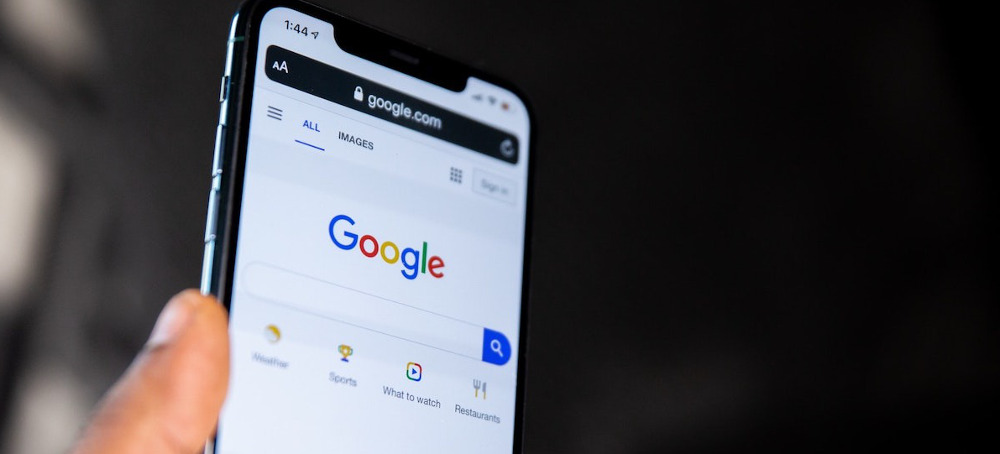
Google Spent $26 Billion to Hide the Search Engine Phone Setting From You

Google Spent $26 Billion to Hide This Phone Setting From You  Google phone Illustration (photo: Elena Lacey/The Washington Post)

Google goes to great lengths to be your default search engine and keep you from switching. Here’s why you should make your own choice.

Geoffrey A. Fowler / The Washington Post 

There’s a setting on your phone and web browser that Google is desperate to keep you from discovering. How desperate? In 2021 alone, Google paid Apple, Samsung and others $26.3 billion to keep it buried.

That’s more money each year than McDonald’s makes selling burgers.

This setting affects who gets to track your location and watch what you look up online. It affects the usefulness of the information you see and how much of your screen is taken up by ads.

I’m talking about your search engine — what pops up the answers when you type into the search bar. Google pays the makers of phones, laptops and browsers to be your default and to stop them from even presenting you other options during setup. It’s billions for a favor.

Most people haven’t thought much about the search function on their devices, much less how Google got there. But this default funny business might make you take a second look at not only Google, but also your trust in Apple, Samsung and other companies for selling you out.

The reason we’re able to pull back the curtain on the big business of default settings is because of an antitrust trial against Google underway in Washington, one of the largest in decades. The U.S. has accused Google of illegally using payments to phone makers and others to deter people from trying alternatives like the privacy-focused DuckDuckGo and or Microsoft-made Bing. We expect a verdict early next year.

You might be wondering: So what? Google has a reputation for good results, in part because it has data from so many users. What’s so bad about making Google the default?

What we’re learning from the trial flips that question on its head. If Google’s so good, then why does it need to spend as much as all the Big Macs combined to make sure we never even consider the alternatives? What have we been missing while Google has been our default? And how would we know if something better came along?

I, for one, changed my search engine because I don’t think any search engine can be the best without the best privacy practices. But even if you’re not interested in breaking up with Google, the choice ought to be yours.

The power of defaults

Tech companies know you’re way too busy to poke around in the settings. In fact, they’re counting on it.

We’re getting an inside view of how Google exploits this behavioral science, sometimes called the “power of defaults.” The idea is that defaults can nudge people’s choices one way or another, because most people are too distracted or confused to change them. Our apps and devices come filled with settings that benefit tech companies more than us — the “devil is in the defaults,” I wrote in 2018.

To get Google’s payout, we’ve learned in the trial, Google requires its partners to make Google the default and also (where allowed by law) not give us a choice during setup. In some cases, the companies also can’t actively encourage us to switch. This is called adding “friction” to our choices.

How does Google defend doing that? “We compete hard for promotional opportunities so that people can easily access Google, and our revenue sharing payments have increased over time because people are searching more with Google,” the company said in a statement.

Google said in its opening statements at the trial that anyone could switch to a different search engine with only a few taps. It also published a blog post with that claim.

To put that to the test, my colleague Tatum Hunter and I hit the streets of San Francisco and asked strangers to show us how to change the default search engine on their phone. We brought a stopwatch to time them.

No surprise: Most people were unable to change it in under two minutes, if at all. Many didn’t even understand that a search engine is different from a web browser (and you theoretically have choices in both).

On an iPhone, it takes 4 taps and some scrolling, once you know where to look. In certain Android phones, changing a search engine takes more than 10 taps because you have to change a browser setting and also a search bar on the home screen.

None of the confusion is our fault — it’s literally what Google pays for. An internal Google document revealed in the trial showed a reason for Google’s concern: It found when people changed their browser homepage away from Google, their searches with Google shrunk by 27 percent.

In Europe, which declared Google a monopoly in 2018, Android phone makers are now required to include a search engine choice during setup. There, Google’s market share has largely stayed the same; competitors say that’s because the choice screen is shown only once and also because it doesn’t give sufficient information about alternatives. In Russia, which also requires a choice screen, most people have now chosen Google’s local rival Yandex.

Apple and Samsung grab that money

What boils my blood: The companies taking all that money from Google know exactly what’s going on. We pay gadget makers to design the best products for us — but they’re not only working for us.

Apple and Samsung declined to answer my questions, but we’ve got testimony from the trial that shows how deeply conflicted they are.

On the stand, Apple senior vice president Eddy Cue said, “When we’re picking search engines, we pick the best one and we let the customer easily change them. So I have no problem with that. I think we’re doing the right thing by customers.”

But wait: I thought Apple made protecting its customers’ privacy a cornerstone of its value proposition? iPhones ask users to make lots of decisions about privacy, including whether they want to give apps the ability to track them. Google’s whole business model is tracking people, and using that data to target them with marketing.

A lawyer for the Department of Justice asked Apple’s Cue if a search engine could affect a user’s privacy. Cue responded with the understatement of the year: “Yes, to some level, it could, yes.”

Funny thing, though — Apple products don’t ask customers to make any privacy choices about their search engine, it’s just Google by default. Not asking us to choose a search engine is part of Google’s deal with Apple.

Samsung, too, actively makes design decisions that help Google rather than us. Lawyers for the DOJ flagged a 2018 document showing Samsung had made a change in its web browser that reduced the friction for people who wanted to change their search engine. But then Google sent a complaint saying that was a violation of Samsung’s search deal with Google. After that, Samsung deleted this change, increasing the friction.

Make your own choice

Given all of that, what should you do?

I get that Googling is to searching what Kleenex is to sneezing. It wouldn’t have reached that point if its results were terrible.

But there are reasons Google might not deserve your loyalty. At the top of my list: Google’s excess data collection is both creepy and a potential risk to your civil rights. (For a potential shock, check out everything it stores on your MyActivity page.) Earlier this year, I found that even after Google said it would delete some of its data to protect the privacy of people seeking abortion care, Google didn’t live up to its promise.

A lack of competition is also leading Google’s search results pages to get worse, flooded with ads and information from its own services. To visualize the decline, I compared the exact same searches across the years.

But after two decades of Googling, many people don’t even know enough about the alternatives to consider trying one. That’s not your fault. You might have tried Bing once in 2015 and been underwhelmed.

For the record, there are benefits to some of the much smaller alternatives. Bing, now beefed up with the artificial intelligence tech behind ChatGPT, also pays you for searching. (A few weeks’ worth of searches might get you a $5 gift card.)

Another alternative, called Ecosia, says it uses its ad revenue to plant trees.

I have switched to DuckDuckGo, a privacy-focused search engine. It doesn’t track what you search and where you go. Because I use it, fewer creepy ads follow me around the web.

Don’t like any of these? Stick with Google. I just think we’re better off when Google has to compete on the merits, rather than by buying our defaults.

The biggest price we pay for monopolies is that they limit better ideas in ways we’ll never get to know.

"To get Google’s payout, we’ve learned in the trial, Google requires its partners to make Google the default and also (where allowed by law) not give us a choice during setup."

Wednesday, November 8, 2023

A Republican told my teen daughter working the polls she should 'get run over by a bus'

ATLANTA, GEORGIA - NOVEMBER 18: College students listen as U.S. Sen. Raphael Warnock's (D-GA) speaks during a campaign stop at Georgia Tech on November 18, 2022 in Atlanta, Georgia. Warnock continues rallying supporters across the state as he faces Republican challenger Herschel Walker in a runoff election December 6. (Photo by Brandon Bell/Getty Images) Getty Images

So, my daughter and her friend volunteered on Election Day to pass out literature on behalf of local Democrats near our local polling place in PrettyBlue County. I'm not going to disclose her age, but she isn't voting yet. And yes, as you might suspect, Dartagnan's daughter does lean Democratic, although that's been mostly reflected by the values of tolerance and respect of others she's developed rather than any overt political affiliation. 

But that probably changed today, and wouldn’t you know, I had absolutely nothing to do with it. Some old Republican white dude did it for me.

You have to be pretty fucking ignorant to verbally abuse a school-age girl just trying out the experience and virtue of performing her civic duties. In fact you probably have to have your head firmly embedded in your anus before you apparently scrunch your neck down a sufficient distance to provide yourself adequate breathing capacity and power of speech to tell her and her friend that they “deserve to be run over by a bus,”  just because they were passing out literature—sample ballots, as I understand it—for local Democrats. 

Or maybe you could just be a typical Republican, I don’t know. But what I do know is that this guy—described as “old” by my daughter, which honestly could mean anyone from 30-95—did not get the response he evidently desired. 

No, actually they laughed at him. And they came home, after their shift was over, still laughing at him. Giggling, in fact, with that high-pitched, joyous giggle that only teenage girls seem to be capable of.

Look, I try not to be a helicopter Dad, so I didn’t explain to her that this might be one of those “teachable moments.” I didn’t need to tell her that if I’d been there, this interesting fellow they met wouldn’t have been on the receiving end of laughter (to put it mildly), because I didn’t need to.

The thing is, she learned something about Republicans today like nothing Dad could have told her. And she, just like countless other people her age, has an awesome memory, especially of formative, “off-the wall” experiences like this. They take that memory with them, it germinates and grows as they mature and get older themselves, becoming part of the way they view the world and certain people in it.

See, they notice everything. They see everything, and they take it all in. They see the racism, they see the bigotry, they see the hate, and they recoil. They’re repelled by it. Because they don’t want to be like that. That’s not what they want for their future, most of them, anyway.

And they make a choice, and usually that choice stays with them for the rest of their lives.

I don’t pretend to know what Republicans are thinking when they embrace Trump, Trumpism, and all the bigotry, racism, and hatred that comes with it. But they might want to seriously think about what values they’re projecting to our young people every time they open their mouths. Because those kids are going to be running the show very soon.

They see the racism, they see the bigotry, they see the hate, and they recoil. They’re repelled by it.